
As an Amazon Associate, I earn from qualifying purchases.
In this article 8 sections
When the news says "super typhoon", it is fair to wonder: is that just a hurricane with a fancier name? Pretty much, yes. A typhoon, a hurricane and a tropical cyclone are the same kind of storm. Only the ocean it forms in decides what we call it. Here is the plain-English version, with the wind speeds that make the difference, who issues the warnings, and why some Americans live with typhoons, not hurricanes.
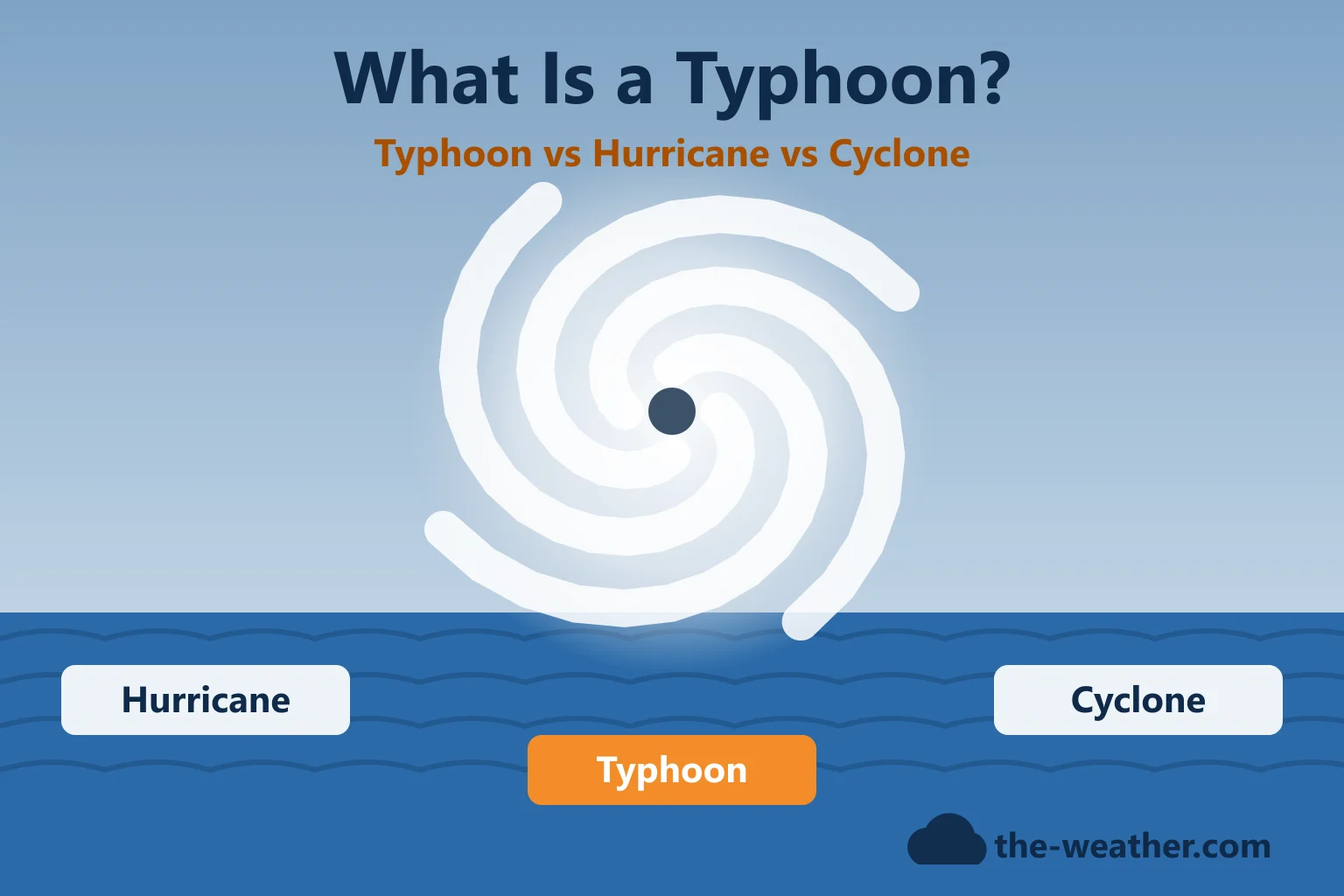
Short answer: a typhoon is a tropical cyclone in the northwest Pacific Ocean with maximum sustained winds of 74 mph or more. The same storm in the North Atlantic or the central and eastern North Pacific is called a hurricane, and in the South Pacific and Indian Ocean it is called a tropical cyclone. NOAA puts it simply: "The only difference between a hurricane and a typhoon is the location where the storm occurs" (NOAA).
In the news (October 2026): Typhoon Champi passed just south of Guam, a U.S. territory, over the weekend of October 17-18, 2026, and was reported to strengthen into a super typhoon after its closest approach (Fox Weather, RNZ). For official, current information on any western Pacific storm, follow the National Weather Service office in Guam. This box is about one storm; the rest of the page applies to every typhoon.
Editorial Research
- Written by
- Lena Thornton, Weather Station Analyst & CWOP Contributor
- Based on
- NOAA's National Ocean Service, the National Hurricane Center glossary and wind scale page, NOAA's Hurricane Research Division FAQ, the National Weather Service and Ready.gov
- Research last verified
- October 20, 2026
One Storm, Three Names
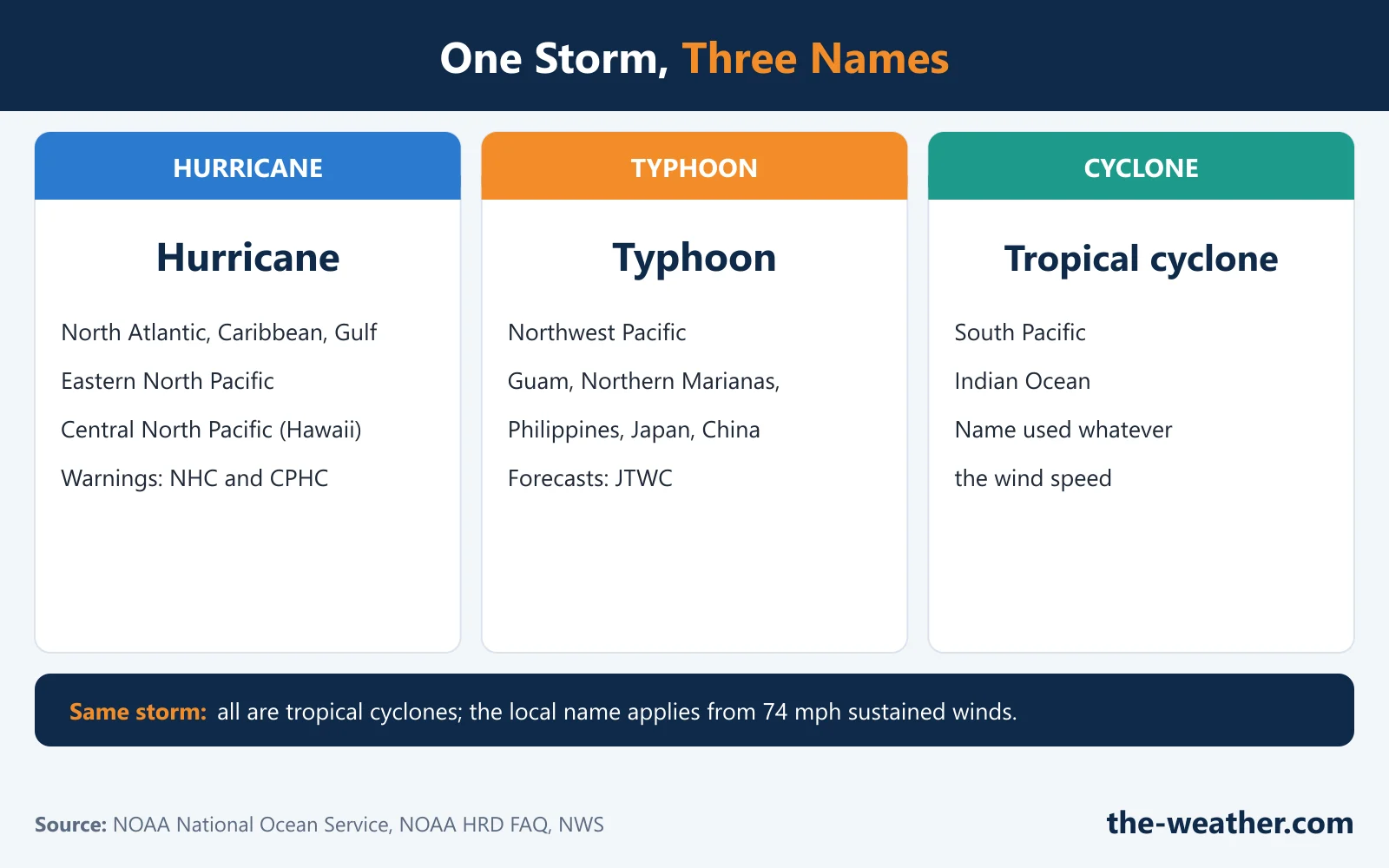
Meteorologists use one umbrella term for all of these storms: tropical cyclone. NOAA describes it as a rotating, organized system of clouds and thunderstorms that starts over tropical or subtropical waters and has a closed circulation near the surface. Once its maximum sustained winds reach 74 mph, it gets the local name:
| Where the storm forms | What it is called at 74 mph or more | U.S. places in that ocean |
|---|---|---|
| North Atlantic (with the Caribbean and the Gulf) | Hurricane | East and Gulf coasts, Puerto Rico, U.S. Virgin Islands |
| Eastern and central North Pacific | Hurricane | Hawaii (and, rarely, the Southwest) |
| Northwest Pacific | Typhoon | Guam and the Northern Mariana Islands |
| South Pacific and Indian Ocean | Tropical cyclone (whatever the wind speed) | American Samoa is in the South Pacific |
Names per ocean: NOAA National Ocean Service. The U.S. places column is our own geography note.
So when a hurricane and a typhoon of the same strength meet the coast, they bring the same dangers: wind, storm surge, flooding rain and sometimes tornadoes. "Typhoon" does not mean stronger, and "cyclone" does not mean weaker. It is a bit like soda, pop and coke: the drink is the same, the word depends on where you grew up.
From Thunderstorms to Typhoon: The Four Steps
A typhoon does not appear overnight. NOAA's Hurricane Research Division describes the ladder a storm climbs:
Tropical disturbance
A cluster of thunderstorms without a closed circulation.
Depression, then tropical storm
Closed circulation. Under 39 mph it is a tropical depression; from 39 mph it is a tropical storm and gets a name.
Hurricane or typhoon
Maximum sustained winds of 74 mph (64 knots) or more.
"Sustained" winds are the steady winds, not the brief gusts. In the U.S., forecasters use a 1-minute average for this, according to the National Hurricane Center glossary. How these storms get started in the first place (warm water, moisture, spin and calm upper winds) is in our page on how hurricanes and typhoons form.
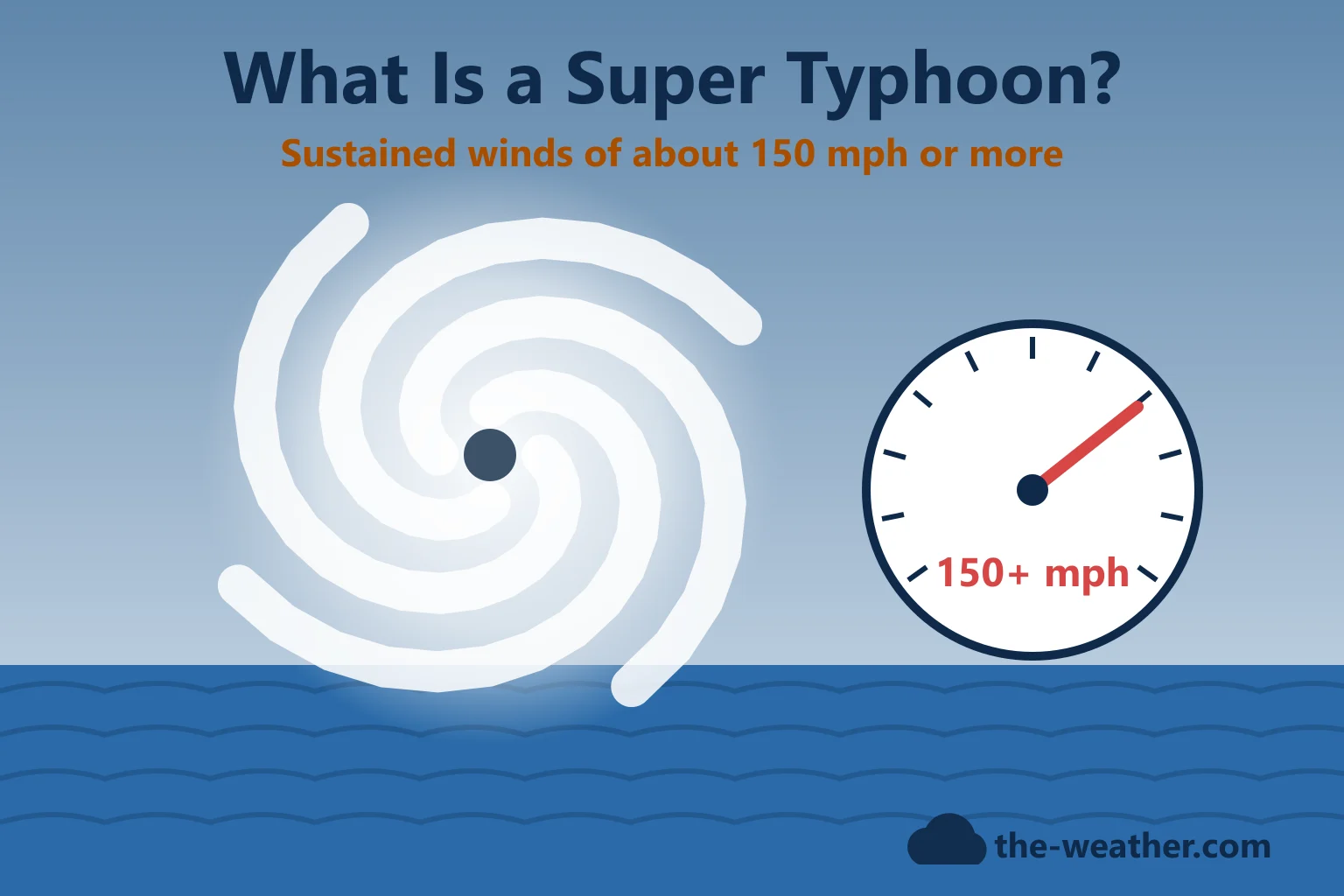
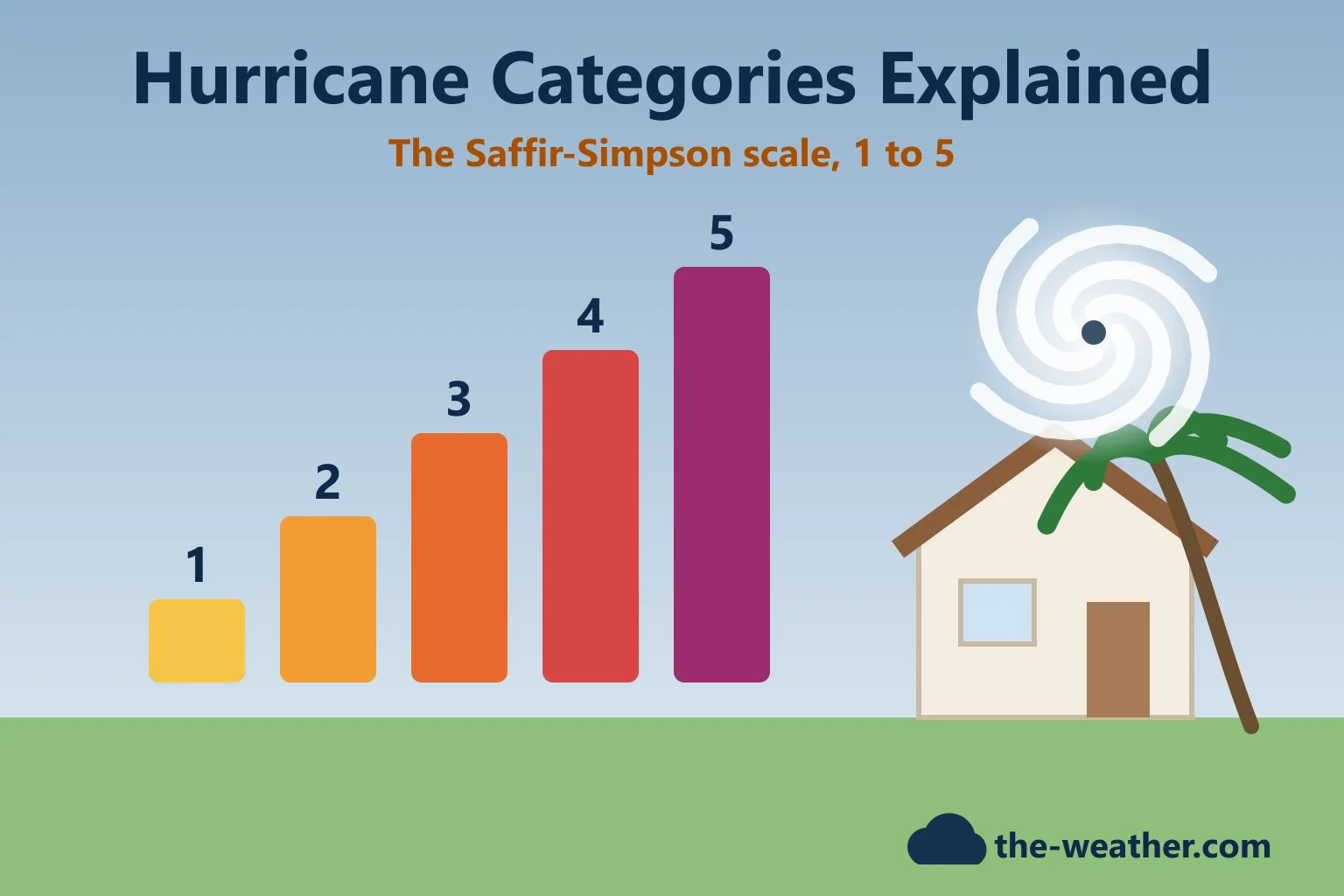
The strongest typhoons get one more label. On its wind scale page the National Hurricane Center notes that in the western North Pacific, "super typhoon" is used for storms with sustained winds above 150 mph. More on that in What Is a Super Typhoon?, and on the 1 to 5 hurricane scale in Hurricane Categories Explained.
Who Tracks and Warns for Each Ocean?
Different oceans, different forecast centers. For Americans, these are the ones to know:
- National Hurricane Center (NHC): the Atlantic and the eastern North Pacific, at hurricanes.gov.
- Central Pacific Hurricane Center (CPHC): the central North Pacific around Hawaii. The National Weather Service says both centers issue advisories at least every 6 hours, and every 3 hours when coastal watches or warnings are in effect (NWS).
- Joint Typhoon Warning Center (JTWC): the U.S. military forecast center for the western Pacific (its history is on our typhoon season page).
- NWS Guam: the local National Weather Service office and the official local source for Guam and the Northern Mariana Islands.
Want to see where a storm is right now and where it is heading? Our guide Where Is the Hurricane Right Now? shows the official live maps for each ocean.
Does the United States Get Typhoons?
Yes. Ready.gov points out that hurricanes can hit any U.S. coast or territory in the Atlantic or Pacific, and that "in parts of the western North Pacific, hurricanes are called typhoons" (Ready.gov). For Guam and the Northern Mariana Islands, typhoons are simply the local version of hurricane season. Two super typhoons that hit Guam are described on our super typhoon page.
When do typhoons happen? Unlike the Atlantic, the northwest Pacific has typhoons in every month, so NOAA's Hurricane Research Division says there is no official typhoon season. The months, the peak and the countries hit most are on our typhoon season page.
Live in Hurricane or Typhoon Country? Two Things to Do Now
The name matters less than the warning. Two habits help in every ocean:
- Know what the alerts mean. A watch means hurricane or typhoon conditions are possible; a warning means they are expected. Our page on hurricane watch vs warning explains the timing and what to do for each.
- Have more than one way to get alerts. NOAA's Hurricane Research Division suggests signing up for wireless emergency alerts, or getting updates from NOAA Weather Radio. Ready.gov's evacuation advice also includes listening to a battery-powered radio. Options are in our weather radios for hurricane season page.
Typhoon FAQ
Is a typhoon the same as a hurricane?
Yes. Both are tropical cyclones with sustained winds of 74 mph or more. NOAA says the only difference is where the storm occurs: typhoon in the northwest Pacific, hurricane in the North Atlantic and the central and eastern North Pacific.
Are typhoons stronger than hurricanes?
Not by definition. The name says where a storm is, not how strong it is. Typhoons and hurricanes are both rated by their sustained wind speed, and the strongest western Pacific storms get the extra label "super typhoon" at sustained winds of about 150 mph or more.
What is the difference between a typhoon and a cyclone?
"Tropical cyclone" is the umbrella term for all of these storms. In the South Pacific and Indian Ocean it is also the everyday name, whatever the wind speed. In the northwest Pacific, a tropical cyclone with sustained winds of 74 mph or more is called a typhoon.
Which way does a typhoon spin?
Counter-clockwise, like every tropical cyclone in the Northern Hemisphere. South of the equator they spin clockwise, according to NOAA's Hurricane Research Division.
Does the U.S. get typhoons?
Yes. Guam and the Northern Mariana Islands are in the northwest Pacific, so their tropical cyclones are typhoons. The National Weather Service office in Guam is the official local source there.
Update Log
- October 20, 2026: First version, with a dated news box on Typhoon Champi that we will update or remove. Definitions and thresholds from NOAA and the NHC.
Sources
- NOAA National Ocean Service: What is the difference between a hurricane and a typhoon?
- NOAA Hurricane Research Division: Tropical Cyclone FAQ (definitions, seasons, spin)
- National Hurricane Center: Glossary
- National Hurricane Center: Saffir-Simpson Hurricane Wind Scale
- National Weather Service: Hurricane and Tropical Storm Watches, Warnings, Advisories and Outlooks
- Ready.gov: Hurricanes
- News box: Fox Weather and RNZ
More in this series: Super typhoons · Hurricane categories · Storm surge · Watch vs warning · Track a hurricane live · Typhoon season · How hurricanes form · Hurricanes in the Pacific · Evacuation zones · Why storms get names