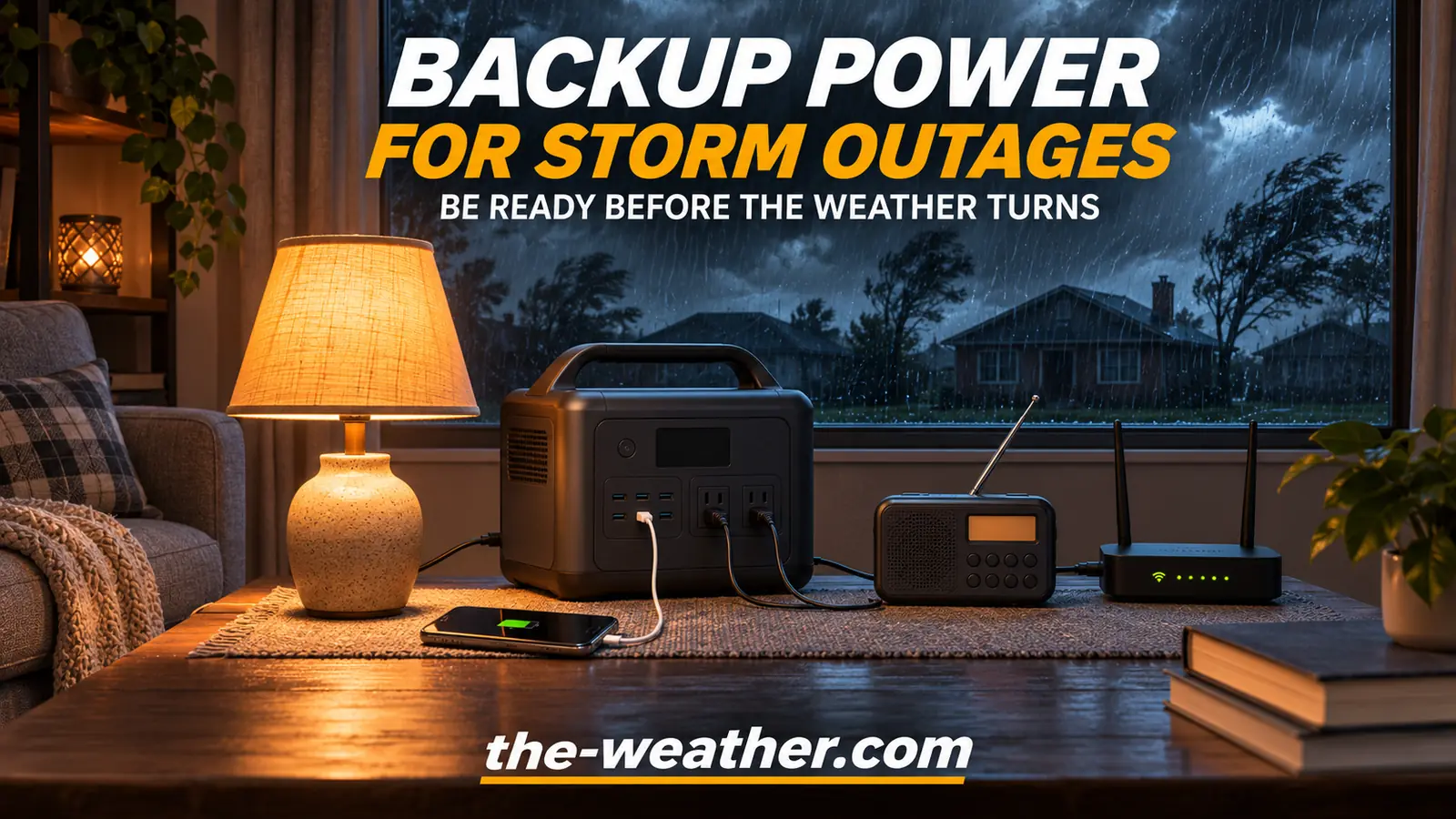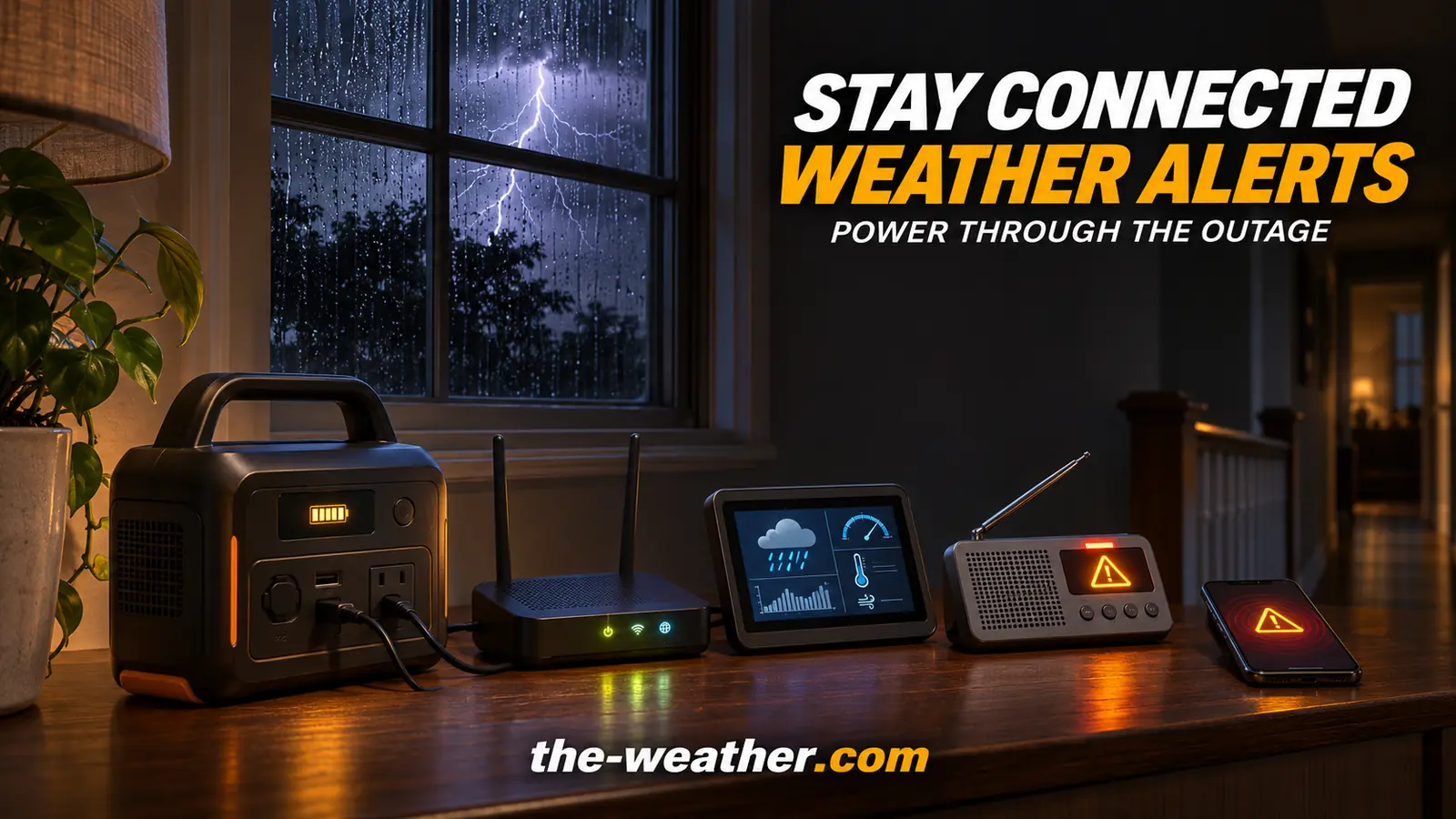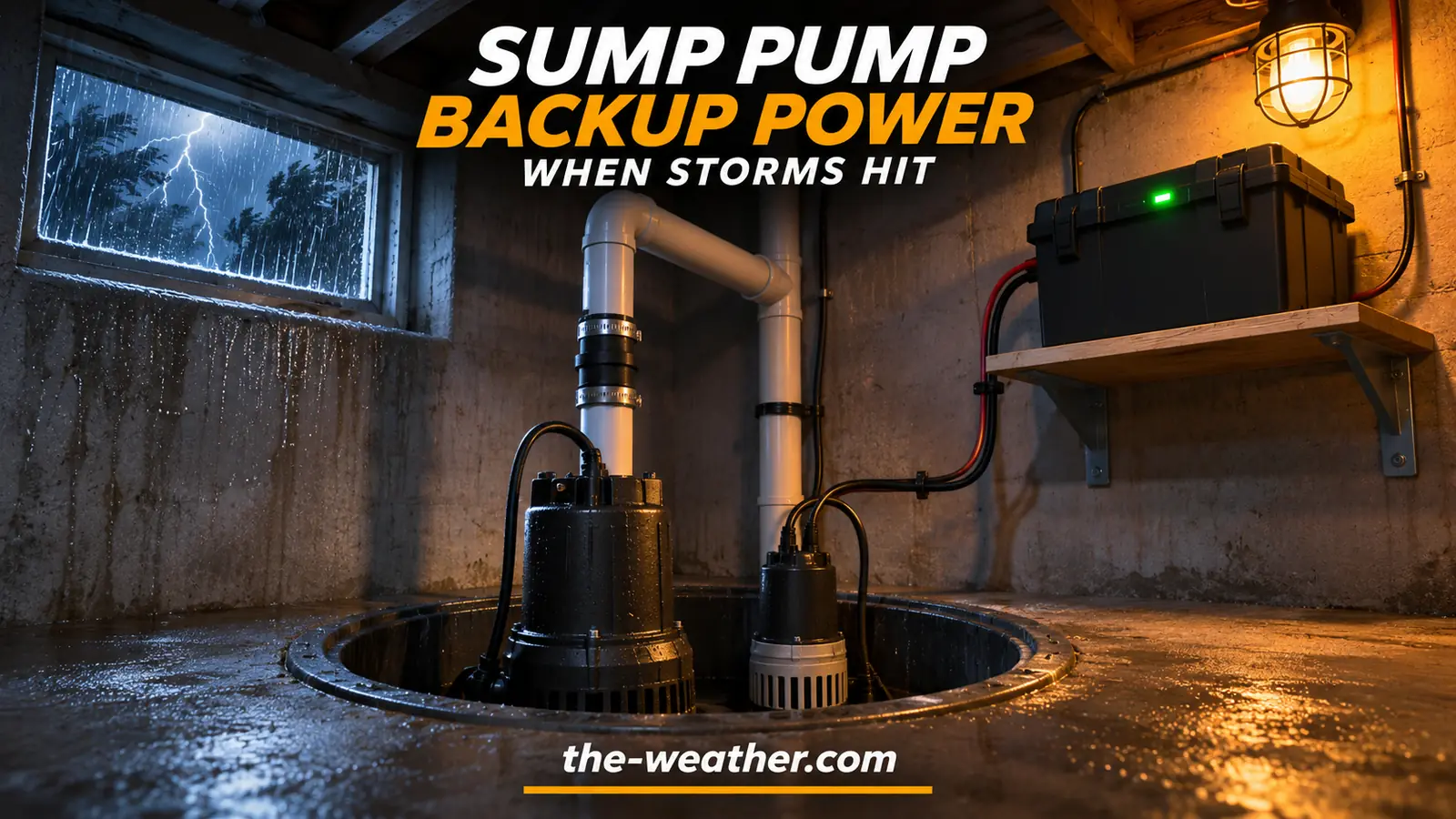

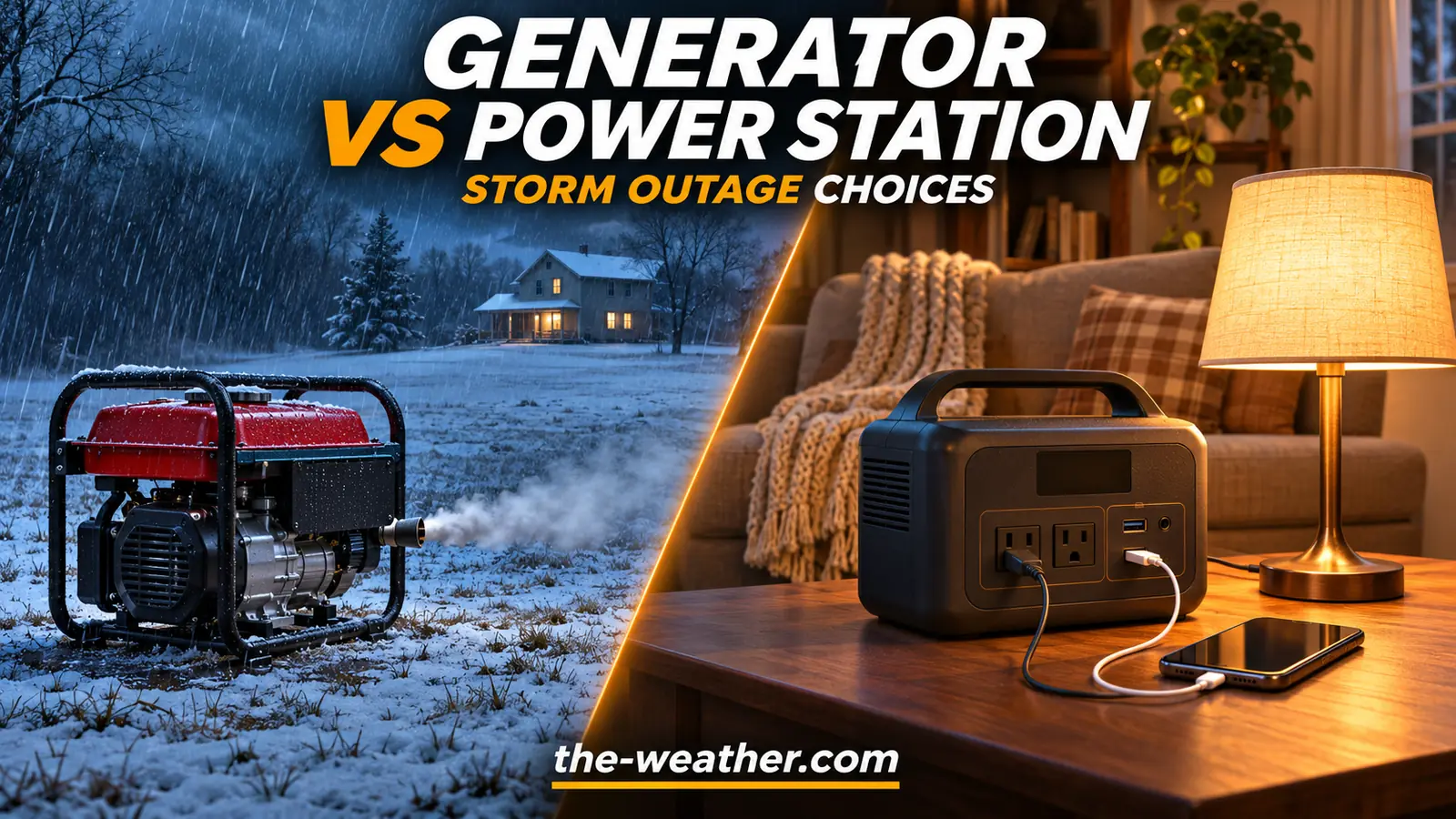
Models compared on this page
Our shortlist, side by side
Check the current price, delivery options and full specs on Amazon.
As an Amazon Associate, I earn from qualifying purchases.In this article 8 sections
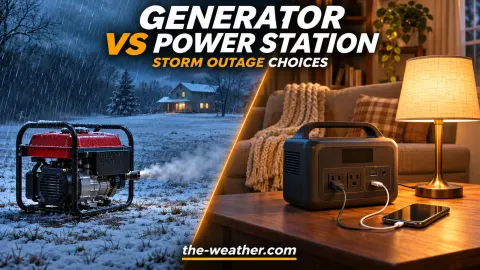
Every storm season brings the same question: should I get a generator or one of those battery power stations? They both keep the lights on, but they are very different machines, and one of them comes with a safety rule that is not up for discussion. Here is the honest comparison for a weather outage, not for camping.
Short answer: a battery power station has no engine and no exhaust, so you can use it inside, next to the fridge or the bed. It is quiet, but it only holds a set amount of energy (about 1 to 5 kWh for the home models in our list) and then needs recharging. A gas or propane generator makes far more power for as long as you have fuel, but it makes carbon monoxide. The CPSC says to use it "outside only, at least 20 feet away from the house", never in a garage, basement, porch or carport. For a short outage and a few essentials, a power station fits. For days without power, or for big loads like a well pump or central air, a generator with a transfer switch put in by an electrician is the stronger tool.
Editorial Research
- Written by
- Lena Thornton, Weather Station Analyst & CWOP Contributor
- Based on
- The U.S. Consumer Product Safety Commission's carbon monoxide pages and its 2025 winter weather safety release, the Department of Energy's Building America Solution Center on generators for backup power, the Jackery Explorer 1500 user manual, and the makers' specifications for the power stations named. We did not test these products.
- Research last verified
- November 27, 2026
Generator vs power station, side by side
| Battery power station | Gas / propane generator | |
|---|---|---|
| Where it can run | Inside the house (no engine, no exhaust), within the placement and temperature limits in its manual | Outside only, at least 20 feet from the house (CPSC) |
| Carbon monoxide | None | Yes: the CPSC says one portable generator makes as much CO as "hundreds of cars" |
| How much it powers at once | About 1,500 to 3,600 W for the home models in our list | Several thousand watts up to whole-home models |
| How long it lasts | Until the battery is empty (about 1 to 5 kWh in our list), then recharge | As long as you have fuel |
| Refilling in an outage | Solar panels, a car, or a running generator | Stored gasoline or propane |
| Switches on by itself | Yes, if it has a UPS function and the devices are plugged in | Only standby or auto-start setups; portables are started by hand or remote |
| Connecting to the house wiring | Only through a transfer switch or home panel made for it, installed by an electrician | Only through a transfer switch installed by a licensed electrician (DOE) |
| Best for | Fridge, CPAP, router, phones, lights, a sump pump for hours | Multi-day outages and bigger loads such as well pumps or heating circuits, if its running and starting watts cover them |
The rule that comes first: carbon monoxide
Carbon monoxide (CO) is a gas you cannot see or smell, and generators make a lot of it. The CPSC is blunt about it. On its carbon monoxide page it says "one portable generator produces the same amount of carbon monoxide as hundreds of cars", and: "More than 200 people in the United States die every year from accidental non-fire related CO poisoning associated with consumer products. More than 100 of those deaths are linked to portable generators."
The rules from the CPSC's 2025 winter weather release:
- "NEVER operate a portable generator inside a home, garage, basement, crawlspace, shed or other enclosed spaces."
- "Opening doors or windows will not provide enough ventilation to prevent the buildup of lethal levels of CO."
- "Operate portable generators outside only, at least 20 feet away from the house."
- "Don't operate a generator on a porch or in a carport."
- "Direct the generator's exhaust away from your home and other buildings where someone can enter."
- "Install battery-operated CO alarms or CO alarms with battery backup on each level and outside separate sleeping areas at home."
When buying, the CPSC adds: "Look for portable generators that have a CO shut-off safety feature." It also says models certified to the latest PGMA G300-2018 and UL 2201 safety standards "are estimated to reduce deaths from CO poisoning by 87% and 100%, respectively." That is worth checking on any listing.
And in rain or snow, the CPSC points to the generator's own instructions about electrical shock, which "may include use of an NFPA-rated non-combustible generator tent or may state to wait until rain passes."
The limits of a power station
No exhaust does not mean no limits. Three to know:
- The battery runs out. A 2,000 Wh station keeps an average fridge going for about a day in our refrigerator calculation. A space heater or central air empties it in a fraction of that.
- Refilling is slow without the grid. Solar panels work, but a dark winter day after an ice storm gives them little to work with.
- Cold matters. The Jackery Explorer 1500 manual, for example, says it "should be used in ambient temperatures between -10°C~40°C (14°F~104°F)". Check the range in your own station's manual, especially for a garage or porch in winter.
Connecting either one to the house
Here the two are in the same boat. Plugging a generator or station into your home wiring in a makeshift way can send power back into the utility lines, which is called backfeeding and is dangerous for the line workers repairing them. The Department of Energy's Building America Solution Center puts the safe route in one sentence: "Engage a licensed electrical contractor to design, permit, and install generator circuitry to interconnect with the household breaker box with a transfer switch that prevents backfeeding". For plugging single appliances straight into the unit with proper cords, you need no house wiring at all.
Which one fits your outage?
- Short outages (hours to a day), apartment or no safe outdoor spot: a power station. It sits next to the fridge or the CPAP, works as a UPS, and makes no fumes.
- Medical devices at night: a power station, because it can run in the bedroom. Check the device maker's own advice for battery use.
- Multi-day outages after hurricanes or ice storms: a generator outside, with fuel stored safely, or a large expandable power station with solar panels if a generator is not an option for you.
- Well pump, central heating or cooling circuits: usually a generator connected through a transfer switch by a licensed electrician.
You can also have both: a generator outside for the heavy work in long outages, and a power station inside for the quiet night-time essentials.
From our list, by type
Chosen from the makers' specifications and listings. We have not tested them.
Power station: indoor essentials for about a day
Anker SOLIX S2000
Why it is on the list: 2,010 Wh and 1,500 W continuous, LiFePO4 and a UPS switchover of 10 ms or less, according to Anker. Big enough for a fridge, a CPAP and the Wi-Fi through a night.
Research basis: Anker SOLIX S2000 specifications.
Power station: closest to a generator, without the fumes
Jackery HomePower 3600 Plus
Why it is on the list: 3,584 Wh and 3,600 W, expandable to 21 kWh with extra battery packs, according to Jackery. For a long outage without a generator, paired with solar panels.
Research basis: Jackery HomePower 3600 Plus product page.
Affiliate links: we may earn a commission if you buy through them, at no extra cost to you. We have not tested these products ourselves.
Generators from our list
Following the CPSC tip, we list the CO safety feature where the listing names one. Check the model's manual and certification (PGMA G300-2018 or UL 2201) before buying. Westinghouse figures come from westinghouse.com.
| Generator | Type (according to the listing) | CO safety feature in the listing | Shop |
|---|---|---|---|
| WEN DF480iX | 4,800 W dual fuel inverter, RV-ready | Yes, "CO Watchdog" | Check on Amazon |
| PowerSmart 4300 W | Gas, inverter technology | Not named in the listing title | Check on Amazon |
| Westinghouse iGen12000DFc | Dual fuel inverter: 12,000 peak / 9,000 running watts on gasoline (Westinghouse) | Yes, CO sensor (Westinghouse) | Check on Amazon |
| DuroMax XP16000iH | 16,000 W dual fuel inverter, home backup | Check the listing | Check on Amazon |
| GENMAX 17,000 peak W | Tri-fuel inverter, home backup | Yes, "CO Sensor" | Check on Amazon |
| Westinghouse WGen9500DF | Dual fuel home backup: 12,500 peak / 9,500 running watts on gasoline (Westinghouse) | No, according to Westinghouse's spec table (the WGen9500DFc version has one) | Check on Amazon |
| Westinghouse WGen14500TFc | Tri-fuel home backup: 18,000 peak / 14,500 running watts on gasoline (Westinghouse) | Yes, CO sensor (Westinghouse) | Check on Amazon |
My take
I would not pick between them on watts first. I would pick on where the machine has to stand. If there is no spot at least 20 feet from the house where a generator can run safely, the choice is made: a power station. If there is, and outages in your area last for days, a generator with a transfer switch does the heavy lifting, and a small power station inside covers the quiet hours. Whatever you choose, put battery-powered CO alarms on every level. They are the cheapest part of the whole plan.
Need a size for your own house? Start with the device pages: refrigerator, sump pump and Wi-Fi and weather alerts.
Plan the whole house: backup power for storm outages in 4 steps · power station and generator size calculator
Quick Answers
Is a power station better than a generator for a power outage?
For short outages and a few essentials, often yes: it runs indoors with no exhaust and can switch over by itself as a UPS. For outages of several days or big loads like a well pump, a generator outside with a transfer switch powers more for longer.
How far from the house should a generator be?
At least 20 feet, outside only, with the exhaust pointed away from the house, according to the CPSC. Never in a garage, basement, crawlspace or shed, and not on a porch or in a carport.
Can I use a power station inside the house?
A battery power station has no engine and makes no exhaust, so it is the option that can stand next to the fridge or the bed. Follow the temperature range and placement advice in its manual.
Can I plug a generator into a wall outlet?
No. Connecting to the house wiring needs a transfer switch that prevents backfeeding, installed by a licensed electrical contractor, as the Department of Energy's Building America Solution Center advises.
What should I look for in a generator for safety?
The CPSC advises a CO shut-off safety feature, and says models certified to PGMA G300-2018 and UL 2201 are estimated to reduce CO poisoning deaths by 87% and 100%, respectively. Also install battery-powered CO alarms.
Sources: CPSC: carbon monoxide · CPSC: winter weather safety tips (2025) · DOE Building America Solution Center: generators for backup power · Jackery Explorer 1500 user manual · Anker SOLIX S2000 · Jackery HomePower 3600 Plus
Ready to decide?
Find your pick on Amazon
Prices and stock change daily. Check the current price, delivery options and what owners say in their reviews.
Our top picksCompare our picks on AmazonCurrent price, delivery & full specs on Amazon
Check on Amazon →