
Your weather app reports conditions from an official station that is often miles away. A home weather station measures temperature, humidity, rain and wind in your own yard. These six stations cover every budget and need, from a simple color display without Wi-Fi to a professional system that lasts for decades.
Shopping during Black Friday? See which home weather stations are worth buying at a sale price, and how to tell a real deal from a dressed-up one: Black Friday Weather Station Deals 2026.
Quick Picks

Ambient Weather WS-2902C
Wind, rain, UV and solar with a color display and Wi-Fi, at a mid-range price.
Check price on Amazon Read our review →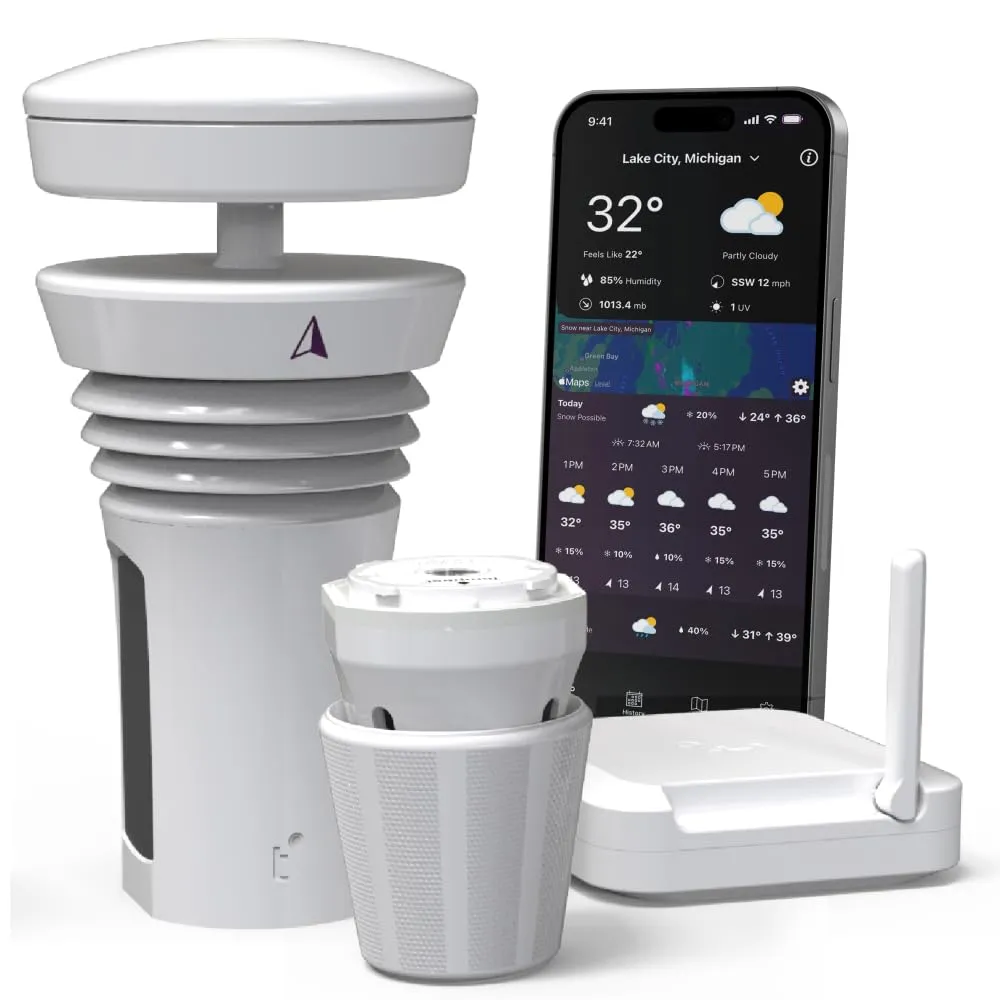
WeatherFlow Tempest
No moving parts, lightning detection and an AI-assisted local forecast. App only.
Check price on Amazon Read our review →
Davis Vantage Pro2
Professional-grade sensors, a separate anemometer and spare parts for decades.
Check price on Amazon Read our review →
Ecowitt Wittboy Pro HP2564
Ultrasonic wind and haptic rain, plus a 7-inch touchscreen and many upload options.
Check price on Amazon Read our review →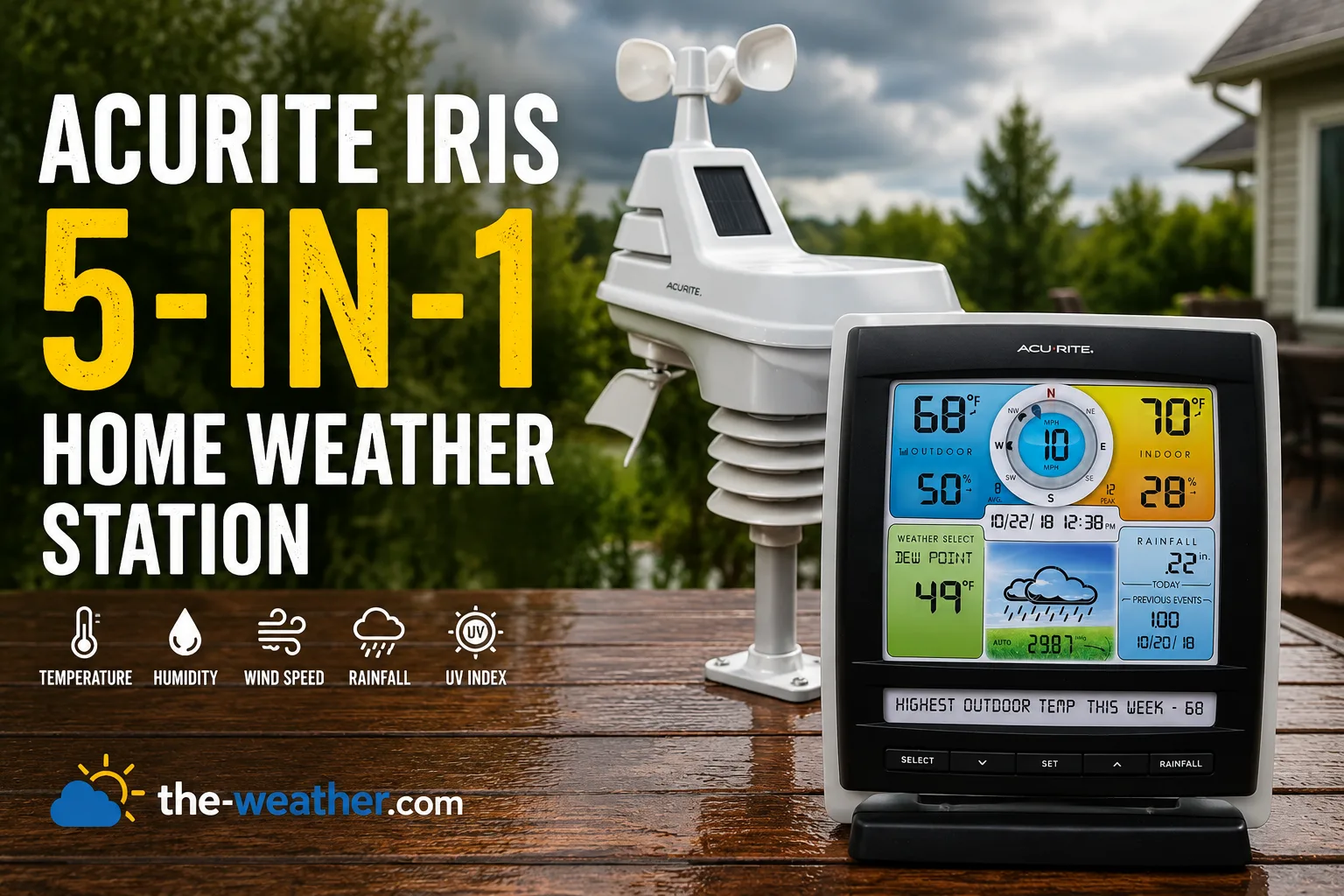
AcuRite Iris 5-in-1
All the essentials with a color display and Wi-Fi app, upgradable to a better sensor.
Check price on Amazon Read our review →
La Crosse S77925
A clear color display with a 24-hour pressure graph and atomic clock. No app needed.
Check price on Amazon Read our review →Side-by-Side Comparison
| Station | Wind | Rain | Display | Wi-Fi / app | Best for |
|---|---|---|---|---|---|
| Ambient WS-2902C | Cups and vane | Tipping bucket | Color console | Yes, 2.4 GHz; Weather Underground built in | Most homes |
| WeatherFlow Tempest | Ultrasonic | Haptic (no bucket) | None, app only | Yes, via hub; no subscription | Smart-home users |
| Davis Vantage Pro2 | Cups and vane, separate mast | Tipping bucket | Console | With WeatherLink Live (separate) | Accuracy and longevity |
| Ecowitt Wittboy Pro HP2564 | Ultrasonic | Haptic (no bucket) | 7-inch touchscreen | Yes; many weather networks | Low maintenance with a display |
| AcuRite Iris 5-in-1 | Cups and vane | Tipping bucket | Color display | Yes, 2.4 GHz; My AcuRite app | Value |
| La Crosse S77925 | No (rain sensor optional) | Optional add-on | Color display | No | Simple, no setup |
1. Ambient Weather WS-2902C: Best Overall
The WS-2902C is the station we point most people to. One outdoor array measures temperature, humidity, rain, wind speed and direction, UV and solar radiation; the color console adds indoor readings and pressure. It uploads directly to Weather Underground and AmbientWeather.net without a separate hub, and extra temperature, humidity and air-quality sensors connect to the same console.
- Complete sensor set including a real UV sensor
- Direct Weather Underground upload and smart-home links
- Widely used, so help and spare parts are easy to find
- 2.4 GHz Wi-Fi only, and the console needs its AC adapter to stay online
- Cup anemometer is less responsive in very light wind and can freeze in ice storms
Check the WS-2902C on Amazon Full WS-2902C review →
2. WeatherFlow Tempest: Smartest All-in-One
The Tempest has no spinning cups and no rain bucket: wind is measured with ultrasound and rain by the impact of drops. It also detects lightning and combines your data with forecast models for a local forecast that WeatherFlow backs with a written forecast guarantee for the first 8 months. There is no screen: you read everything in the app, and there is no subscription.
- No moving parts and almost no maintenance
- Lightning detection and smart-home integration included
- Quick to install: one unit on one pole
- Haptic rain sensor tends to under-read heavy downpours
- Solar-only power can struggle in short winter days at high latitudes
- No display or add-on sensors
Check the Tempest on Amazon Full Tempest review →
3. Davis Vantage Pro2: Most Accurate
The Vantage Pro2 is the professional choice. The anemometer sits on its own mast, so you can mount it high in clean wind while the temperature sensor stays at the right height. A fan-aspirated radiation shield is available for the most accurate temperature, readings update every 2.5 seconds, and Davis sells almost every part separately, so a station can keep running for decades.
- Separate anemometer for correct wind placement
- Optional fan-aspirated shield; replaceable parts
- Popular with serious observers and CWOP contributors
- Highest price, and Wi-Fi needs a WeatherLink Live hub or bundle
- More installation work than an all-in-one sensor
Check the Vantage Pro2 on Amazon Full Vantage Pro2 review →
Prefer something more compact from Davis? See the Davis Vantage Vue and our Vantage Vue vs Pro2 comparison.
4. Ecowitt Wittboy Pro HP2564: No Moving Parts, With a Display
The Wittboy Pro pairs a WS90 outdoor sensor with ultrasonic wind and a haptic rain gauge with a 7-inch touchscreen console. It measures wind, rain, temperature, humidity, UV and solar radiation and can upload to Weather Underground, WeatherCloud, WOW and Ecowitt's own platform. Ecowitt's wide range of add-on sensors makes it a good base for growing a system.
- No cups or bucket to wear out or clog
- Large touchscreen plus Wi-Fi uploads
- Many optional sensors (soil, air quality, extra rooms)
- Haptic rain gauges in general can under-read very heavy rain
- Wi-Fi setup is more involved than with simpler stations
Check the Wittboy Pro on Amazon Full Wittboy Pro review →
5. AcuRite Iris 5-in-1: Best Value
The Iris 5-in-1 covers the essentials: temperature, humidity, wind speed and direction and rainfall from one outdoor sensor, plus pressure on the color display. The Wi-Fi version sends data to the My AcuRite app and Weather Underground. If you want better temperature accuracy later, the Iris PRO+ sensor upgrade fits the same system.
- All core measurements at a lower price
- Clear color display with auto-dim
- Upgrade path to the PRO+ sensor
- 2.4 GHz Wi-Fi only; use lithium batteries in the sensor in cold climates
- Fewer sensors than the WS-2902C (no UV or solar)
Check the AcuRite Iris on Amazon Full Iris review →
6. La Crosse S77925: Best Without Wi-Fi
Not everyone wants an app. The S77925 is a color weather station that works straight out of the box: indoor and outdoor temperature and humidity, an atomic clock, moon phase and a 24-hour barometric pressure graph that shows where the weather is heading. A rain sensor and extra temperature sensors are available as add-ons.
- No Wi-Fi, account or app needed
- 24-hour pressure history: a simple, useful forecast tool
- Easy for anyone to read
- No wind sensor; rain only with the optional add-on
- Adding extra sensors replaces the pressure display
Check the S77925 on Amazon Full S77925 review →
Which One Should You Buy?
Want to understand the differences first? Our guide on how to choose a home weather station explains sensors, connectivity and durability, and how to install a home weather station shows where to mount each sensor for accurate readings.
Frequently Asked Questions
Do I need Wi-Fi for a home weather station?
No. Stations such as the La Crosse S77925 work with only the display. Wi-Fi adds remote viewing, alerts, long-term history and sharing with networks like Weather Underground.
Are ultrasonic wind sensors better than cups?
They have no moving parts, so nothing wears out or freezes solid, and they respond quickly. Good cup anemometers are still accurate and cheaper; placement high and in the open matters more than the type.
Do any of these need a subscription?
None of the six requires a subscription for basic data and app use. Some brands offer optional paid plans for extended history or extra features.
Where should I put my weather station?
Temperature and humidity in the shade over grass at about 1.25 to 2 m (4 to 6.5 ft), the wind sensor as high and open as safely possible, and the rain gauge level and away from trees and roofs.