
As an Amazon Associate, I earn from qualifying purchases.
In this article 8 sections
"Super typhoon" sounds like a marketing word, the kind of thing you would put on a vacuum cleaner. It is not. It is a real forecasting label for the strongest storms in the western Pacific, and when you hear it, it means winds that would rank near the very top of the hurricane scale. Here is exactly where the line is, who draws it, and how it compares to a Category 4 or 5 hurricane.
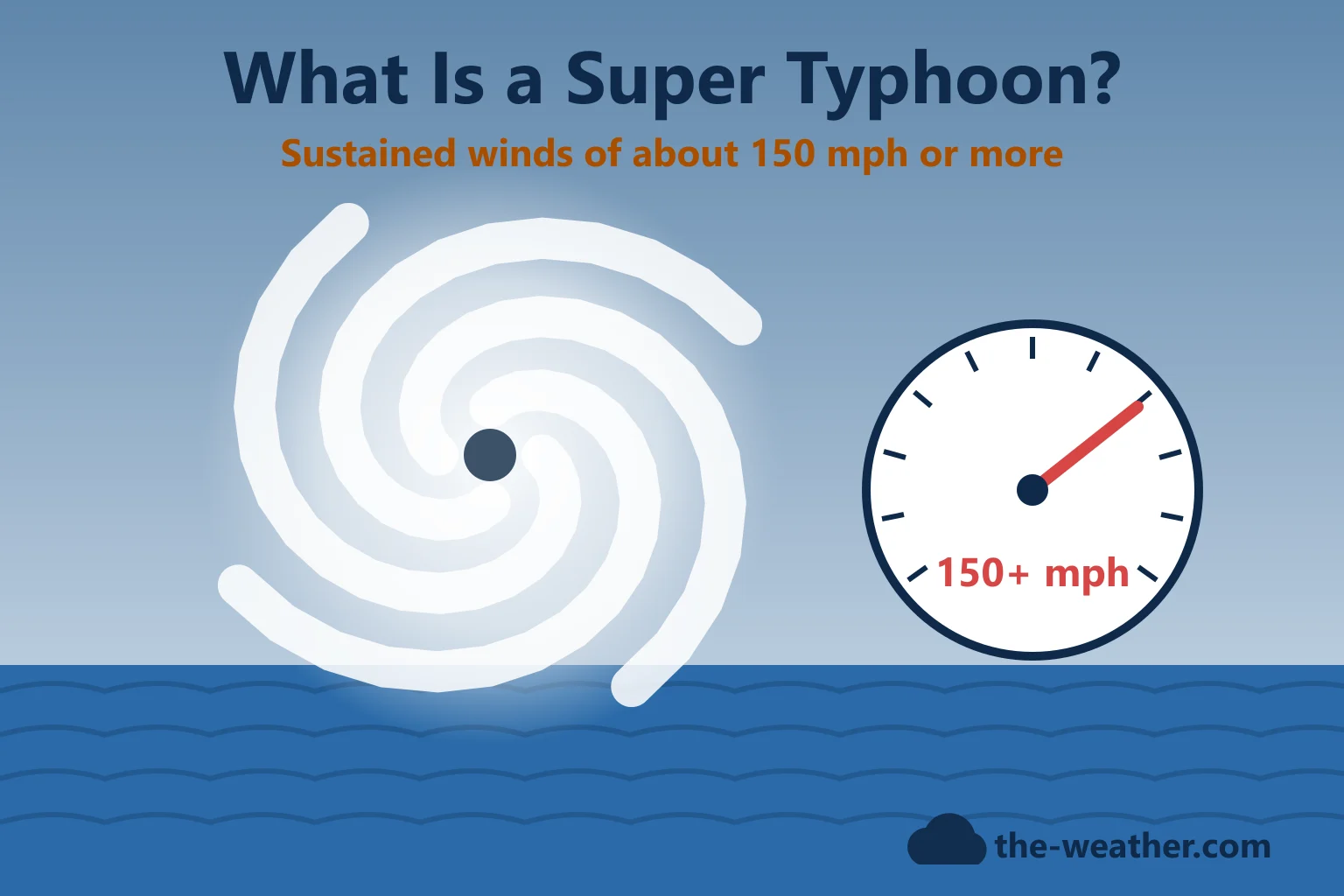
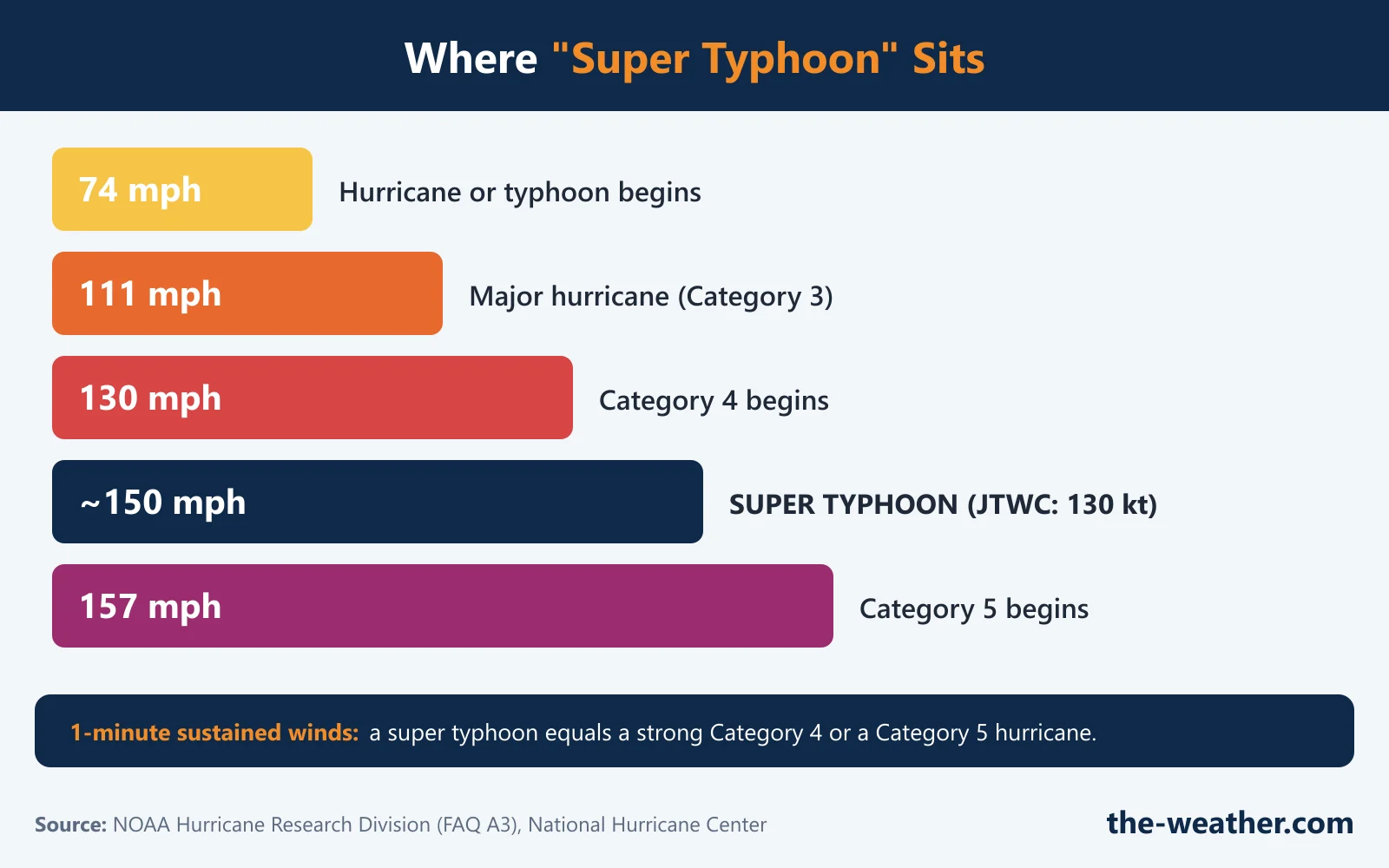
Short answer: a super typhoon is a typhoon with maximum sustained winds of about 150 mph or more. The term comes from the U.S. Joint Typhoon Warning Center, which uses it for typhoons with 1-minute sustained winds of at least 130 knots (150 mph). NOAA calls that the equivalent of a strong Category 4 or a Category 5 hurricane (NOAA Hurricane Research Division, archived FAQ entry). There is no "super hurricane" on the U.S. scale; the top label there is Category 5. In the Philippines the line is lower: the weather service PAGASA calls a storm a super typhoon when its maximum wind speed exceeds 185 km/h (100 knots, about 115 mph) (PAGASA).
Editorial Research
- Written by
- Lena Thornton, Weather Station Analyst & CWOP Contributor
- Based on
- NOAA Hurricane Research Division (FAQ entry on super typhoons and its tropical cyclone FAQ), the National Hurricane Center's Saffir-Simpson Hurricane Wind Scale page and glossary, NOAA's National Ocean Service and PAGASA's tropical cyclone classification
- Research last verified
- October 20, 2026
The Exact Definition, and Two Ways It Is Worded
Two official U.S. sources describe the same line in slightly different words:
- NOAA's Hurricane Research Division (archived FAQ entry A3): "super-typhoon" is a term used by the Joint Typhoon Warning Center for typhoons with maximum sustained 1-minute surface winds of at least 130 knots (65 m/s, 150 mph).
- The National Hurricane Center: on its wind scale page it notes that in the western North Pacific, "super typhoon" is used for tropical cyclones with sustained winds exceeding 150 mph.
The Philippine definition
If you follow a storm in Philippine news, you will hear PAGASA's labels. PAGASA defines a super typhoon as "a tropical cyclone with maximum wind speed exceeding 185 kph or more than 100 knots" (PAGASA). That is about 115 mph, well below the U.S. line of about 150 mph. So the same storm can be a super typhoon in Manila and a "typhoon" in a U.S. report, and neither is wrong: they use different scales. Always check which agency a number comes from.
NOAA's current hurricane FAQ sums it up more simply: a super typhoon "reaches category 4 or 5 on the Saffir-Simpson Scale". For everyday use the message is the same: around 150 mph of steady wind, not gusts. The "1-minute" part matters. It means the wind is averaged over one minute, the U.S. standard for sustained winds according to the National Hurricane Center glossary. Gusts in such a storm are higher still.
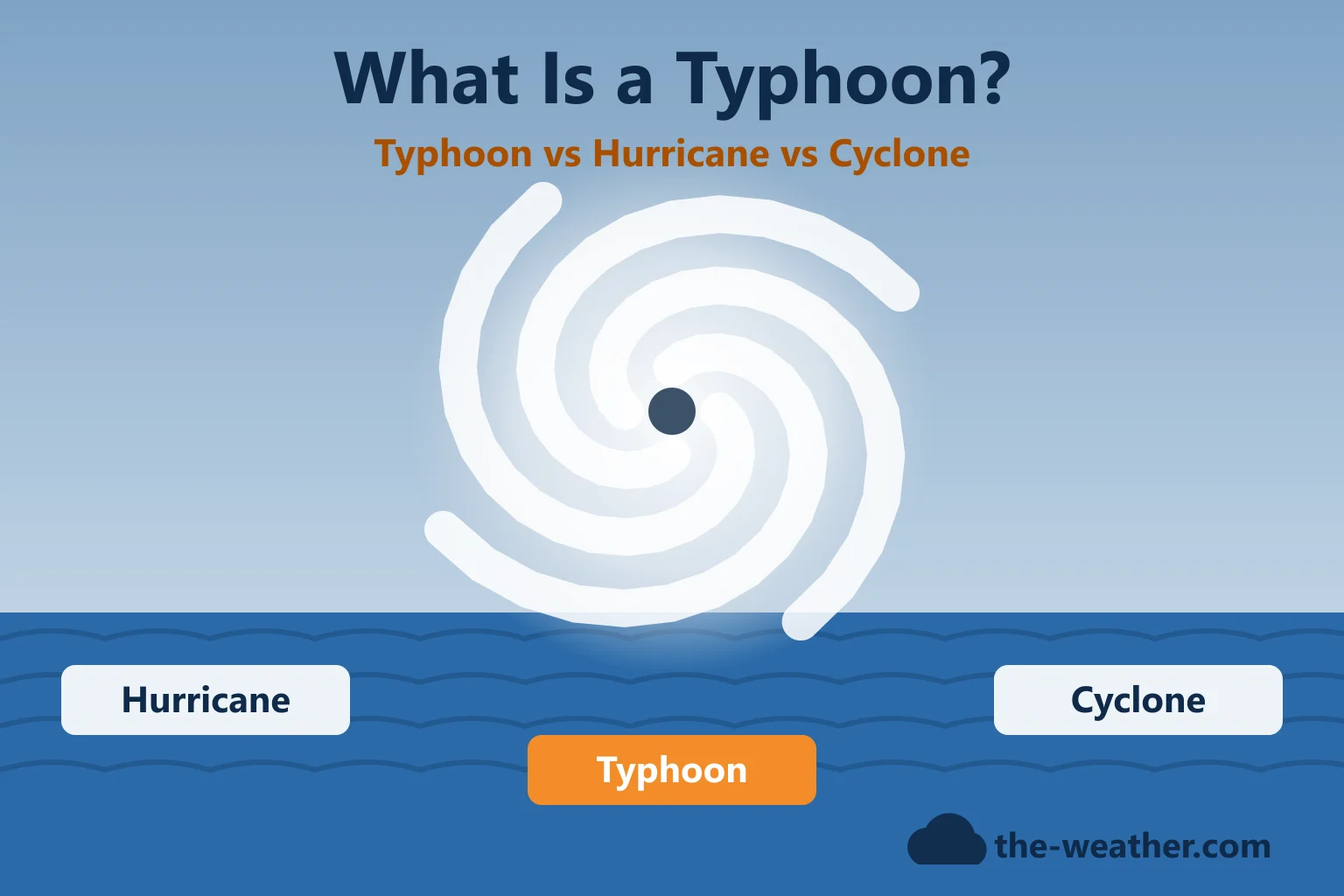
A typhoon itself starts at 74 mph, just like a hurricane (NOAA). So a super typhoon has roughly double the wind speed of a "starter" typhoon. If you are new to the word typhoon, our main page What Is a Typhoon? explains the basics.
Super Typhoon vs Hurricane Categories
| Label | Wind | Used by |
|---|---|---|
| Hurricane or typhoon | 74 mph or more | NOAA, for all oceans (name depends on the ocean) |
| Major hurricane (Category 3 and up) | 111 mph or more | National Hurricane Center |
| Category 4 | 130 to 156 mph | Saffir-Simpson scale |
| Super typhoon | 130 knots (150 mph) or more | Joint Typhoon Warning Center (western Pacific) |
| Category 5 | 157 mph or more | Saffir-Simpson scale |
| Super typhoon (Philippines) | More than 185 km/h (100 knots, about 115 mph) | PAGASA |
The U.S. numbers are 1-minute sustained winds. Sources: NHC Saffir-Simpson scale, NOAA HRD FAQ A3, PAGASA.
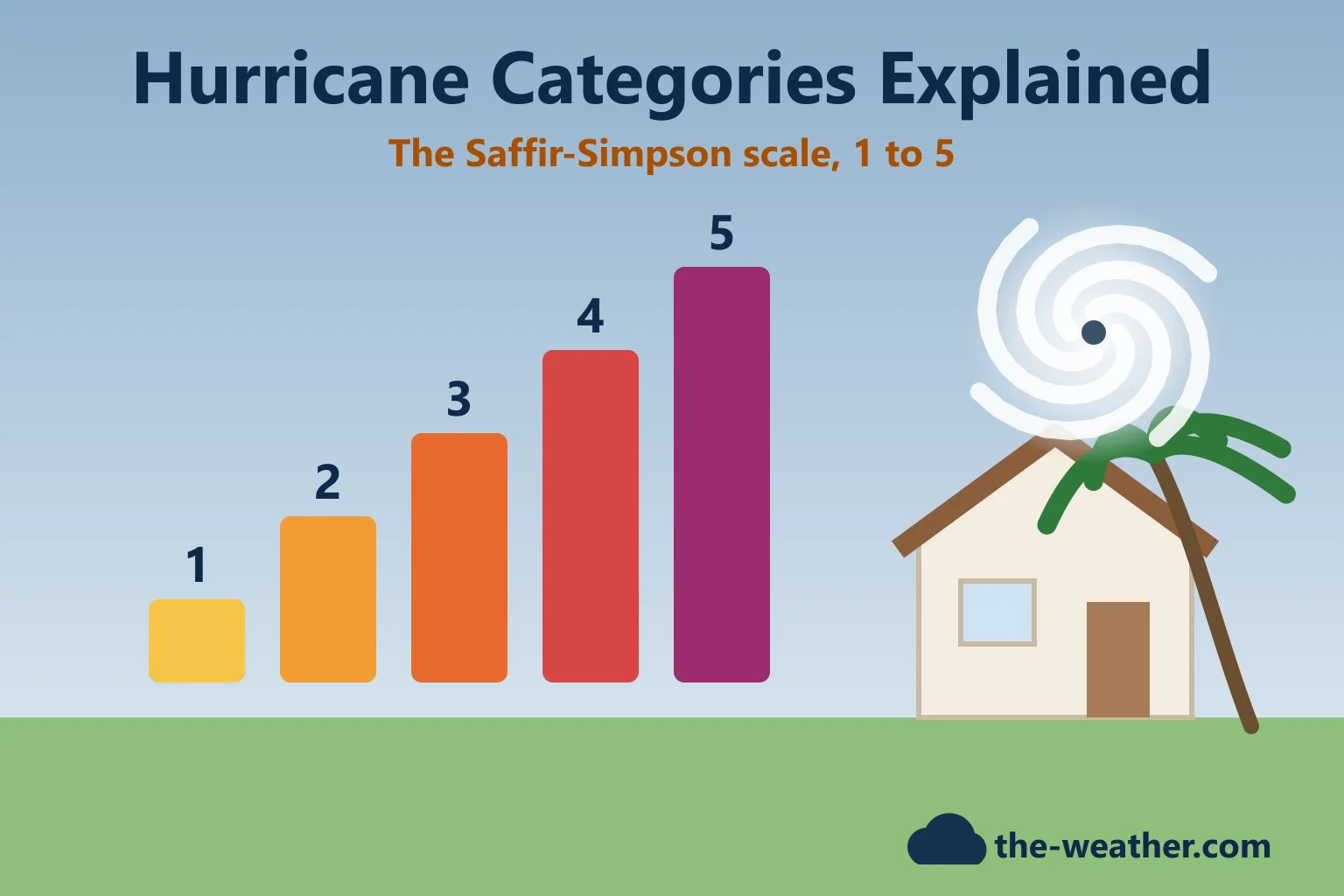
So every super typhoon on the U.S. scale is at least a high-end Category 4 in hurricane terms, and the strongest reach Category 5 strength. A Category 4 at 135 mph is not a super typhoon; a typhoon at 155 mph is. If the 1 to 5 scale itself is new to you, see Hurricane Categories Explained.
What That Wind Speed Means on the Ground
The National Hurricane Center's description of Category 4 and 5 winds gives a feel for it. At Category 4, well-built framed homes can lose most of the roof structure and some exterior walls, most trees are snapped or uprooted, and power can be out for weeks to possibly months. At Category 5, a high percentage of framed homes is destroyed, and most of the area can be uninhabitable for weeks or months (NHC).
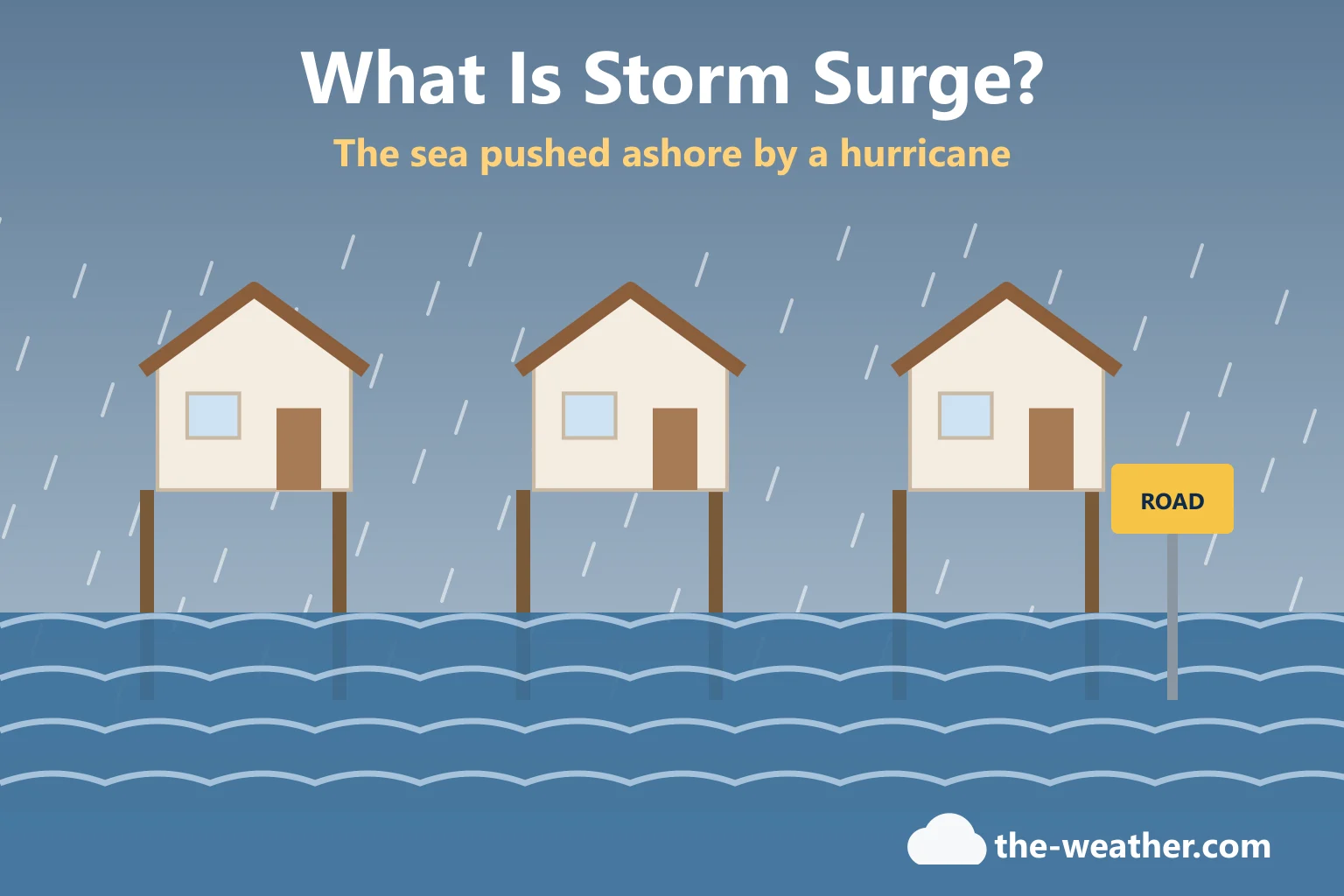
One thing the label does not tell you: the water. The NHC stresses that its wind scale does not take storm surge, rainfall flooding or tornadoes into account, and that storms of any category can produce deadly surge and floods. A weaker typhoon that stalls over land can still cause terrible flooding. More on the water side in What Is Storm Surge?
Super Typhoons and U.S. Territories
Guam and the Northern Mariana Islands sit in the typhoon zone, so super typhoons are not just a headline for them. NOAA's Hurricane Research Division lists Super Typhoon Omar (1992) and Super Typhoon Paka (1997) among the storms that caused major damage on Guam.
In the news (October 2026): Typhoon Champi passed just south of Guam over the weekend of October 17-18, 2026, and was then reported as a super typhoon (Fox Weather, RNZ). We will update or remove this box.
For any live storm, the National Weather Service office in Guam is the official local source.
How Do Forecasters Know a Storm Hit 150 mph?
Out over the open Pacific there are no weather stations under the eyewall. NOAA's Hurricane Research Division explains that forecasters estimate a storm's strength from satellite pictures using the Dvorak technique, a method developed in the early 1970s that matches cloud patterns and temperatures to typical intensities. Its history timeline also notes that the Air Force disbanded its Pacific typhoon reconnaissance squadrons in 1987. That is one more reason to treat a single wind number as a best estimate and to follow the official advisories, not a screenshot on social media.
Super Typhoon FAQ
Is a super typhoon the same as a Category 5?
Not exactly. A super typhoon starts at about 150 mph sustained winds, while Category 5 starts at 157 mph. NOAA says a super typhoon is the equivalent of a strong Category 4 or a Category 5 hurricane.
Is there such a thing as a super hurricane?
Not as an official label. The National Hurricane Center rates hurricanes from Category 1 to 5 and calls Category 3 and up "major hurricanes". NOAA notes that "intense hurricane" is an unofficial term that means the same as major hurricane.
Who decides when a typhoon becomes a super typhoon?
In the U.S. system, the Joint Typhoon Warning Center (the military forecast center for the western Pacific) draws the line at about 150 mph. In the Philippines, the weather service PAGASA uses its own line: a maximum wind speed above 185 km/h (about 115 mph). If two news reports give different numbers for the same storm, check which agency each one quotes and whether it is a sustained wind or a gust.
How strong is a super typhoon?
On the U.S. scale, its 1-minute sustained winds are about 150 mph (130 knots) or more, according to NOAA. PAGASA in the Philippines uses a lower line of more than 185 km/h (about 115 mph). Gusts are higher. On the ground that matches the damage the National Hurricane Center describes for a strong Category 4 or a Category 5 hurricane.
Update Log
- October 20, 2026: First version. Thresholds compared between the NHC wind scale page, NOAA's current and archived FAQ and PAGASA's classification.
Sources
- NOAA Hurricane Research Division: What is a super-typhoon? What is a major hurricane? (archived FAQ entry A3)
- National Hurricane Center: Saffir-Simpson Hurricane Wind Scale
- National Hurricane Center: Glossary
- NOAA Hurricane Research Division: Tropical Cyclone FAQ (Dvorak technique, history timeline)
- NOAA National Ocean Service: hurricane vs typhoon
- PAGASA: About Tropical Cyclones (Philippine intensity classes)
- News box: Fox Weather and RNZ on Typhoon Champi
More in this series: What is a typhoon? · Hurricane categories · Typhoon season · How hurricanes form · Rapid intensification