As an Amazon Associate, I earn from qualifying purchases.
In this article 13 sections
- How Hail Forms Step by Step
- Storm Cross-Section: How a Hailstorm Works
- Hailstone Sizes, Fall Speeds, and Damage
- Why Does It Hail in Summer?
- Hail vs Snow vs Sleet: What Is the Difference?
- Where Hail Is Most Common: Hail Alley
- Why Does It Hail Before a Tornado?
- Protecting Your Car from Hail
- Can Hail Kill?
- Is Hail Getting Worse?
- Video: How Hail Forms
- Frequently Asked Questions
- Understanding Hail and What to Do About It
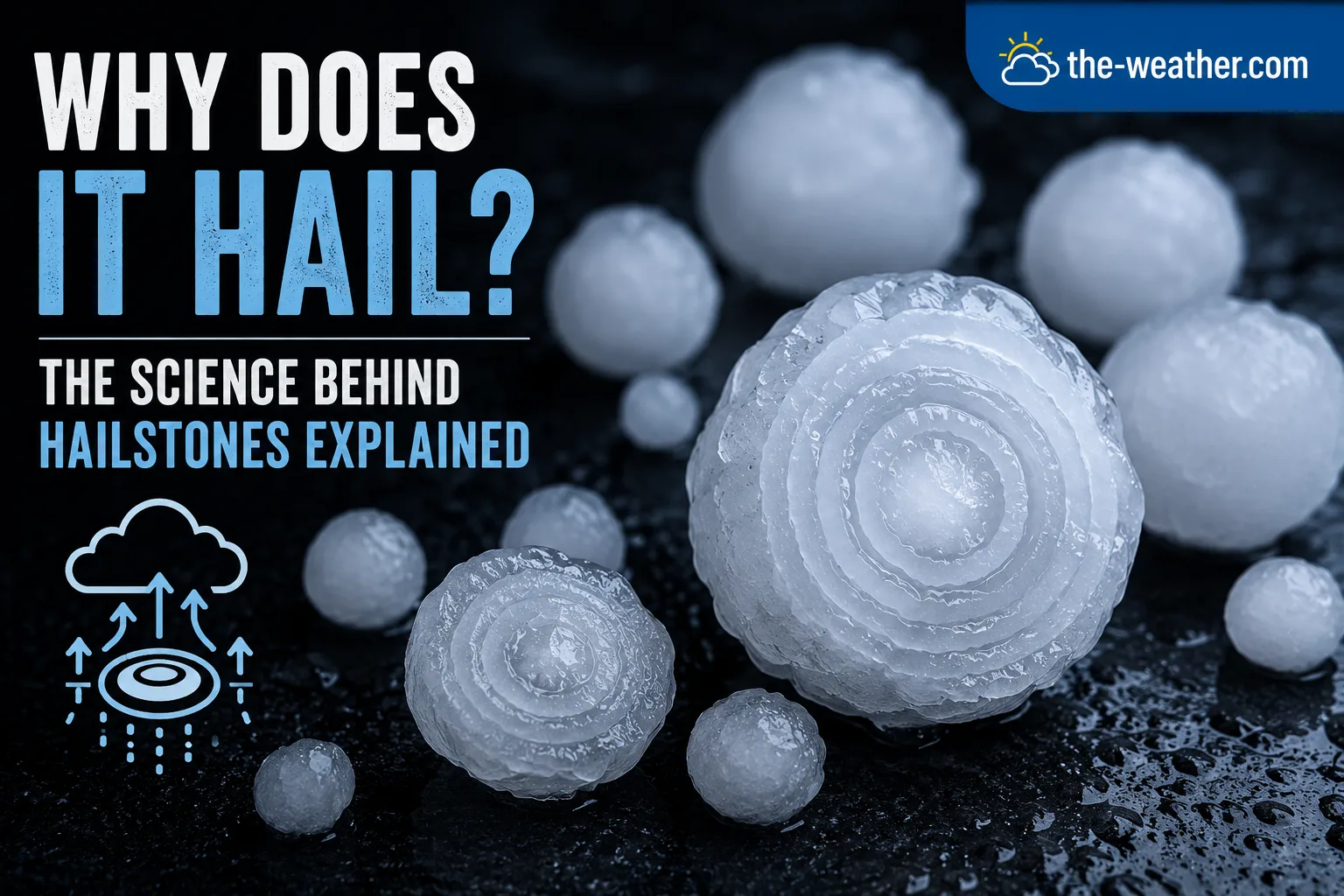
Hail forms inside thunderstorms when powerful updrafts (rising columns of warm, moist air) that carry water droplets high into the freezing upper atmosphere. At those altitudes, temperatures drop far below 32°F, but the droplets remain liquid in a supercooled state. When they collide with ice particles or dust, they freeze instantly. Those frozen embryos are then swept back up and down repeatedly, accumulating new layers of ice with each cycle, until the hailstone grows too heavy for the updraft to support and falls to the ground.
What makes hail distinct from sleet or freezing rain is this repeated cycling process inside a strong thunderstorm. Sleet falls through a shallow freezing layer once. Hail may cycle dozens of times through alternating wet and dry growth zones, which is why cutting a large hailstone in half reveals concentric rings, much like an onion, each representing a separate growth cycle.
A hailstone can travel up and down inside a thunderstorm several times before finally falling to the ground. Each trip through the freezing zone adds another layer of ice. The number of rings visible in a cross-section tells you how many cycles it completed. The largest hailstones make the most journeys.

Lena Thornton, Weather Station Analyst & CWOP Contributor
Meteorological data sourced from NOAA and NWS publications
At a Glance
How Hail Forms Step by Step
Hail requires a specific sequence of atmospheric conditions inside a severe thunderstorm. All five stages below must occur for a hailstone to reach the ground. The strength of the updraft ultimately determines both whether hail forms and how large it grows.
Updraft develops inside a cumulonimbus cloud
Warm, moist surface air rises rapidly during a thunderstorm, creating powerful vertical air currents. These updrafts can exceed 100 mph in the most severe supercell thunderstorms. Without a strong updraft, hailstones cannot be carried high enough into the atmosphere to grow.
Water droplets become supercooled
The updraft carries liquid water droplets high into the storm where temperatures drop well below 32°F (0°C). In the right conditions, these droplets remain liquid in a state called supercooling. Supercooled water can persist down to around -40°F before freezing spontaneously.
Freezing begins on an ice nucleus
When a supercooled droplet collides with a small ice particle, dust grain, or other aerosol, it freezes instantly. This forms the embryo, the tiny seed around which the hailstone will grow. Without an ice nucleus, supercooled droplets can remain liquid much longer.
Hailstone grows by accumulating layers
The frozen embryo is swept up and down within the storm by the updraft, repeatedly colliding with more supercooled droplets that freeze on contact. Each pass through a high-moisture zone adds a new layer of ice. Opaque layers form in drier, colder regions of the cloud. Clear layers form in warmer, wetter zones, creating the visible rings visible in a cross-section.
Falls when too heavy for the updraft
Once the hailstone accumulates enough mass, gravity overcomes the updraft force and the stone falls toward the ground. Larger storms with stronger updrafts produce larger hailstones because they can suspend the growing stone for longer. A golf ball-sized hailstone requires an updraft of approximately 56 mph to remain airborne.
Storm Cross-Section: How a Hailstorm Works
Inside a cumulonimbus thunderstorm cloud, hailstones form and grow through a vertical cycle driven by updrafts and downdrafts. The diagram below shows the key zones where each stage of hail formation occurs.
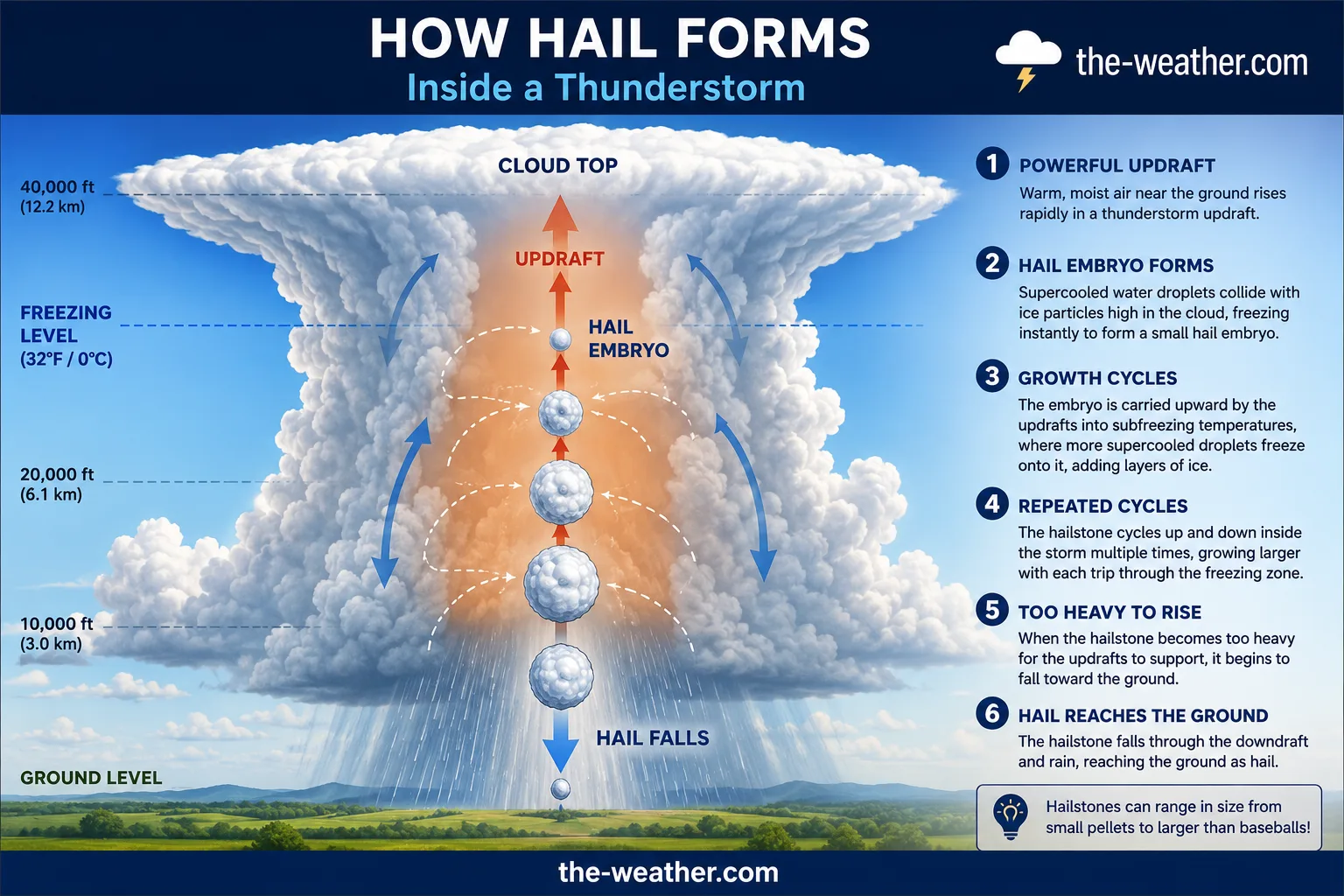
Figure 1. Hailstones grow as powerful updrafts repeatedly lift them through freezing layers inside a cumulonimbus thunderstorm.
The opaque and clear layers visible inside a cut hailstone correspond to dry and wet growth zones inside the storm. The more cycles the stone completes, the more rings and the larger the final size.

Figure 2. From updraft to impact: the five stages of hail formation inside a severe thunderstorm.
Hailstone Sizes, Fall Speeds, and Damage
Hailstone size is the primary factor in determining damage potential. The NWS uses common object comparisons to communicate hail size to the public during severe weather statements. Below 0.75 inches, hail is generally too small to cause significant structural damage, though it can still injure people and damage plants.
Hailstone Size Scale
The US record hailstone fell in Vivian, South Dakota on July 23, 2010. It measured 8 inches in diameter and weighed nearly 2 pounds, roughly the size of a volleyball. It required updraft speeds estimated at over 150 mph to reach that size before falling.
Why Does It Hail in Summer?
Hail is counterintuitive for many people because it is a cold-weather phenomenon (frozen water) yet it most commonly occurs during warm spring and summer months. The reason is updraft strength, not surface temperature.
Why summer produces the most hail
Strong updrafts require a large temperature difference between the warm surface and the cold upper atmosphere. This instability is greatest in spring and summer when surface temperatures are high but the upper atmosphere remains cold.
Summer thunderstorms can generate updrafts strong enough to suspend growing hailstones for long periods, allowing them to accumulate more layers and reach larger sizes. The surface air temperature at the ground does not determine whether hail reaches the ground. It can be 95°F at the surface while hail falls.
Why hail melts before reaching the ground in some storms
Smaller hailstones falling through warm summer air often melt partially or completely before reaching the surface, arriving as large raindrops. Larger hailstones fall fast enough to reach the ground before melting.
This is why you sometimes see hail mixed with heavy rain. The larger stones survive the descent while smaller ones melt. It also explains why hail events are often brief: once the storm's updraft weakens, the remaining suspended hailstones fall all at once.
Hail vs Snow vs Sleet: What Is the Difference?
| Type | How It Forms | Season | Requires Thunderstorm? |
|---|---|---|---|
| Hail | Supercooled droplets cycling through thunderstorm updrafts, accumulating ice layers | Spring / Summer | Yes, cumulonimbus required |
| Snow | Water vapor freezes directly into ice crystals at high altitude and falls slowly | Winter | No |
| Sleet | Rain falls through a shallow freezing layer and freezes before reaching the ground | Winter | No |
| Freezing rain | Rain falls through a freezing layer but freezes on contact with cold surfaces rather than in the air | Winter | No |
| Graupel | Snow crystals coated by supercooled water droplets, softer than hail and forms at lower altitudes | Winter / Spring | No, but needs convection |
Where Hail Is Most Common: Hail Alley
The United States experiences more hail damage than any other country due to the unique geography that allows warm, moist Gulf air to clash with cold continental air masses over the Great Plains. This collision zone consistently produces the severe thunderstorms needed for large hail.
| State / Region | Why High Hail Frequency | Peak Season |
|---|---|---|
| Colorado | High elevation shortens fall distance, so hail survives the descent. Most hail days per year in the US. | May – August |
| Kansas | Central position in Hail Alley, frequent supercell development along dry line | April – June |
| Nebraska | Strong wind shear supporting supercell organization, flat terrain allows storms to mature | May – July |
| Wyoming | High elevation, Rocky Mountain storm interactions, consistent severe weather corridor | June – August |
| Texas | Largest US exposure by area and population. Highest total insured hail losses nationally. | March – June |
Why Does It Hail Before a Tornado?
Large hail and tornadoes do not always occur together, but they frequently share the same parent storm: the supercell thunderstorm. Understanding the structure of a supercell explains why encountering large hail during a storm is a serious warning sign.
In a supercell, the main updraft and the hail-producing region are spatially separated from the tornado formation zone. The hail core typically falls on the northern and eastern flanks of the storm, while the tornado most commonly forms on the southern flank near the wall cloud. If you are driving through heavy rain and suddenly encounter large hail, you may be entering the hail core on the north side of a supercell, with the tornado potential on the other side of the storm.
Large hail during a storm is not a reason to stop and watch. Golf ball-sized or larger hail indicates a severe supercell is overhead. Seek sturdy shelter immediately. Do not remain in a vehicle, and do not stand outside to observe. A tornado may be present on another flank of the same storm.
Protecting Your Car from Hail
Vehicle damage is the most common hail insurance claim in the United States. Even quarter-sized hail can dent car hoods and roofs. The best protection is covered parking: a garage or carport eliminates the risk entirely. When covered parking is not available, these options reduce damage.
Car Protection Options, Ranked by Effectiveness
Can Hail Kill?
Yes: Large Hail Is Life-Threatening
Hail fatalities are rare in the United States but have occurred. Baseball-sized hailstones fall at speeds exceeding 100 mph and carry enough force to fracture skulls and cause fatal head trauma. Several hail-related deaths have been recorded in the US, typically when people were caught outdoors during severe storms with no shelter available.
Globally, hail fatalities are more common in parts of South Asia and China where large populations work outdoors in agriculture during severe storm seasons. A single 1987 hailstorm in Bangladesh is estimated to have killed approximately 92 people.
Injury is far more common than fatality. Golf ball-sized hail causes bruising and lacerations. Eye injuries from hail are a significant risk for anyone outdoors without eye protection during a hailstorm. Hail also shatters car windshields, which can cause secondary injuries from flying glass.
What to do: When hail begins, move indoors to a sturdy building immediately. If you are in a vehicle, pull over and stay inside. Do not exit. Protect your head with your arms if caught in the open. A NOAA weather radio with S.A.M.E. alerts gives advance warning before hail-producing storms arrive.
Is Hail Getting Worse?
Annual insured hail losses in the United States have increased significantly over recent decades, rising from under $1 billion per year in the 1980s to an average of $10–15 billion in recent years. Whether this reflects a true increase in hail frequency or severity is a question researchers are actively studying.
The primary driver of rising losses is clear: more people and more property in hail-prone areas. As suburban development has expanded into the Front Range of Colorado, the Texas Hill Country, and other high-frequency hail zones, the same storm that previously hit farmland now strikes densely developed suburbs. A single supercell crossing the Dallas-Fort Worth metropolitan area can cause billions in insured losses in a matter of hours.
The climate signal is less settled. Some research suggests that climate change may be shifting the geographic distribution of severe hail and potentially increasing the intensity of hail-producing storms in certain regions. Other studies find no clear long-term trend in hail frequency at the national level. The detection record is also complicated by improvements in radar technology and hail reporting networks, which have made smaller events more visible in the data over time.
Monitoring severe weather in real time, including hail threats, is one of the core functions of a NOAA weather radio. Severe thunderstorm warnings that include hail size information are broadcast immediately on all seven NOAA weather channels when a storm is confirmed by radar or spotter reports.
Video: How Hail Forms
Frequently Asked Questions
What is the main cause of hail?
Hail is caused by powerful updrafts inside thunderstorms that carry water droplets high into the freezing upper atmosphere. When supercooled droplets collide with ice particles, they freeze and begin accumulating layers of ice. The hailstone grows until it becomes too heavy for the updraft to support and falls to the ground.
Why does it hail in summer and not winter?
Hail is most common in spring and summer because those seasons produce the strongest thunderstorm updrafts. Strong updrafts require large temperature contrasts between the warm surface and cold upper atmosphere, conditions most prevalent during warm-season convective storms.
Why does it hail instead of snow?
Hail and snow form through completely different processes. Snow forms when water vapor freezes directly into ice crystals at high altitude. Hail forms when liquid water droplets are repeatedly cycled through freezing zones by thunderstorm updrafts, accumulating layers. Hail requires a strong thunderstorm; snow does not.
Can it hail at night?
Yes. Hail can occur at any hour because it depends on thunderstorm updraft strength, not sunlight. Nocturnal thunderstorms, particularly common in the Great Plains, can produce significant hail after dark.
Which state has the worst hail?
Colorado, Kansas, Nebraska, Wyoming, and Texas form Hail Alley, the region with the highest frequency of large hail in the US. Colorado leads in hail days per year. Texas leads in total insured hail losses due to its large population and property exposure.
Does hail hurt if it hits you?
Yes. Even small hailstones fall at significant speed and can cause bruising or cuts. Golf ball-sized hail falls at speeds exceeding 80 mph and can cause serious injury. Baseball-sized hail has caused fatalities. Seek shelter in a sturdy building immediately when hail begins.
Why does it hail before a tornado?
Large hail frequently accompanies the same supercell thunderstorms that produce tornadoes. In a supercell, the hail core typically falls on the northern and eastern flanks while the tornado forms on the southern flank. Encountering large hail is a signal you are near a severe supercell. Seek shelter immediately.
Understanding Hail and What to Do About It
Hail forms when strong thunderstorm updrafts carry water droplets into freezing upper air and cycles them through ice-building zones until gravity wins. That process, driven entirely by updraft speed, explains why hail is a warm-season phenomenon, why summer storms can produce ice while the surface temperature is 90°F, and why the same region that produces tornadoes also produces the largest hailstones.
Understanding how hail forms helps explain why severe thunderstorms can produce destructive ice even on hot summer days. By recognizing the conditions that create hail, monitoring severe weather alerts from a NOAA weather radio, and knowing the size thresholds that cause serious damage, you can better protect yourself, your family, and your property before a storm arrives.
If tracking weather conditions at your home is important to you, a home weather station gives you real-time barometric pressure data that can indicate approaching severe weather before it arrives. See our guides on weather instruments, barometers, and hygrometers to build out your monitoring setup.