
As an Amazon Associate, I earn from qualifying purchases.
In this article 8 sections
The storm warning is out, and somewhere in the back of your mind a question is waiting: what happens if the power goes? You do not need to keep the whole house running. You need the right few things, for the hours that matter. This page is the plan in four steps, with a link to the math for each device.
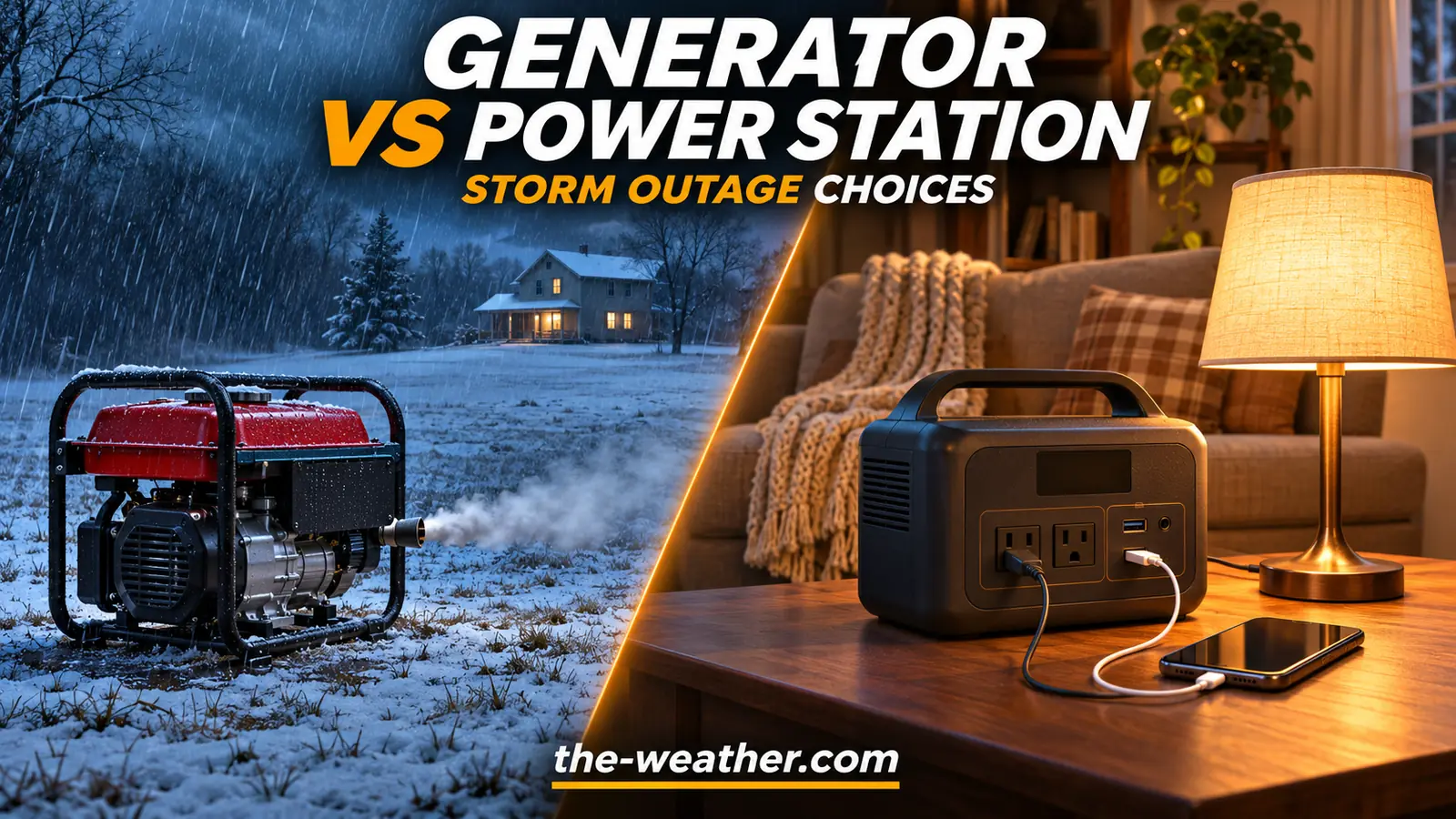
Short answer: start with what works for free: phone alerts come from the cell tower, a weather radio runs on its own batteries, and a closed fridge keeps food safe for about 4 hours (FDA). Then list what must keep running (fridge, CPAP, sump pump, Wi-Fi), and use our size calculator to see the watts and energy you need. For a short outage and a few essentials, a battery power station fits, inside the house. For days without power or big loads, a generator outside, at least 20 feet from the house (CPSC), connected through a transfer switch by a licensed electrician.
Editorial Research
- Written by
- Lena Thornton, Weather Station Analyst & CWOP Contributor
- Based on
- FDA and CDC food safety guidance, the National Weather Service on Wireless Emergency Alerts, the CPSC on generator safety, the Department of Energy's Building America Solution Center, and the manuals used on our device pages. We did not test any products. Every runtime is our own calculation, shown on the device pages.
- Research last verified
- November 27, 2026
Step 1: what keeps working without any backup
Some of the most useful things in an outage cost nothing extra:
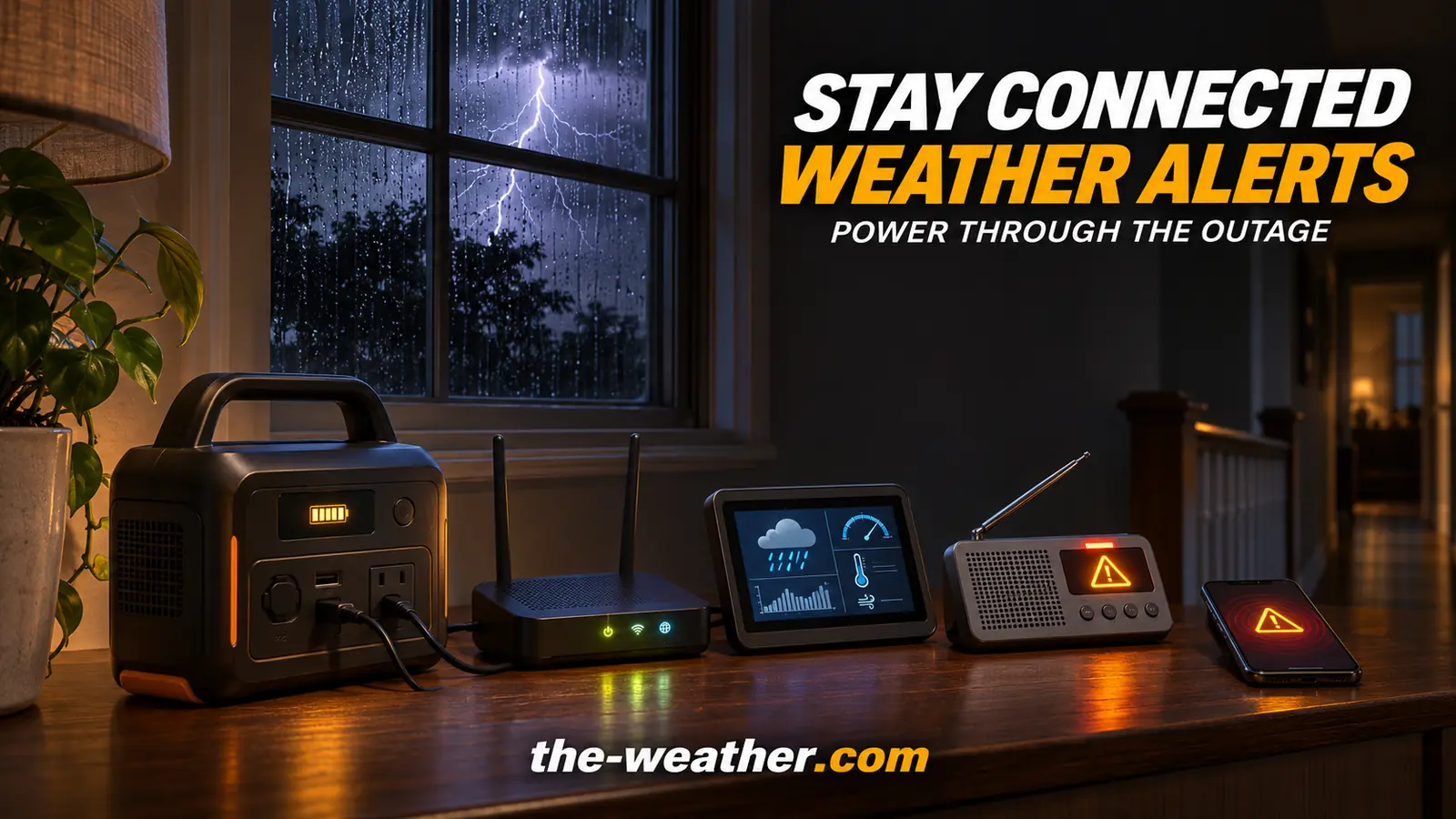
- Warnings on your phone. The National Weather Service says carriers broadcast Wireless Emergency Alerts from cell towers, and you need no app. Your Wi-Fi is not part of it. Keep the phone charged.
- A weather radio with fresh batteries keeps the warnings coming if the cell towers go quiet too. See our weather radio for power outages page.
- A closed fridge and a full freezer. The fridge keeps food cold for about 4 hours if it is unopened (FDA), and a full freezer keeps food safe for 48 hours (CDC).
So in a short outage, the honest answer can be: nothing to buy. The plan below is for when "a few hours" is not enough.
Step 2: decide what must keep running
Write down the devices that really matter in your house, and only those. Each one has its own page with the sources and the math:
| Device | Why it matters in an outage | The math and options |
|---|---|---|
| Refrigerator and freezer | Food is safe for about 4 hours in a closed fridge | Battery backup for a refrigerator |
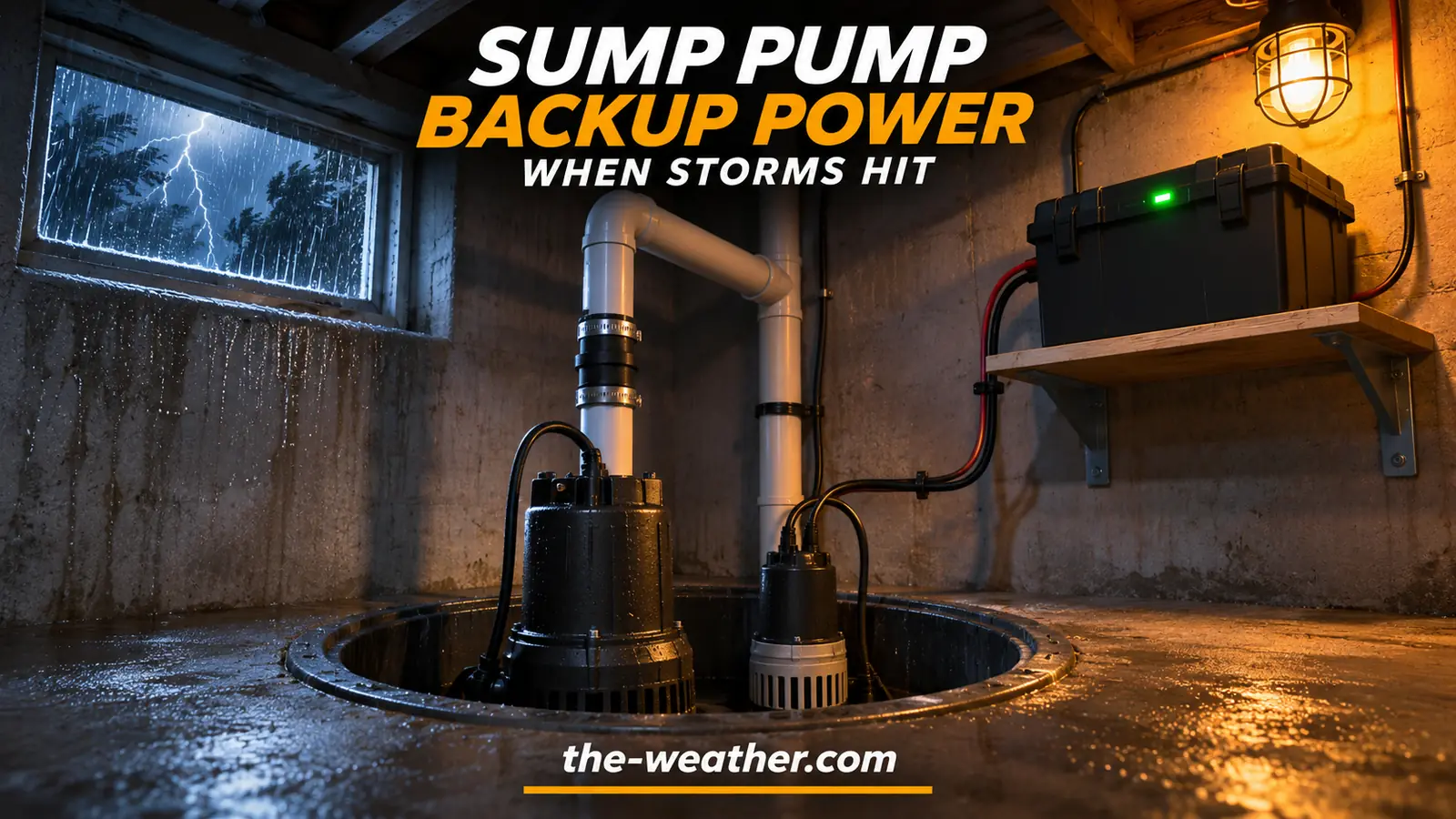
| Sump pump | Heavy rain and power cuts arrive together | Battery backup for a sump pump |
| Wi-Fi, weather station, phones | The forecast and your own readings | Keep Wi-Fi and weather alerts on |
| CPAP and other medical devices | Needed through the night | Ask the device maker or your equipment supplier how to run it on battery; our CPAP page is in preparation |
| Furnace blower, well pump | Heat in a winter storm, water on a private well | Big loads with their own requirements: check the manual, and see step 3 |
Then put your list into the power station and generator size calculator. It adds up the watts that run at the same time and the energy per day, and shows how long each battery size lasts.
Step 3: choose the kind of backup
| Your situation | Fits best |
|---|---|
| Outages of a few hours to a day, a few essentials | Often a battery power station of about 1,000 to 2,000 Wh, used as a UPS so it takes over by itself. The watts and startup of your own devices decide the size: check them in the calculator. |
| Only phones, router, weather station and lights | A small station of about 300 Wh |
| A sump pump in a storm area | A dedicated sump pump backup (battery, combo, inverter or water-powered) |
| Apartment, or no safe spot 20 feet from the house | A power station: no exhaust, so it can stand inside |
| Outages of several days, well pump, heating or cooling circuits | A generator outside with a transfer switch, or a large expandable power station with solar panels |
The full comparison, with the CPSC rules in their own words: generator vs power station for storm outages.
Step 4: the safety rules that come first
- Generators outside only. The CPSC says: "NEVER operate a portable generator inside a home, garage, basement, crawlspace, shed or other enclosed spaces", and "Operate portable generators outside only, at least 20 feet away from the house." Not on a porch or in a carport either.
- CO alarms on every level. The CPSC advises "battery-operated CO alarms or CO alarms with battery backup on each level and outside separate sleeping areas at home."
- No makeshift connections to the house wiring. The Department of Energy's Building America Solution Center advises to "Engage a licensed electrical contractor" for "a transfer switch that prevents backfeeding".
- Medical devices: follow the device maker's own advice for battery power.
Source for the generator rules: the CPSC's 2025 winter weather safety release.
By kind of storm
Plan for days, not hours
Outages after a hurricane can be long. Charge everything before landfall and know your plan for the fridge. Background: hurricane watch vs warning and weather radios for hurricane season.
Heat and cold batteries
Ice storms bring down lines. Check the temperature range in your power station's manual, and never move a generator into the garage "for the cold". More: winter storm emergency alerts during power outages.
The sump pump moment
Heavy rain plus a power cut is exactly when a basement floods. See the sump pump backup options and what a flash flood watch means.
Cooling is the hard part
Air conditioners use a lot of power, so a battery covers fans and the fridge far longer than an AC. Background: what is a heat wave.
Where to start, by size
Three sizes from our list, chosen from the makers' specifications. We have not tested them. The device pages explain each one.
| Size | Example from our list | Covers (our own math) | Shop |
|---|---|---|---|
| About 300 Wh | BLUETTI Elite 30 mini (288 Wh, UPS under 10 ms per BLUETTI) | Router + weather station console for about 10 to 13 hours | Check on Amazon |
| About 1,000 Wh | Anker SOLIX C1000 Gen 2 (1,024 Wh, 2,000 W per Anker) | An average fridge for about 12 hours | Check on Amazon |
| About 2,000 Wh | Anker SOLIX S2000 (2,010 Wh, 1,500 W per Anker) | An average fridge for about a day | Check on Amazon |
Affiliate links: we may earn a commission if you buy through them, at no extra cost to you. "Average fridge" = a 630 kWh/year EnergyGuide label; the math is on our refrigerator page.
My take
The best backup plan I know starts on a sunny day, not during the storm. Make the list, do the math once, charge the station, put fresh batteries in the weather radio, and hang a CO alarm if you will ever run a generator. Then, when the forecast turns ugly, all that is left to do is watch the pressure fall on your weather station. With the lights on.
Quick Answers
What is the best emergency power supply for a storm outage?
It depends on how long your outages last and what must run. For a few essentials over hours to a day, a battery power station inside the house. For days or big loads, a generator outside with a transfer switch. Use a size calculator first.
What should I keep running during a power outage?
Only what matters: food (fridge and freezer), water in the basement (sump pump), medical devices such as a CPAP, and information (phone, weather radio, Wi-Fi). Lights and phones need very little power.
Do I need backup power for weather alerts?
Not for phone alerts: the National Weather Service says they come from cell towers, with no app or Wi-Fi needed. Keep the phone charged and a weather radio with fresh batteries as a backup.
How big a power station do I need for a power outage?
About 300 Wh covers a router, weather station and phones for many hours; about 1,000 to 2,000 Wh covers a fridge for half a day to a day. Our calculator works it out for your own devices.
Can I run a generator in the garage with the door open?
No. The CPSC says never inside a home, garage, basement, crawlspace or shed, and that opening doors or windows will not provide enough ventilation. Outside only, at least 20 feet from the house.
Sources: NWS: Wireless Emergency Alerts · FDA: power outages and food safety · CDC: discarding food after a power outage · CPSC: winter weather safety tips (2025) · DOE Building America Solution Center: generators for backup power