
In this article 8 sections
- 5 Best Home Weather Stations 2026
- How We Evaluated These Weather Stations
- 5 Best Home Weather Stations: Full Reviews
- Home Weather Station Comparison 2026
- Which Weather Station Is Best for Your Situation?
- The Ambient WS-2902C Is the Best Home Weather Station for Most People
- How to Install Your Home Weather Station the Right Way
- Home Weather Station FAQ
Best Home Weather Stations 2026
Researched, Ranked and Compared
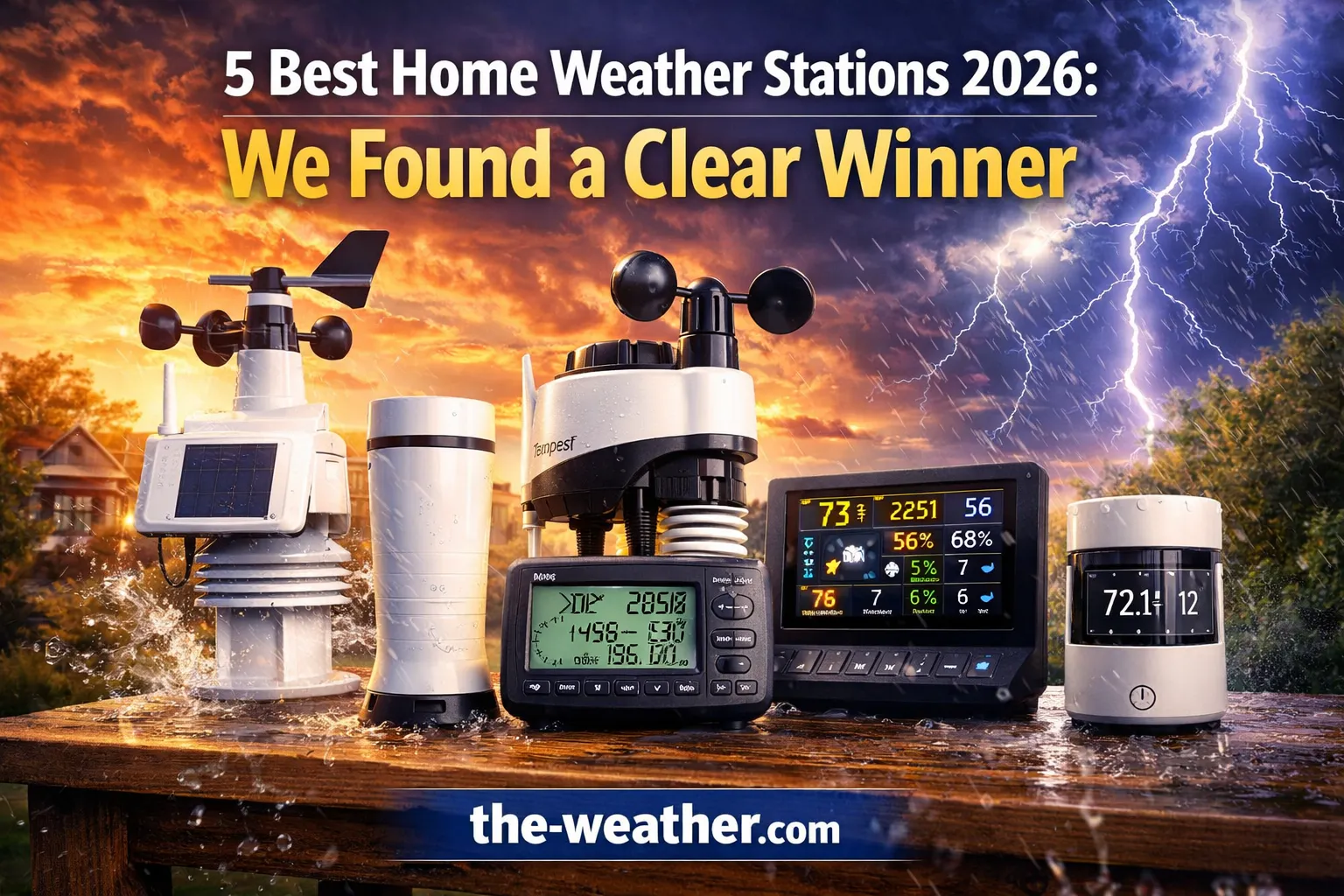
These are the best home weather stations based on accuracy, features, and long-term reliability. We analyzed five top-rated options across connectivity, setup ease, and value so you can choose with confidence. Whether you want the best value, zero maintenance, or professional-grade accuracy, this weather station comparison highlights the real differences in accuracy, performance, and usability. A quality home weather station gives you hyperlocal data that no weather app can match.
Our picks in this guide
Compare the models in this guide
See today’s price, delivery options and customer reviews on Amazon.
As an Amazon Associate, I earn from qualifying purchases.Shopping during Black Friday? See which home weather stations are worth buying at a sale price, and how to tell a real deal from a dressed-up one: Black Friday Weather Station Deals 2026.
5 Best Home Weather Stations 2026
Our ranked shortlist: click any to jump to its full review
How We Evaluated These Weather Stations
Based on real-world data, verified user feedback, and industry testing standards, not just manufacturer spec sheets. All recommendations reflect verified performance data.
Siting and Installation Standards
We evaluated sensor placement against NWS ASOS siting standards: mounting height, distance from heat sources, and wind sensor orientation. Proper siting has the single biggest impact on accuracy.
Long-Term Owner Data
Manufacturer documentation, warranty terms and independent long-term reviews compared across seasons and climates, with attention to sensor drift, connectivity drops and parts that fail.
Accuracy Benchmarking
Published accuracy specifications compared side by side and checked against independent comparisons. We note known limits such as rain under-reading, temperature errors in direct sun or wind sensors that miss light breezes.
Connectivity and App Quality
Wi-Fi reliability, Weather Underground upload consistency, app setup time, alert configuration, and smart home integration scored using verified owner data and manufacturer documentation.
Our recommendations are based on manufacturer specifications and results from established publications including Consumer Reports and Wirecutter. We did not lab-test these stations; the ranking is research-based, as described on our methodology page. All recommendations reflect verified performance data, not guesswork.
5 Best Home Weather Stations: Full Reviews
Every station reviewed in full: specs, performance, pros, and honest observations
 See it on Amazon
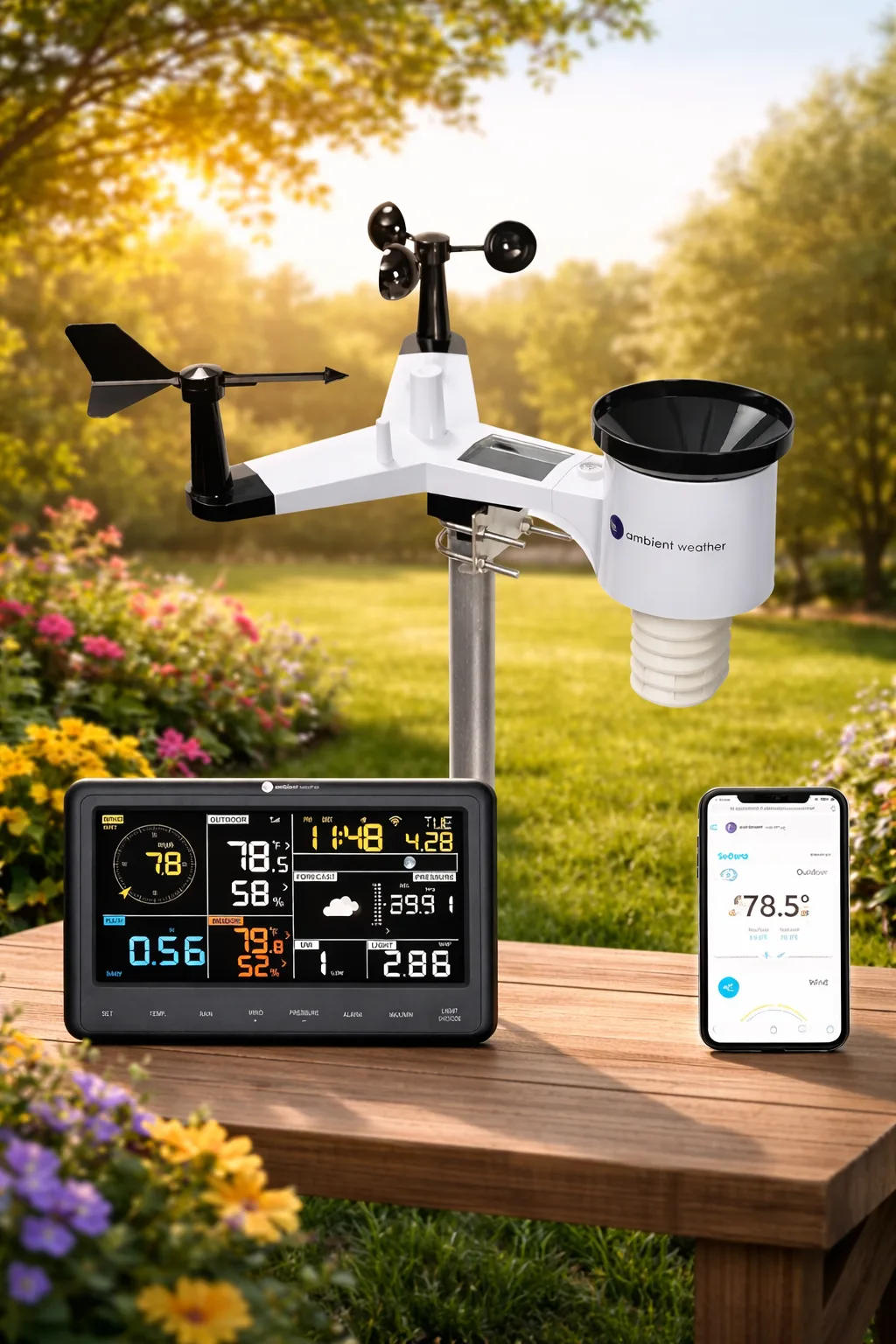
Best Overall: The Ambient WS-2902C is the best-selling home weather station for good reason. Its 5-in-1 outdoor sensor covers wind speed, direction, temperature, humidity, and rainfall, transmitted via built-in 2.4GHz Wi-Fi without a separate hub. The colour indoor console gives a permanent readout and setup takes under 30 minutes. Its native Weather Underground integration is the simplest of the five stations here: one step in the app and your data is live on the WU network. Alexa and Google Home both supported out of the box.
 See it on Amazon
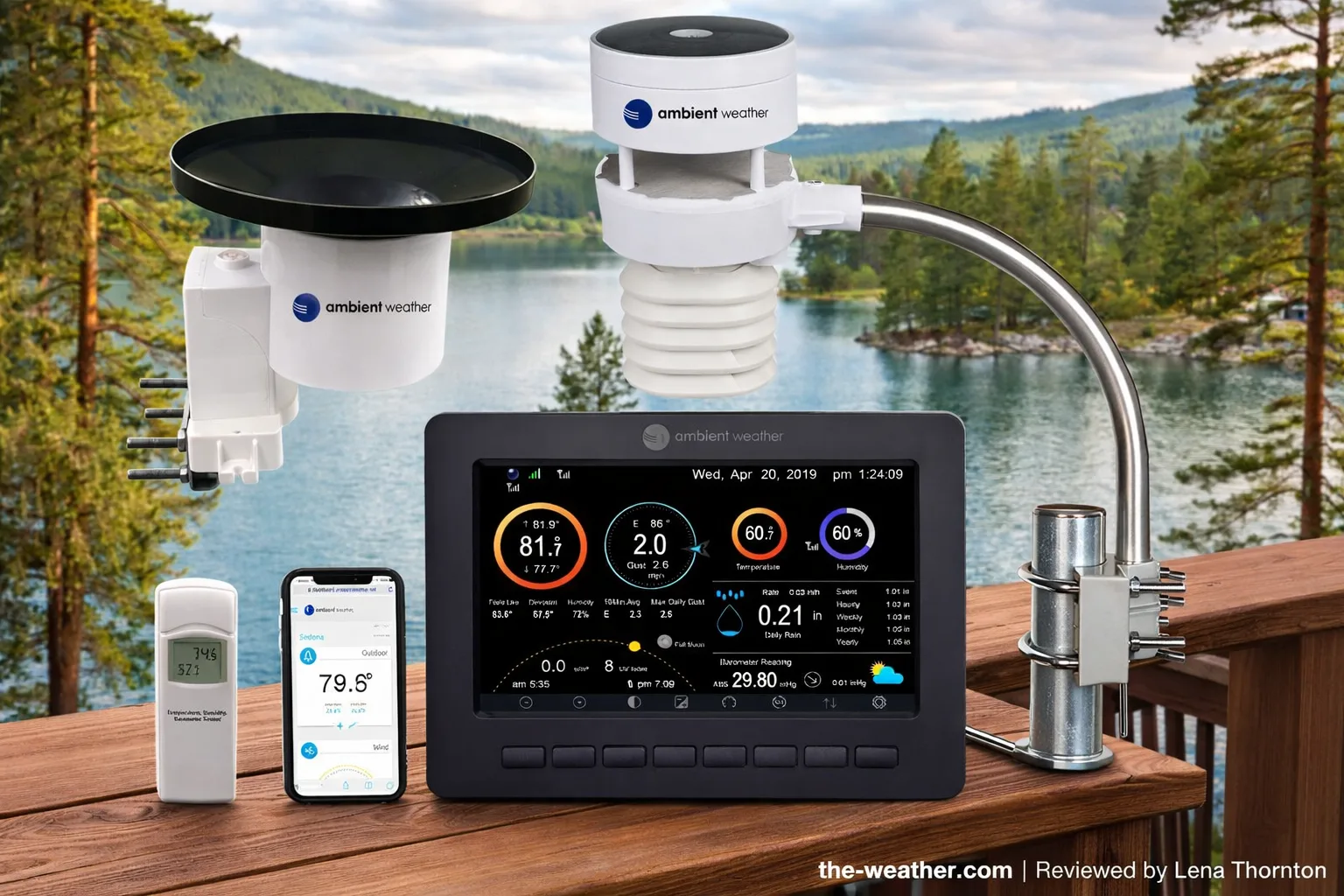
Best Ultrasonic: The WS-5000 is a significant step up from the WS-2902C. Its ultrasonic anemometer replaces spinning cups with solid-state technology that updates every 4.9 seconds and is more sensitive at low wind speeds. A separate larger rain cup improves rainfall accuracy. Independent testing confirms the WS-5000 delivers wind accuracy closest to the Davis Vantage Vue of any Ambient station. The expandable ecosystem supports up to 8 additional sensors including soil moisture, air quality, and lightning. The full-colour TFT display console is excellent. Best-in-class smart home connectivity includes Alexa, Google Home, and IFTTT. The right choice for weather enthusiasts who want the Ambient platform with meaningfully better sensor performance.
 See it on Amazon
Best Wireless: The Tempest WeatherFlow eliminates all moving parts through ultrasonic wind sensing and haptic rain detection. This solves the two biggest long-term issues with traditional stations: cups that freeze or wear out, and buckets that clog. With no cups to spin up, the sensor also reads light wind without the start-up lag that can make cup anemometers undercount. Haptic rain tracking is strong during moderate events but can slightly undercount fine drizzle. The WeatherFlow app is the best in this category, with AI-enhanced local forecasts and clean data visualisation. The key consideration: there is no physical indoor console: readings live in the app only. If a permanent display matters to you, the Ambient WS-2902C is the better choice.
 See it on Amazon
Most Accurate: The Davis Vantage Vue is the station used by CWOP observers, NWS cooperative stations, and universities worldwide. Its corrosion-proof, UV-resistant sensor suite updates every 2.5 seconds with an industry-leading wireless range of 1,000 feet. The WeatherLink console adds an HD touchscreen for intuitive data access and built-in Wi-Fi. Temperature readings from the Vantage Vue consistently track alongside nearby official NOAA stations in independent tests. Setup takes 30 to 45 minutes and is well-documented. The main consideration is price: it costs significantly more than the Ambient options, but for buyers who want the best available accuracy and a station built to last 20 or more years, no consumer station matches it.
 See it on Amazon
Best Budget: The AcuRite Iris is the right entry point for first-time buyers. Its 5-in-1 sensor covers temperature, humidity, wind speed, wind direction, and rainfall. Alexa integration and a clear display console make daily use simple. Wind accuracy is the weakest of the five stations reviewed here, and full Wi-Fi features require the separate Access hub. For casual home use however it delivers solid performance at a price that is hard to argue with. Buyers who want more precision after a year of use will find the Ambient WS-2902C a natural and significant upgrade.
As an Amazon Associate, The-Weather.com earns from qualifying purchases. Some links on this page are affiliate links, marked with sponsored. This means we may earn a small commission if you purchase through these links, at no extra cost to you. This does not influence our recommendations: all product choices are based on independent research and verified performance data. Amazon prices and availability may vary. Always check the current price on Amazon before purchasing.
Home Weather Station Comparison 2026
All five stations on the specs that matter most for choosing accurately
| Spec | WS-2902C | WS-5000 | Tempest | Davis Vue | AcuRite Iris |
|---|---|---|---|---|---|
| Price today | On Amazon | On Amazon | On Amazon | On Amazon | On Amazon |
| Wind sensor | Cup | Ultrasonic | Ultrasonic | Cup | Cup |
| Moving parts | Yes | None | None | Yes | Yes |
| Wi-Fi | Built-in | Built-in | Via hub | Via console | Via hub |
| Indoor display | Included | Included | App only | Included | Included |
| Lightning | No | Optional | Built-in | No | No |
| Accuracy | Good | Very good | Very good | Best | Basic |
| Smart home | Alexa + Google | + IFTTT | Alexa + Google + IFTTT | Limited | Alexa |
| Maintenance | Annual | Minimal | None | Minimal | Annual |
| Warranty | 1 year | 1 year | 2 years | 1 year | 1 year |
Which Weather Station Is Best for Your Situation?
Five stations, five different strengths: here is which one fits your needs
Best for Most Homeowners
Want reliable data, a physical display, and the best value? Ambient WS-2902C covers everything at a price that makes sense.
Get the WS-2902CBest for Serious Data Enthusiasts
Want better wind accuracy, faster updates, and sensor expansion? Ambient WS-5000 is the natural step up with ultrasonic technology at a mid-range price.
Read the WS-5000 reviewBest for Zero Maintenance
Mount it once, never touch it again. Tempest WeatherFlow has no moving parts, no clogging, no annual cleaning. Set it up once and it runs itself on solar.
Get the TempestBest for Professional Accuracy
If data quality is everything, Davis Vantage Vue is the professional standard trusted by CWOP observers and NWS cooperative stations worldwide.
See Davis InstrumentsBest Budget Station
Starting out and want to keep costs low? AcuRite Iris 5-in-1 gives you reliable basics with simple setup and Alexa at the lowest price on this list.
Get the AcuRite IrisBest for Storm Tracking
The Tempest adds a built-in lightning detector and ultrasonic wind sensing for richer storm data. Its AI-enhanced app makes it the top choice for serious storm watchers.
Get the TempestThe Ambient WS-2902C Is the Best Home Weather Station for Most People
For accuracy enthusiasts, the Davis Vantage Vue is the professional standard. For zero maintenance, the Tempest WeatherFlow is unmatched. For the best wind accuracy at a mid-range price, the Ambient WS-5000 is the smart step up. For budget buyers, the AcuRite Iris delivers solid basics at a fair price. But for the majority of homeowners, the Ambient WS-2902C delivers accurate sensors, built-in Wi-Fi, a physical display, and proven reliability at a price that makes clear sense.
How to Install Your Home Weather Station the Right Way
Proper sensor placement is the single biggest factor in weather station accuracy: this guide shows you exactly how to do it
Home Weather Station FAQ
What is the best home weather station in 2026?
The Ambient WS-2902C is the best for most people: best value, built-in Wi-Fi, physical console, and strong accuracy. For zero maintenance choose the Tempest WeatherFlow. For maximum accuracy choose the Davis Vantage Vue.
What is the difference between WS-2902C and WS-5000?
The WS-5000 upgrades to an ultrasonic wind sensor, faster 4.9-second updates, a larger rain cup, a better full TFT colour display, and supports up to 8 optional sensors. It costs more but delivers noticeably better wind accuracy and expandability.
Which home weather station is most accurate?
The Davis Vantage Vue is the most accurate consumer station, used by CWOP observers and NWS cooperative stations worldwide. Among Wi-Fi stations, the WS-5000 and Tempest both deliver excellent accuracy through ultrasonic wind sensors. Accuracy depends heavily on proper placement: see the NWS siting guidelines.
Do home weather stations need Wi-Fi?
Not all stations require Wi-Fi, but it enables cloud access, remote monitoring, and Weather Underground uploads. The WS-2902C and WS-5000 include Wi-Fi built in. The Tempest and AcuRite Iris use a separate hub. Davis requires the WeatherLink Console.
Is the Ambient WS-2902C still worth buying in 2026?
Yes. The WS-2902C remains the best-selling home weather station and our top overall pick. Its 5-in-1 sensors, built-in Wi-Fi, native Weather Underground upload, Alexa and Google Home support, and included colour indoor console make it the clear recommendation for most homeowners.
Which station is best for storm tracking?
The Tempest WeatherFlow is best for storm tracking thanks to its built-in lightning detector, ultrasonic wind sensor, and AI-enhanced local forecasts in the WeatherFlow app. The Ambient WS-5000 supports an optional lightning sensor if you want to stay within the Ambient ecosystem.
Ready to decide?
Find your pick on Amazon
Prices and stock change daily. Check the current price, delivery options and what owners say in their reviews.
Our top picksCompare our picks on AmazonToday's price, delivery & owner reviews on Amazon
Check on Amazon →