
As an Amazon Associate, I earn from qualifying purchases.
In this article 8 sections
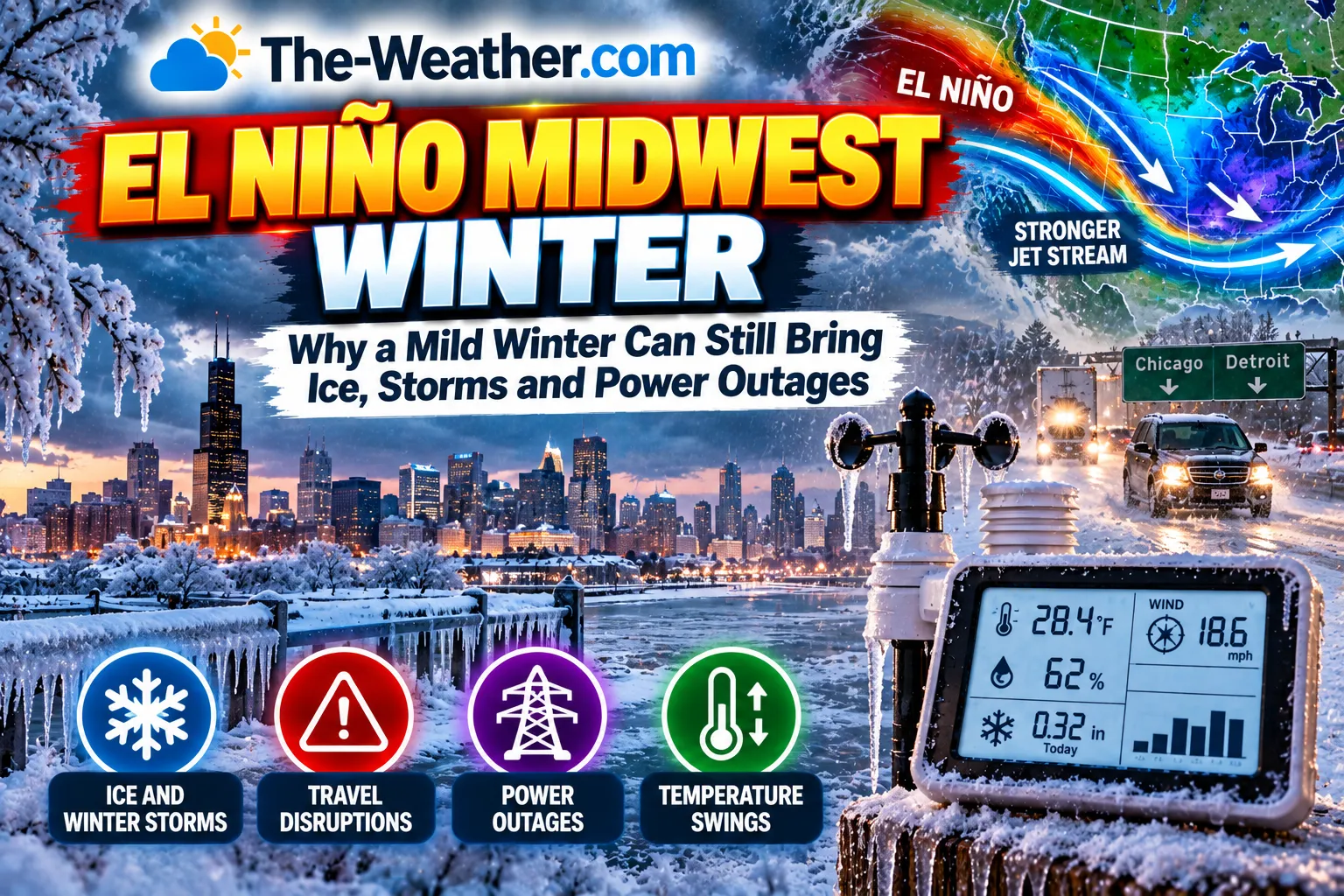
"Mild winter" sounds like good news in Chicago, Detroit or Indianapolis. Less shoveling, potentially lower heating demand, maybe even a January walk without three layers. And with a very strong El Niño on the way, the odds for a milder Midwest winter are real. But here is the part that gets left out of the headlines: a mild winter is not a calm winter. Ice storms, a blizzard and long power outages can still show up, and El Niño does not reliably predict any single one of them. Let me explain why, and what to have ready.
Short answer: during El Niño the Midwest often sits between two storm tracks, which tilts the odds toward a warmer and somewhat drier winter with less snow, especially in the upper Midwest and around the Great Lakes. But the Midwestern Regional Climate Center is clear that El Niño is not known to change the risk of ice storms or blizzards, or the path of any single storm (MRCC). Cold snaps still happen, just less often. Plan for a milder average, not a milder worst day.
Editorial Research & Review
- Written by
- Lena Thornton, Weather Station Analyst & CWOP Contributor
- Based on
- Midwestern Regional Climate Center and NOAA El Niño impact summaries, NOAA Climate Prediction Center outlooks (September 2026), National Weather Service warning criteria
- Hands-on testing
- Not performed by The-Weather.com for the products on this page
- Research last verified
- October 2, 2026
What El Niño Usually Means for a Midwest Winter
During El Niño, the polar jet stream tends to stay farther north, while the Pacific jet stream runs across the southern U.S. "With the Midwest region falling between storm tracks, warmer and drier conditions can develop," the Midwestern Regional Climate Center explains (MRCC).
NOAA's September 2026 outlook fits that picture: better odds of above-normal temperatures over the northern and central U.S. east of the Rockies, and a "modest" tilt toward below-normal precipitation in parts of the Great Lakes region (NOAA CPC). The national story is in how strong the 2026 El Niño could become.
Why a Mild Winter Can Still Bring Ice and Storms
Here is the twist. The same research that shows milder winters also lists what El Niño is not known to affect (MRCC):
- the potential for ice storms or blizzards
- the track and strength of any one storm
- the date of the first fall freeze and the last spring freeze
There is also a simple bit of weather physics. Freezing rain happens when snow melts in a warm layer of air higher up, then falls as rain onto ground and wires that are below freezing. A winter that keeps hovering around 32°F, instead of staying deep below it, gives you plenty of days where rain, sleet, freezing rain and snow are all on the menu. Mild on paper, messy on the driveway.
When Ice Becomes an Outage
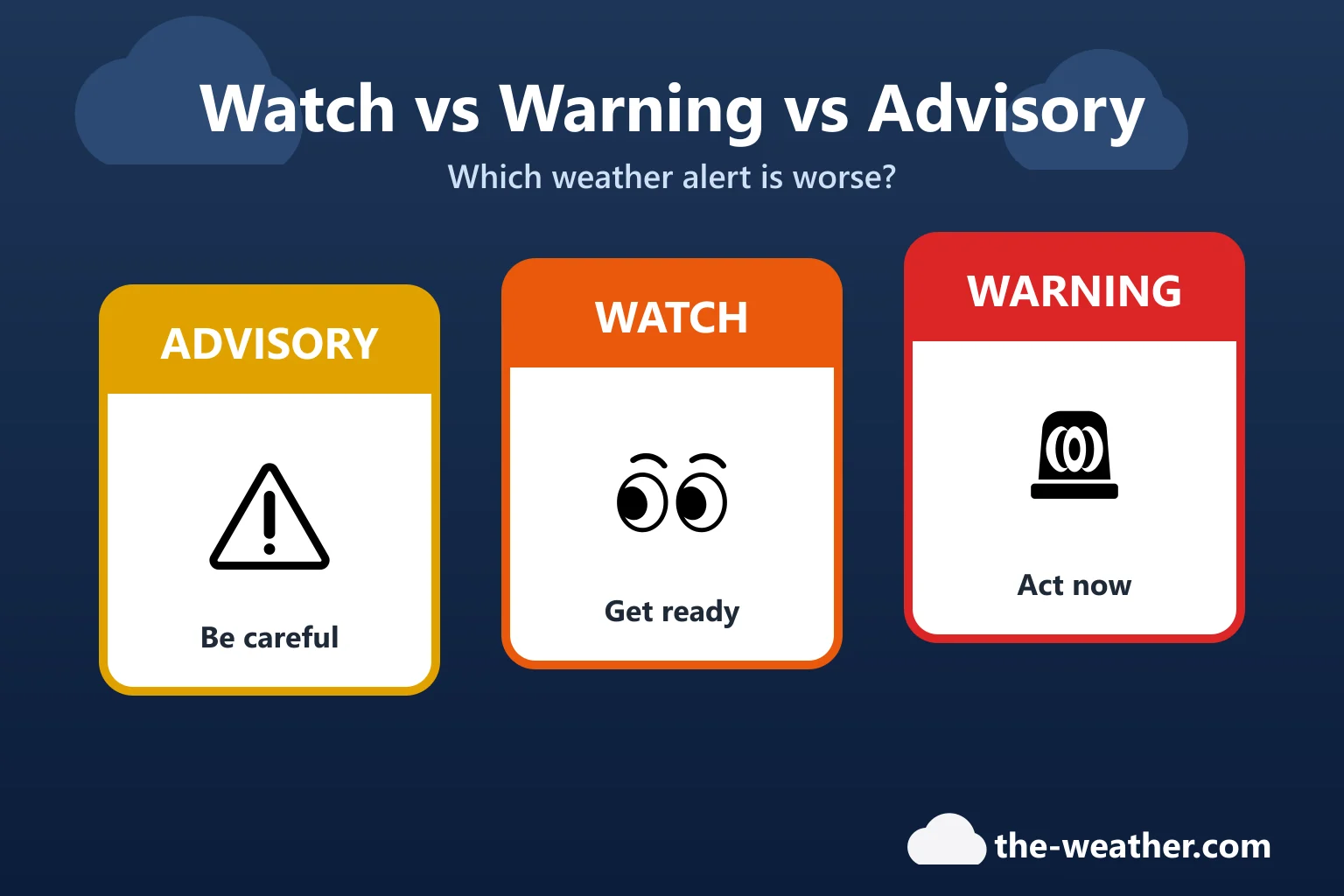
The National Weather Service uses ice thickness to decide which alert to send. In central Indiana, for example (NWS Indianapolis):
Glaze
Less than a quarter inch of ice expected. Slick roads, steps and sidewalks.
Heavy snow
In central Indiana, 5 inches of snow or more in one event of 48 hours or less.
Lines down
A quarter inch of ice or more on all surfaces. The NWS note says it plainly: "Brings down wires."
Criteria differ a little by NWS office. Check your local office's criteria page.
When ice brings down lines, the outage can last a long time, and that is when cold becomes dangerous. Our pages on winter storm alerts during power outages and why cold weather is dangerous go deeper. And yes, check your water heater before the first deep freeze, not during it.
Your Midwest El Niño Winter Checklist
| When | What to do |
|---|---|
| Now (fall) | Program a weather alert radio for your county (S.A.M.E. code steps), test the battery backup, trim branches that hang over lines to your house (or ask your utility). |
| Before a storm | Charge phones and power banks, fill prescriptions, get fresh batteries, know where the water shut-off is. |
| Ice or snow falling | Stay off the roads if you can, keep the radio on, report downed lines to your utility and stay far away from them. |
| Power out | Close off unused rooms, never run a generator or grill indoors or in a garage, check on neighbors who live alone. |
Weather Tools for a Midwest Winter
Find your match in 10 seconds
Strong fit for night-time warnings
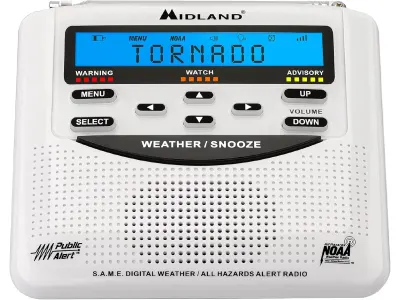
Midland WR120B NOAA Weather Alert Radio
Why it fits a Midwest winter: Ice storms and blizzards often arrive overnight. This S.A.M.E. alert radio stays quiet until there is a warning for your county, then sounds a loud siren, with battery backup when the power fails.
Research basis: our Midland WR120B review, Midland's specifications.
Good fit if
- You want night-time alerts for your county
- You want simple setup
- You want battery backup when the power fails
Skip it if
- You want AM/FM radio too
- You want the warning read out
- You need a portable radio
Check current price on Amazon
Check current price on AmazonMidland WR120B · opens in a new tabNot sure yet? Read our Midland WR120B review
Strong fit for long outages
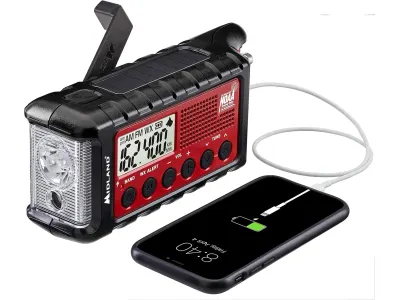
Midland ER310 Emergency Crank Weather Radio
Why it fits a Midwest winter: After an ice storm the power can be out for days. The ER310 charges by hand crank, sun or USB, takes AA batteries, scans the NOAA weather channels and adds a flashlight with SOS.
Research basis: our Midland ER310 review, Midland's specifications and the ER310 user manual.
Good fit if
- You want a radio for the emergency kit or car
- You live where outages can last days
- You want to charge a phone
Skip it if
- It would be your only night-time alert radio (no S.A.M.E.)
- You want something pocket-sized
- You only need home alerts
Check current price on Amazon
Check current price on AmazonMidland ER310 · opens in a new tabNot sure yet? Read our Midland ER310 review
Strong fit for watching a home from a distance
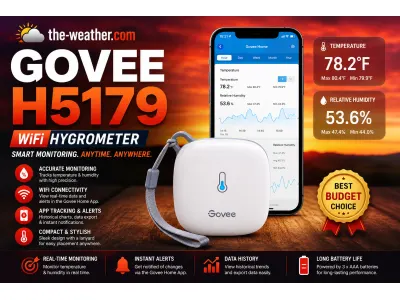
Govee H5179 Wi-Fi Thermometer Hygrometer
Why it fits a Midwest winter: Wi-Fi alerts on your phone when the temperature drops below your limit. Useful for a cabin, a parent's home or a basement with pipes. If alerts stop arriving, that can indicate a power or internet connection problem.
Research basis: our Govee H5179 review, Govee's specifications.
Good fit if
- You want a phone alert when a room gets too cold
- You watch a second home or a parent's home
- You like graphs of day and night
Skip it if
- The home has no 2.4 GHz Wi-Fi
- You want no app at all
- You need it to work during a full power and internet outage
Check current price on Amazon
Check current price on AmazonGovee H5179 · opens in a new tabNot sure yet? Read our Govee H5179 review
Midwest El Niño FAQ
Does El Niño mean a mild winter in the Midwest?
It raises the odds. During El Niño the Midwest often sits between storm tracks, which favors warmer and somewhat drier conditions, especially in the upper Midwest and Great Lakes. Cold outbreaks still happen, just less often.
Does El Niño mean less snow in Chicago and the Great Lakes?
Below-average snowfall is the more common outcome during moderate to strong El Niño winters across the Midwest and Great Lakes. But a single big storm can still bring a lot of snow, and El Niño does not change the risk of blizzards.
Can there be ice storms during an El Niño winter?
Yes. According to the Midwestern Regional Climate Center, El Niño is not known to change the potential for ice storms or blizzards. Winters that hover near freezing can actually bring many days with a mix of rain, freezing rain and snow.
How much ice causes power outages?
The National Weather Service issues an Ice Storm Warning in many areas when a quarter inch of ice or more is expected on all surfaces, a level that can bring down wires and branches. Criteria vary a little by NWS office.
Update Log
- October 2, 2026: Page published. El Niño patterns checked against the Midwestern Regional Climate Center summary; outlook against the NOAA Climate Prediction Center outlook of September 17, 2026; warning criteria against NWS Indianapolis.
Sources
- Midwestern Regional Climate Center and NOAA: El Niño impacts and outlook, Midwest region
- NOAA Climate Prediction Center: seasonal outlook discussion (September 17, 2026)
- NOAA Climate Prediction Center: ENSO Diagnostic Discussion
- National Weather Service Indianapolis: warning and advisory criteria
- Our articles: winter storm alerts during outages, Midwest severe weather and NOAA radio, weather radio for power outages
See also: How Strong Could the 2026 El Niño Become? · El Niño and Western Snowpack · Blizzards explained