As an Amazon Associate, I earn from qualifying purchases.
In this article 10 sections
- Alerts Survival Cheat Sheet
- Why Winter Storms Disable Your Tech
- Why Weather Alert Radios Still Work
- Recommended Weather Alert Radios for Winter Storm Emergencies
- Features to Look for in an Emergency Radio
- Smartphone vs. Weather Radio
- Video: How Winter Storms Cause Rapid Power Failures
- How to Ensure You Stay Informed
- Common Questions About Winter Alerts
- Updates & Revisions
⚠️ Storm Update: Active Conditions
Current Status: Winter storm warnings remain active across multiple US states today. Power outages during winter storms and icy conditions continue to impact communication networks in affected regions. Please ensure your backup alert systems are ready.

Winter Storm Emergency Alerts During Power Outages
Winter storm warnings bring more than just a layer of snow. When ice snaps power lines and the house goes dark, the situation can escalate quickly. Disruptions are common, causing the apps we rely on to stop working. Knowing how NOAA weather alerts work and how to get them without electricity can make a real difference in keeping your family safe.
El Niño winter 2026-27: a milder winter on average does not stop ice storms or blizzards. Read El Niño in the Midwest and El Niño and western snowpack.
Alerts Survival Cheat Sheet
The gold standard. Works when cell towers fail.
Cold kills phone batteries fast. Keep ‘em warm.
Ice storms often disable local cell towers.
The #1 cause of long-term power outages.
Look for radios that generate their own power.
Specific Area Message Encoding filters alerts for your county.
Why Winter Storms Disable Your Tech
During major winter storms, several systems people depend on can fail simultaneously. It creates a dangerous domino effect. Mobile networks may become unreliable when ice damages towers or when backup power runs out. Home internet connections, your Wi-Fi, stop working the second the power goes out. Even official emergency alerts sent to smartphones depend on functioning networks. When those networks are overloaded, alerts may arrive late or not at all.
This is why relying solely on a smartphone can be risky during severe winter storms. You need reliable weather alert radios to bridge the gap when modern tech fails.
| Alert Type | What It Means | Urgency Level |
|---|---|---|
| Winter Storm Warning | Heavy snow, sleet, or ice is expected. | Take Action Now |
| Blizzard Warning | Sustained winds + snow = zero visibility. | Life Threatening |
| Ice Storm Warning | Ice accumulation will cause outages. | Prepare for Blackout |
| Wind Chill Warning | Cold air will cause frostbite in minutes. | Stay Indoors |
Why Weather Alert Radios Still Work
Direct Signal
They receive broadcasts directly from the National Weather Service, bypassing clogged cell towers and downed internet lines.
Power Independence
They run on batteries, hand cranks, or solar. They don't need a wall outlet to tell you a tornado or blizzard is coming.
The "Wake Up" Alarm
Unlike a text message you might sleep through, these radios trigger a loud siren tone for critical warnings.
Recommended Weather Alert Radios for Winter Storm Emergencies
For households in storm-prone areas, a weather alert radio is not a backup convenience: it is a primary safety tool. We have compared many models to find the best weather alert radios for emergencies so you don't have to guess.
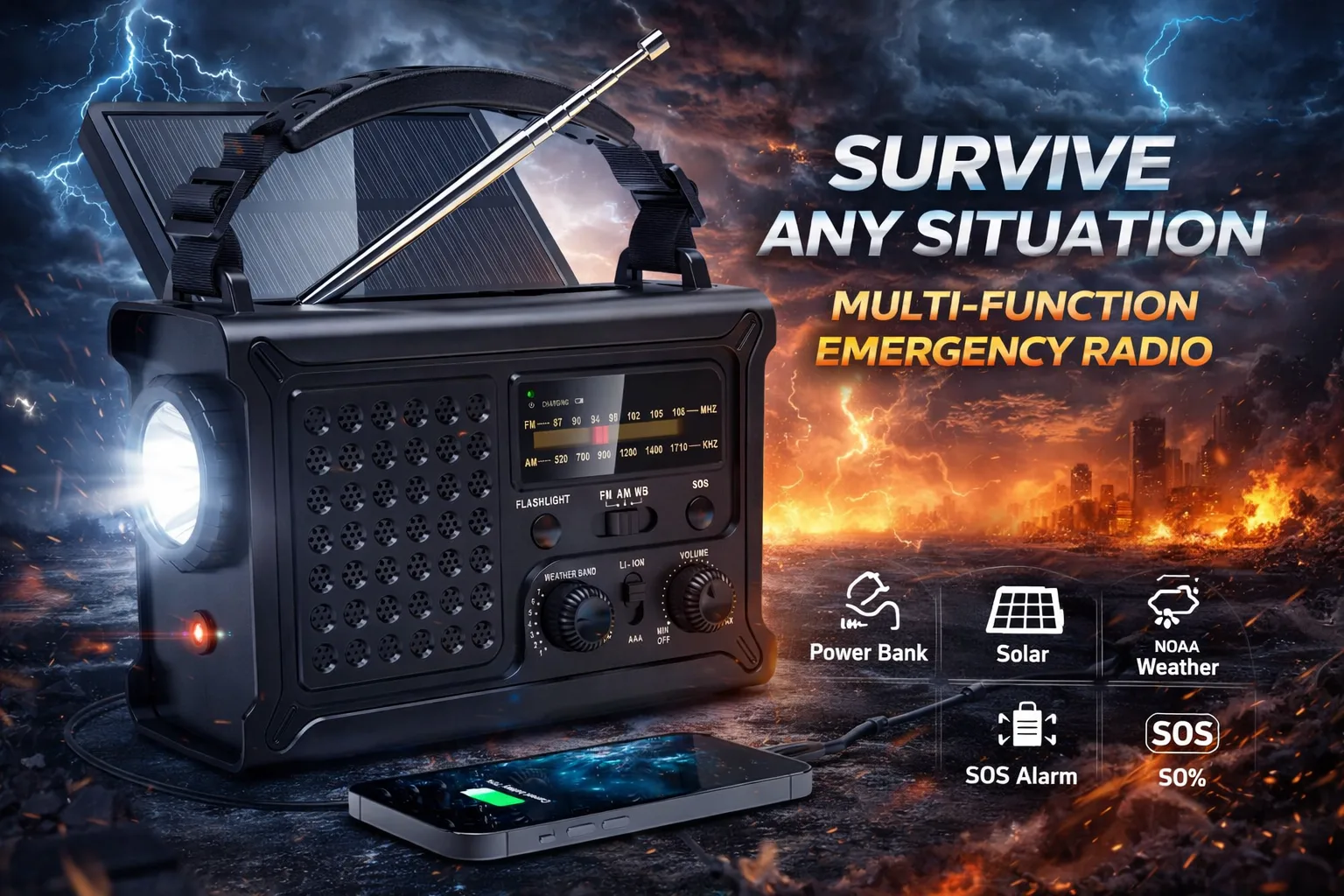
Emergency Portable Radio with Solar Panel
This is a solid choice for winter preparedness. It features multiple power sources (Solar, Hand Crank, USB) so you are never left in the dark. It tunes into all NOAA weather channels and includes a flashlight, which is essential when the grid goes down.
Check Price & Availability As an Amazon Associate, I earn from qualifying purchases.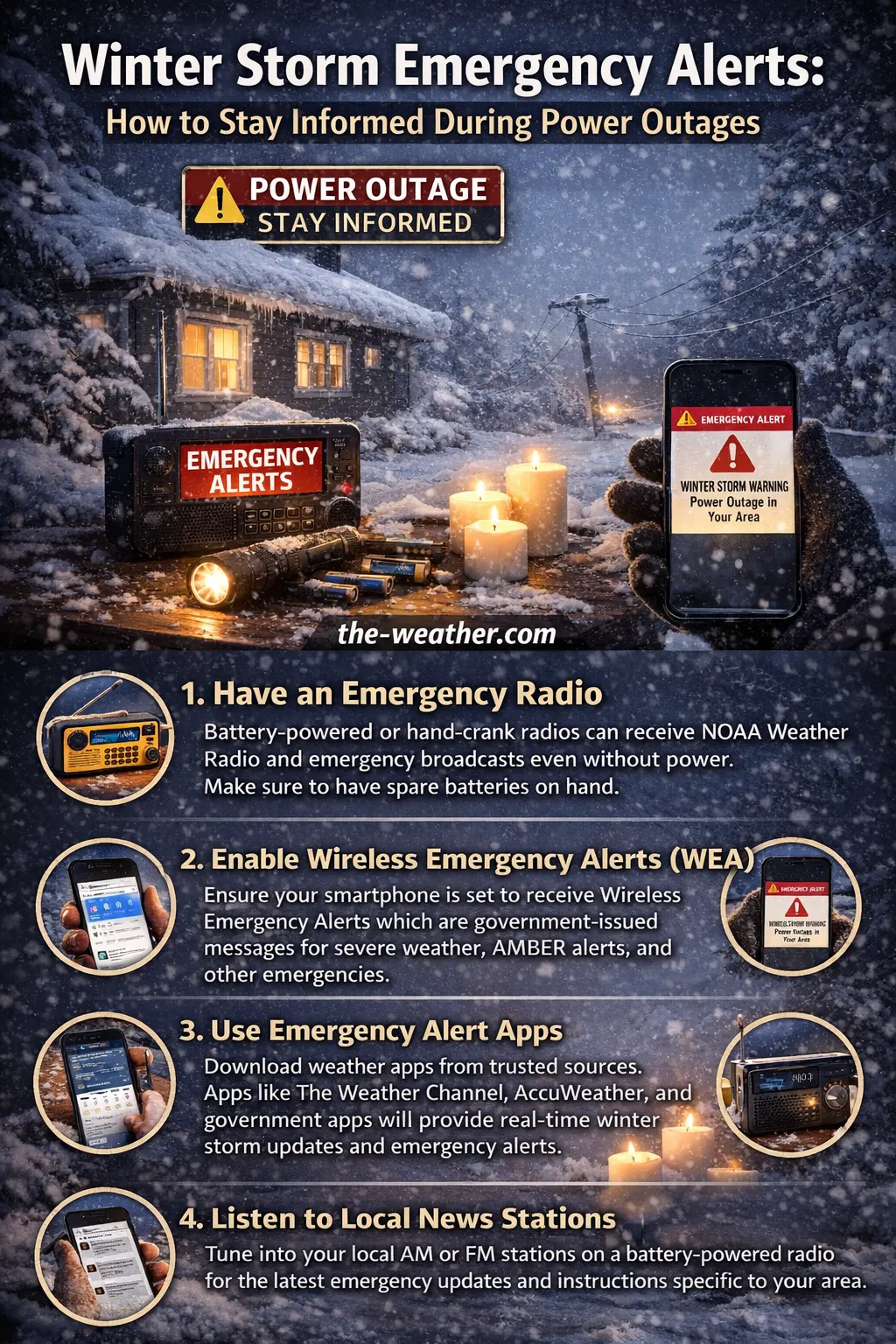
When the Grid Goes Down
This visual explains exactly why we lose contact during storms.
- Ice Loading: Just a 1/4 inch of ice adds hundreds of pounds to power lines, snapping them and cutting off your router.
- Tower Failure: Cell towers have backup batteries, but in a multi-day storm, those run out.
- The Battery Gap: Cold weather causes chemical reactions in phone batteries to slow down, draining them 50% faster than normal.
To navigate this, you must understand the mechanics of emergency alerts. It is the only way to know when it is safe to venture out.
Features to Look for in an Emergency Radio
Smartphone vs. Weather Radio
Great for daily use, but reliant on fragile cell towers. Alerts can be delayed by network congestion. Battery dies quickly in the cold.
Operates independently of the grid. Receives official alerts via radio waves. Designed to wake you up.
Usually the first to go during a storm. Useless once the power lines snap unless you have a generator.
Video: How Winter Storms Cause Rapid Power Failures
See how quickly conditions deteriorate and why staying informed is critical.
How to Ensure You Stay Informed
- Get Hardware Early: Don't wait for the winter storm warning to be issued. Buy your radio when the sun is shining.
- Program Your County: Set up the SAME code for your specific area. If you don't, the radio might stay silent or wake you up for distant storms.
- Fresh Batteries: Always keep a sealed pack of Lithium batteries (they perform better in the cold) taped to the back of the radio.
- Know Your Signals: Understand the difference between a "Watch" (be ready) and a "Warning" (take action).
Lena’s Backyard Wisdom
I'll never forget the Ice Storm of '18. The house was pitch black, the heater was off, and it was dead silent outside. It’s an eerie feeling. The only comfort we had was the robotic voice on our crank radio telling us exactly when the freezing rain would switch to snow. It let us know we didn't need to evacuate. That little box gave us peace of mind when our expensive smartphones were just expensive paperweights.
Common Questions About Winter Alerts
Do cell phones work in a power outage?
Initially, yes. But cell towers rely on grid power. Once their backup batteries drain (usually after 24 hours), or if ice damages the antenna, your signal will vanish.
What is a NOAA Weather Radio?
It is a specialized receiver that tunes into the National Weather Service frequencies. It is not a standard FM/AM radio. It provides continuous weather information 24/7.
How do I find my SAME code?
You can find the Specific Area Message Encoding (SAME) code for your county on the National Weather Service website. This ensures you only get relevant alerts.
Will a hand-crank radio really work?
Yes! It takes a bit of elbow grease, usually cranking for one minute gives you 15-20 minutes of radio time, but it is the ultimate backup when batteries are dead.
Which NOAA Weather Alert Radio Should You Buy?
We put five NOAA weather alert radios head to head on alert coverage, S.A.M.E. county programming, siren volume, and battery backup. See which one we recommend for most homes.
Updates & Revisions
Last Updated: January 23, 2026. This guide was updated to include the latest specifications for SAME alert technology and updated battery safety tips for extreme cold weather.

Lead Reviewer at The-Weather.com
I've spent over a decade tracking storms and researching weather gear. When I'm not analyzing barometric pressure trends, you can find me in my garden or teaching my grandkids how to read a rain gauge. I believe that local data is the best data! Read more about Lena.