
As an Amazon Associate, I earn from qualifying purchases.
In this article 10 sections
- Where the 2026 El Niño Stands Right Now
- How Strong Is "Very Strong"? The Scale Explained
- What It Could Mean for U.S. Winter Weather
- Why a Strong El Niño Is Not a Guarantee
- The Side Effect Everyone Noticed: A Quiet Hurricane Season
- What to Do at Home This Winter
- Weather Tools for an El Niño Winter
- 2026 El Niño FAQ
- Update Log
- Sources
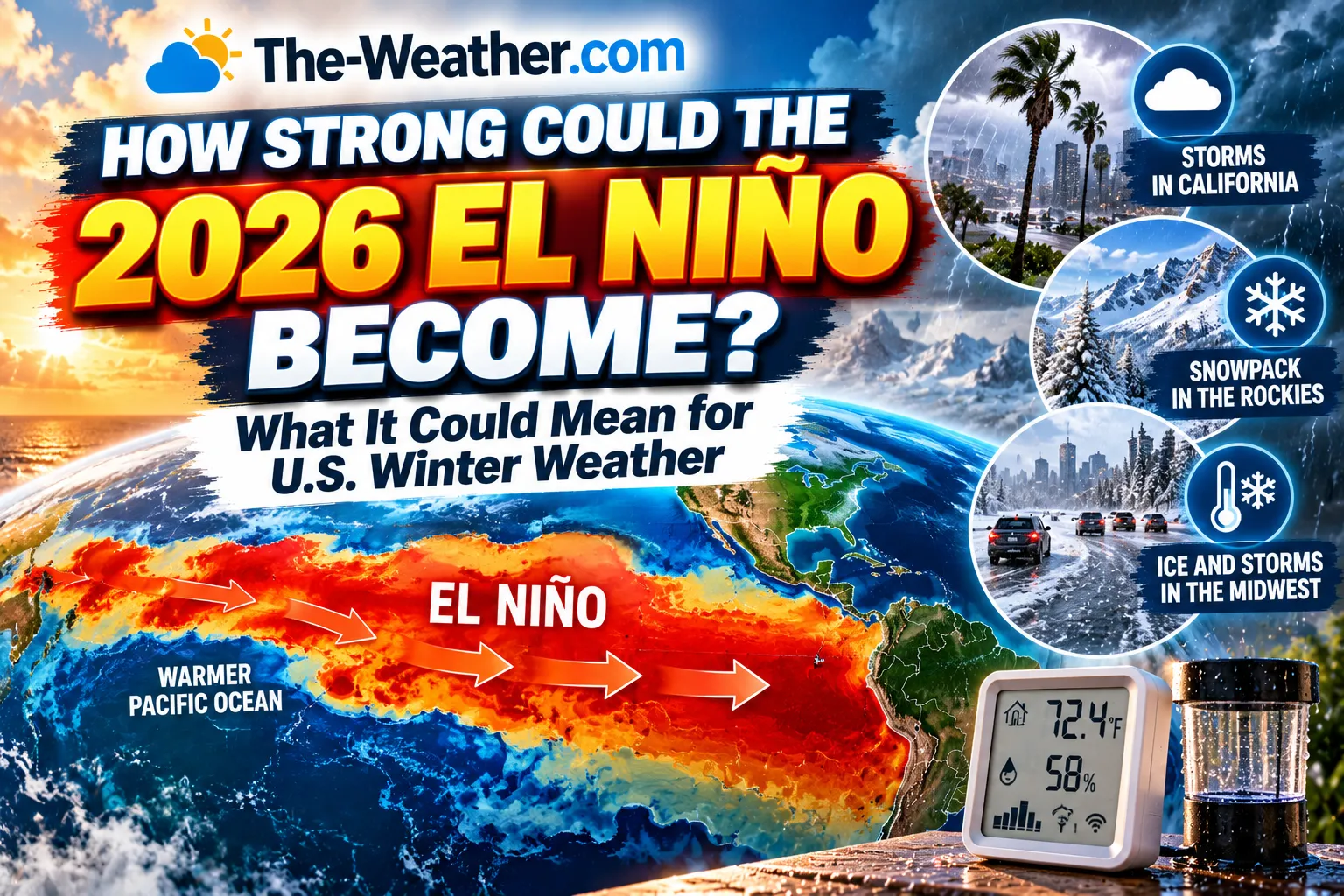
Every few years the Pacific Ocean near the equator warms up, and suddenly half the country is talking about El Niño. This year the talk is louder than usual, and for good reason: NOAA now gives the 2026 event a very high chance of becoming very strong, and forecasts a real chance that it could become the strongest since records began in 1950. That is a forecast, not a done deal. So what does that mean for the snow shovel, the rain gauge and the power bill in your part of the country? Let me walk you through it, without the hype.
Short answer: very likely very strong, and possibly historically strong. In its October 8, 2026 update, NOAA's Climate Prediction Center called a strong-to-very strong El Niño likely through January to March 2027 (a greater than 83% chance), and put the chance of an event that would be historically strong, stronger than any since 1950, at 83% for October to December (NOAA CPC). For U.S. winter weather, that tilts the odds toward a wetter South and California and a milder North. Tilts the odds, not guarantees: every El Niño winter still has its own surprises.
Editorial Research & Review
- Written by
- Lena Thornton, Weather Station Analyst & CWOP Contributor
- Based on
- NOAA Climate Prediction Center ENSO updates (September and October 2026) and seasonal outlook (September 2026), NOAA climate research on past El Niño winters
- Hands-on testing
- Not performed by The-Weather.com for the products on this page
- Research last verified
- October 12, 2026
Where the 2026 El Niño Stands Right Now
NOAA has an El Niño Advisory in effect. That is the official way of saying: El Niño is here and expected to continue. In its October 8 update, the Climate Prediction Center wrote that El Niño "strengthened further last month, with sea surface temperature anomalies exceeding +4.0°C in portions of the eastern equatorial Pacific" (NOAA CPC ENSO discussion). In plain English: parts of the ocean there are more than 7°F warmer than normal. That is a lot of extra heat sitting right under the jet stream's nose.
Figures from NOAA's ENSO discussion of October 8, 2026 and its October strength chart; the December to February figure is read from that chart (NOAA CPC strength table). The next ENSO update is due on November 12, 2026, and we will update this page after it.
How Strong Is "Very Strong"? The Scale Explained
NOAA measures El Niño with an index called RONI (Relative Oceanic Niño Index). Since February 2026 it has replaced the older ONI. RONI compares the key area of the Pacific with the rest of the tropical oceans, so a warming planet does not make every El Niño look stronger than it really is (NOAA CPC). The number is the temperature difference in °C, averaged over three months:
The famous "super" El Niños of 1982-83, 1997-98 and 2015-16 were all in the very strong class. "Super" is a nickname, not an official NOAA category. If you like the history, our page on the strongest El Niño events in history lines them all up, and what causes El Niño explains the ocean and wind behind it.
What It Could Mean for U.S. Winter Weather
Here is the key idea. During El Niño the Pacific jet stream, the fast river of air that steers storms, tends to stretch out and run across the southern United States. The polar jet tends to stay farther north. The result is a fairly familiar pattern, and NOAA's September outlook calls it "a classic El Niño signature" (NOAA CPC seasonal outlook):
| Region | What the odds favor this winter | Read more |
|---|---|---|
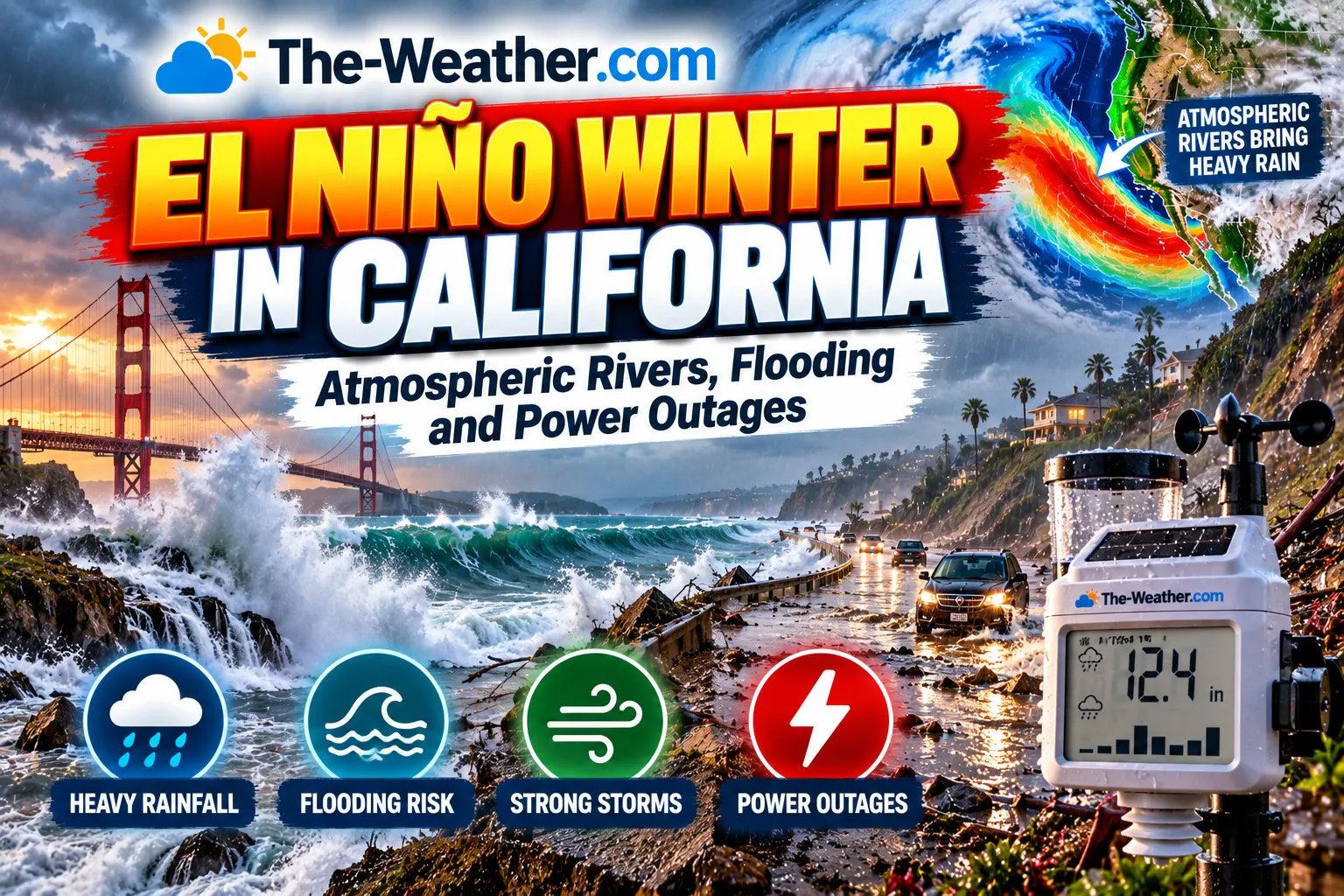
| California | Wetter than normal, 50 to 60% chance near the coast in winter. Storms, atmospheric rivers, flooding risk. | El Niño winter in California |
| Southwest, Gulf Coast, Southeast | Wetter than normal, up to 70 to 80% chance over southern Georgia and northern Florida. | Track rainfall at home |
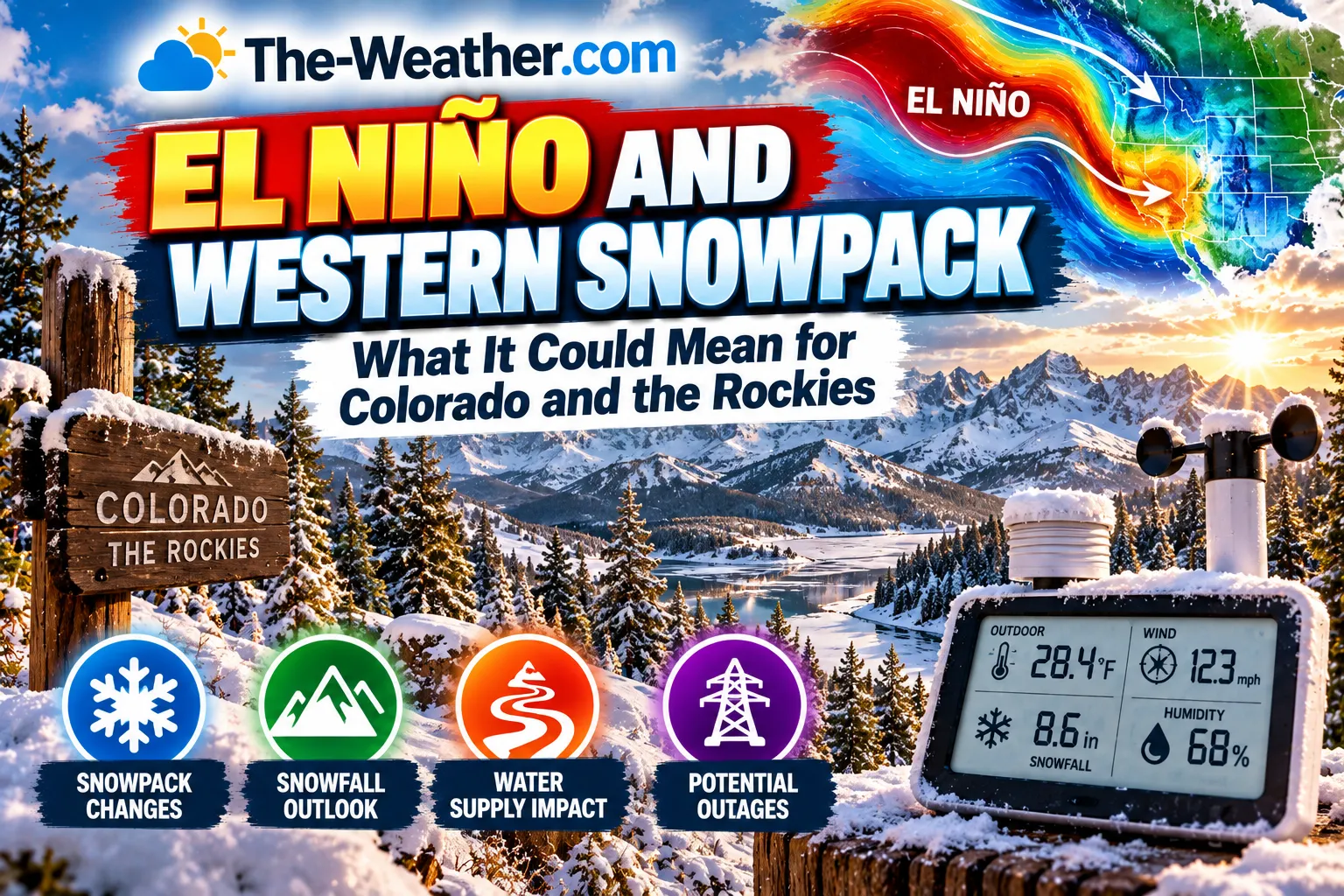
| Colorado and the Rockies | NOAA's broad wet signal covers the southern and central U.S., while the interior Northwest leans slightly dry. Temperatures in the southern Rockies are a coin flip. | El Niño and western snowpack |
| Northern tier and Midwest | Milder than normal, with a slight dry tilt around the Great Lakes. Cold snaps still happen. | El Niño in the Midwest |
| Interior Northwest | Slightly drier and warmer than normal. | Super El Niño 2026 tracker |
NOAA climate scientists note that the Gulf Coast is the most consistent signal in strong El Niño winters, that the Ohio and Tennessee Valleys often run drier, and that California's wet signal gets more reliable the stronger the event is (NOAA Climate.gov).
Why a Strong El Niño Is Not a Guarantee
I wish El Niño came with a money-back guarantee. It does not. NOAA itself says that with an event this big, the chance of typical El Niño impacts is larger, "though not guaranteed". Two reminders keep me humble:
So think of El Niño as loaded dice, not a script. Your local forecast and warnings still decide what you do on any given day.
The Side Effect Everyone Noticed: A Quiet Hurricane Season
El Niño also adds strong upper-level winds over the tropical Atlantic, which tear young storms apart. That is a big reason why the 2026 Atlantic season reached late September without a single hurricane, something not seen since 1914. The full story is in why the 2026 Atlantic hurricane season has had no hurricanes, and the mechanism in how El Niño affects the Atlantic hurricane season.
What to Do at Home This Winter
You cannot change El Niño, but you can make sure it does not catch you off guard. Here is my short list, from cheapest to most fun:
Get the warnings
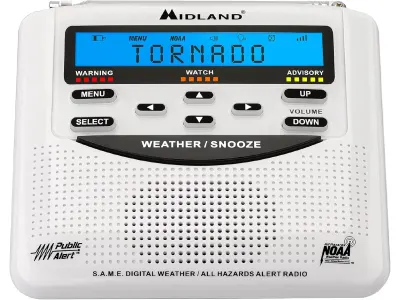
A NOAA weather radio with S.A.M.E. wakes you for a flood or winter storm warning, even when the phone is on silent. Program it with our S.A.M.E. code steps.
Measure your own rain
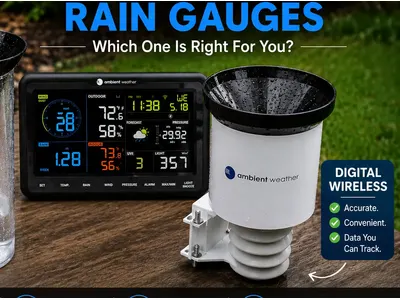
In a wet El Niño winter, knowing how fast rain is falling at your house tells you more than a regional total. See how much rain is too much.
Plan for outages
Storms bring down trees and power lines. A crank radio and a charged power bank keep you informed. More in weather radio for power outages.
Weather Tools for an El Niño Winter
Find your match in 10 seconds
Strong fit for night-time warnings
Midland WR120B NOAA Weather Alert Radio
Why it fits an El Niño winter: A desktop S.A.M.E. alert radio that stays quiet until there is a warning for your programmed counties, then sounds a loud siren. Battery backup keeps it working when the power fails.
Research basis: our Midland WR120B review, Midland's specifications.
Good fit if
- You want night-time alerts for your county
- You want simple setup
- You want battery backup when the power fails
Skip it if
- You want AM/FM radio too
- You want the warning read out
- You need a portable radio
Check current price on Amazon
Check current price on AmazonMidland WR120B · opens in a new tabNot sure yet? Read our Midland WR120B review
Strong fit for wet winters
AcuRite 02446M Wireless Rain Gauge
Why it fits an El Niño winter: A self-emptying wireless gauge with a display indoors, rainfall history and rainfall alerts. Handy when one storm after another rolls in.
Research basis: our rain gauge article, AcuRite's specifications.
Good fit if
- You want to follow the rain from your couch
- You want an alert when rain adds up
- You want daily and storm totals
Skip it if
- You report to CoCoRaHS (manual gauges are required)
- You want a phone app
- You prefer no batteries
Check current price on Amazon
Check current price on AmazonAcuRite 02446M · opens in a new tabNot sure yet? Read our rain gauge article
Strong fit for tracking the whole winter
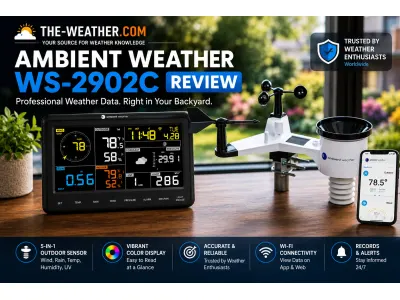
Ambient Weather WS-2902C
Why it fits an El Niño winter: A full weather station with rain totals, wind, temperature and humidity on the console and in the app. Its history lets you compare this winter with the next one.
Research basis: our WS-2902C review, Ambient Weather's documentation.
Good fit if
- You want rain, wind and temperature on your phone
- You like history to compare storms
- You want to share data with Weather Underground
Skip it if
- You only need one measurement
- You have no open spot for the array
- Your Wi-Fi is 5 GHz only
Check current price on Amazon
Check current price on AmazonWS-2902C · opens in a new tabNot sure yet? Read our WS-2902C review
2026 El Niño FAQ
How strong will the 2026 El Niño get?
NOAA's October 2026 update calls a strong-to-very strong El Niño likely through January to March 2027 (a greater than 83% chance), and puts the chance of an event during October to December that would be historically strong, stronger than any El Niño since 1950, at 83%. That is a forecast: whether 2026 actually becomes historic will only be known once the season's data is in.
Is the 2026 El Niño a "super El Niño"?
"Super El Niño" is a nickname, not an official category. NOAA's top official classes are very strong (2.0°C or more) and, for this event, historic (2.5°C or more on the RONI index). NOAA's forecast gives 2026 a good chance to reach those classes, but that is not yet confirmed.
What does El Niño mean for winter in the United States?
It tilts the odds toward a wetter southern U.S. and California, and a milder, often drier northern U.S. and Ohio Valley. These are odds, not guarantees: storms, ice and cold snaps can still happen anywhere.
When will El Niño end?
NOAA's strength table shows the event weakening during spring 2027, with neutral conditions becoming the most likely outcome by around April to June 2027.
Update Log
- October 12, 2026: Updated with NOAA's ENSO discussion of October 8, 2026: new status, new strength chances and the date of the next update.
- October 2, 2026: Page published. El Niño status, strength probabilities and winter outlook checked against NOAA Climate Prediction Center updates of September 10 and September 17, 2026.
Sources
- NOAA Climate Prediction Center: ENSO Diagnostic Discussion (September 10 and October 8, 2026)
- NOAA Climate Prediction Center: ENSO strength probabilities
- NOAA Climate Prediction Center: switch to the Relative Oceanic Niño Index
- NOAA Climate Prediction Center: seasonal outlook discussion (September 17, 2026)
- NOAA Climate.gov: United States El Niño impacts
- UC San Diego: Why was the 2015-16 El Niño so dry?
- Midwestern Regional Climate Center: El Niño impacts and outlook, Midwest
- Our articles: Super El Niño 2026 tracker, strongest El Niño events, understanding ENSO
See also: El Niño Winter in California · El Niño and Western Snowpack · El Niño in the Midwest · 2026 Hurricane Season