
As an Amazon Associate, I earn from qualifying purchases.
In this article 8 sections
Update, October 9, 2026: the quiet streak is over. Isaias became the first Atlantic hurricane of 2026 late on October 7. On the morning of October 9 the National Hurricane Center listed it as a major hurricane with 120 mph winds, heading for the northern Gulf Coast (NHC update, 7:20 a.m. CDT). This page is background reading, not a warning: for the current situation, follow the National Hurricane Center and your local officials.
Until Isaias, the Atlantic had not produced a single hurricane all year. No season had gone that long without one since 1914. Here is what happened, why El Niño was a major factor, and why the kit should stay ready until the end of November.
Short answer: the 2026 Atlantic season had named storms but no hurricanes until October 7, 2026, when Isaias became the first. Reaching late September without one had not happened since 1914, and October 7 is the latest first hurricane of the satellite era, which began in 1966 (Fox Weather, WBTV). The main reason is a very strong El Niño, which adds strong upper-level winds (wind shear) over the tropical Atlantic that tear developing storms apart (NOAA). The season runs until November 30.
Editorial Research & Review
- Written by
- Lena Thornton, Weather Station Analyst & CWOP Contributor
- Based on
- National Hurricane Center advisories, outlooks and climatology, NOAA's 2026 seasonal outlook update, NOAA Climate Prediction Center ENSO updates, news reports on the season's records
- Hands-on testing
- Not performed by The-Weather.com for the products on this page
- Research last verified
- October 9, 2026
The 2026 Season by the Numbers
Sources: WBTV, WCAX. On October 2 the National Hurricane Center was only watching the remnants of former Tropical Storm Fay, with a low 10% chance of development (NHC outlook). Five days later Isaias became a hurricane (Fox Weather).
To put it in context: in an average season, the first hurricane forms in early to mid-August, and the peak of the season is September 10 (NHC climatology). This year we sailed right past both.
Why There Were No Hurricanes Until October: El Niño
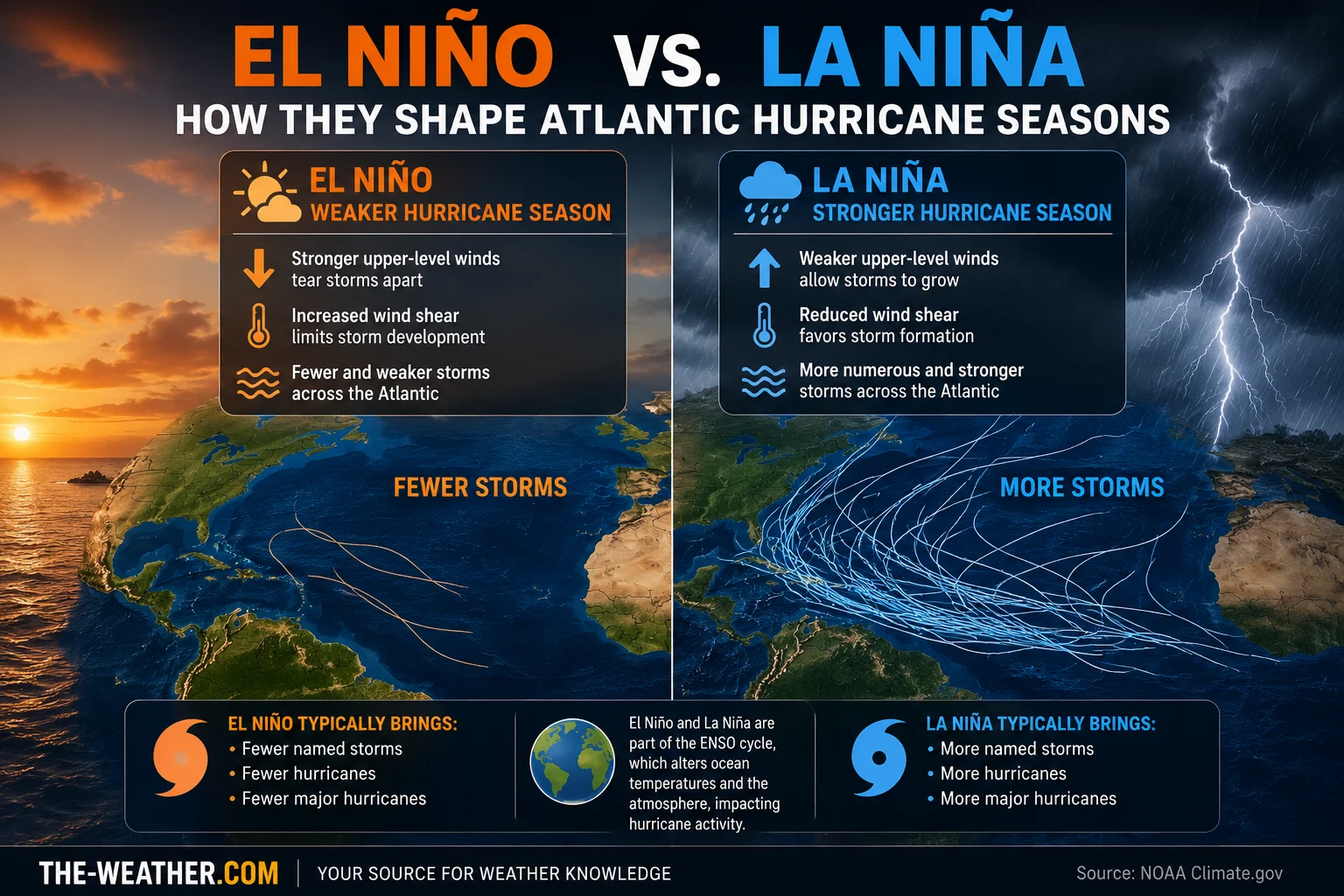
Hurricanes need three things: warm water, moist air, and calm winds high up so the storm can stack itself into a tall, organized column. El Niño breaks that third ingredient. It strengthens the winds high over the tropical Atlantic, and that wind shear tilts and tears young storms apart before they can organize. Think of trying to build a sandcastle while someone keeps blowing a leaf blower at it.
NOAA saw it coming. Its August 6 update lowered the forecast to 7 to 13 named storms, 2 to 6 hurricanes and 0 to 2 major hurricanes, with a 75% chance of a below-normal season, pointing to "the growing influence of El Niño" (NOAA seasonal outlook). The observed lack of hurricanes has been unusually quiet even compared with NOAA's below-normal seasonal outlook. By September, NOAA rated the El Niño as very likely to become very strong this winter (NOAA CPC).
More on the mechanism in how El Niño affects the Atlantic hurricane season, and a look at decades of data in El Niño vs La Niña hurricane seasons. How big this El Niño could get is in how strong the 2026 El Niño could become.
Could 2026 Have Ended With No Hurricanes at All?
It was possible, but it would have been rare. Isaias took 2026 off that list on October 7. In records going back to 1851, only two Atlantic seasons finished without a known hurricane: 1907 and 1914 (WCAX). Keep in mind that back then there were no satellites or hurricane hunter aircraft, so a storm far out at sea could easily be missed. That makes 2026, watched by satellites every minute, even more unusual.
Why You Should Not Put the Hurricane Kit Away Yet
Isaias is the reminder: it went from the season's first hurricane to a major hurricane in less than two days. The season runs until November 30. Forecasters point out that late-season storms "can form in the Caribbean, Gulf of Mexico or western Atlantic, sometimes close enough to Florida to leave little time for residents to prepare" (CBS12). Storms that form close to land are the tricky ones: less warning, and sometimes fast strengthening (see rapid intensification).
History has a few sobering reminders that a quiet season is not a safe season. 1992 was a below-normal year, and it gave us Hurricane Andrew in South Florida. 1983 had only four named storms, and one of them was Hurricane Alicia in Galveston and Houston. It only takes one.
Your kit ready
Water, batteries, medicines, documents and a radio stay ready until November 30.
The Gulf and Caribbean
Check the National Hurricane Center now and then, especially for systems close to land.
On warnings
If a watch or warning is issued for your area, follow local officials. Quiet seasons do not make single storms weaker.
Our checklist of 5 weather tools every home should have in hurricane season still applies, and so does the weather radio page for Florida and the Gulf Coast. Houston readers: see weather alert radio for Houston and Southeast Texas.
Hurricane Preparedness: Stay Ready for the Rest of the Season
These tools have nothing to do with why the season has been quiet. They are simply the practical basics for the weeks that are left: a way to get warnings, and a way to stay informed if the power goes out.
Find your match in 10 seconds
Strong fit for night-time warnings
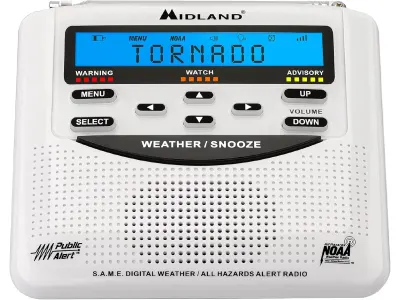
Midland WR120B NOAA Weather Alert Radio
Why it fits hurricane season: A S.A.M.E. alert radio that stays quiet until there is a warning for your programmed counties, then sounds a loud siren. Battery backup keeps it working when the power fails.
Research basis: our Midland WR120B review, Midland's specifications.
Good fit if
- You want night-time alerts for your county
- You want simple setup
- You want battery backup when the power fails
Skip it if
- You want AM/FM radio too
- You want the warning read out
- You need a portable radio
Check current price on Amazon
Check current price on AmazonMidland WR120B · opens in a new tabNot sure yet? Read our Midland WR120B review
Strong fit for the hurricane kit
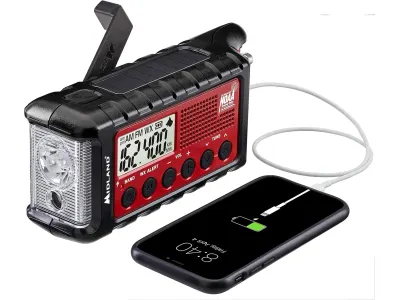
Midland ER310 Emergency Crank Weather Radio
Why it fits hurricane season: After a landfalling storm the power can be out for days. The ER310 charges by hand crank, sun or USB, takes AA batteries, scans the NOAA weather channels and adds a flashlight with SOS.
Research basis: our Midland ER310 review, Midland's specifications and the ER310 user manual.
Good fit if
- You want a radio for the emergency kit or car
- You live where outages can last days
- You want to charge a phone
Skip it if
- It would be your only night-time alert radio (no S.A.M.E.)
- You want something pocket-sized
- You only need home alerts
Check current price on Amazon
Check current price on AmazonMidland ER310 · opens in a new tabNot sure yet? Read our Midland ER310 review
2026 Hurricane Season FAQ
Why were there no hurricanes in 2026 until October?
The main reason is a very strong El Niño. It strengthens upper-level winds over the tropical Atlantic, and that wind shear tears developing storms apart before they can organize into hurricanes. NOAA had already forecast a below-normal season for that reason.
When was the last Atlantic season without a hurricane?
In records going back to 1851, only 1907 and 1914 finished without a known hurricane. 2026 is the first season since 1914 to reach late September without one. It will not join them: Isaias became a hurricane on October 7, 2026.
Is the 2026 hurricane season over?
No. The Atlantic hurricane season officially runs until November 30, and late-season storms can still form in the Caribbean, the Gulf of Mexico and the western Atlantic, sometimes close to land.
Does a quiet season mean lower risk for my area?
Fewer storms means fewer chances, but it does not make a single storm weaker. 1992 was a below-normal season and still brought Hurricane Andrew. Keep your kit and alerts ready until the season ends.
Update Log
- October 9, 2026: Isaias became the season's first hurricane on October 7 and a major hurricane by October 9. Title, summary, numbers, two headings and the FAQ updated. Checked against the National Hurricane Center update of 7:20 a.m. CDT, October 9, 2026, and Fox Weather (updated October 9, 2026).
- October 2, 2026: Page published. Storm count and records checked against news reports of September 21 to 29, 2026; current activity against the National Hurricane Center outlook of October 2, 2026; forecast figures against NOAA's August 6, 2026 update.
Sources
- National Hurricane Center: Hurricane Isaias update, 7:20 a.m. CDT, October 9, 2026
- Fox Weather: Isaias, the first Atlantic hurricane of 2026 (updated October 9, 2026)
- National Hurricane Center: Atlantic Tropical Weather Outlook
- National Hurricane Center: tropical cyclone climatology
- NOAA: 2026 Atlantic hurricane season outlook (August update)
- NOAA Climate Prediction Center: ENSO Diagnostic Discussion
- WBTV: longest hurricane-free stretch of the satellite era (September 29, 2026)
- WCAX: first season without a hurricane by September 21 in 112 years
- CBS12: no Atlantic hurricanes yet in 2026
- Our articles: how El Niño affects hurricanes, El Niño vs La Niña hurricane seasons, why we name storms
See also: How Strong Could the 2026 El Niño Become? · Weather Stations for Hurricane Season · Weather Radios for Hurricane Season