
As an Amazon Associate, I earn from qualifying purchases.
In this article 9 sections
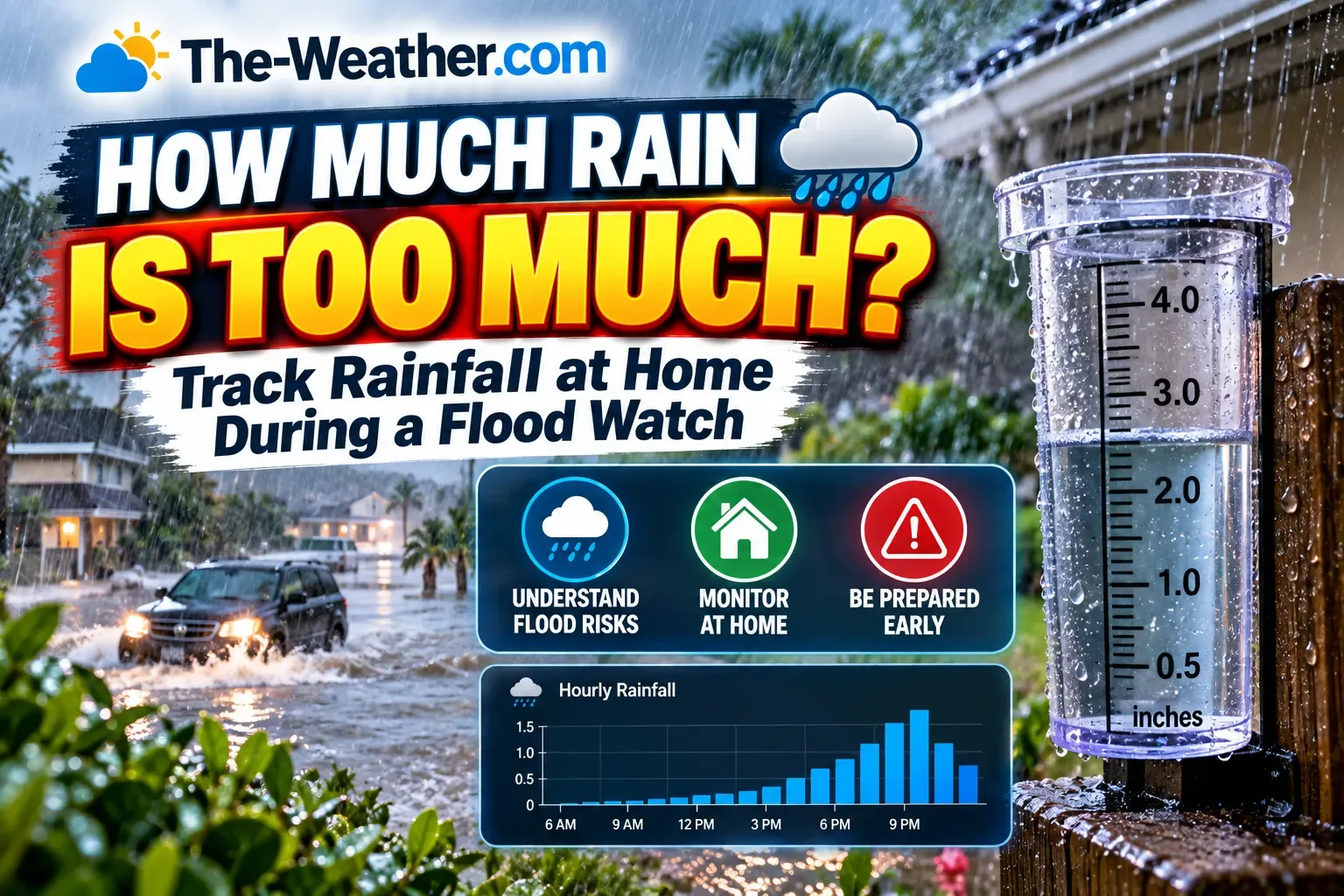
A Flood Watch is on. It is pouring. The big question in every household is the same: is this "a lot of rain", or is this "move the car and get the sandbags" rain? The honest answer is that there is no single magic number. But there is a way to know much more than the news can tell you: measure the rain at your own home, and watch how fast it falls.
Short answer: how much rain is "too much" depends on how fast it falls, how wet the ground already is, and how much pavement is around you. The National Weather Service uses Flash Flood Guidance: an estimate of how much rain over 1, 3 or 6 hours would make small streams flood, based on current soil moisture and stream flow. At home, read a rain gauge every hour during heavy rain and watch the rate, not just the total. Never drive into flood water: just 12 inches of rushing water can carry away most cars (NWS).
Editorial Research & Review
- Written by
- Lena Thornton, Weather Station Analyst & CWOP Contributor
- Based on
- National Weather Service flash flood and flood safety guidance, and our existing rain gauge and weather station research
- Hands-on testing
- Not performed by The-Weather.com for the products on this page
- Research last verified
- October 2, 2026
Why There Is No Single "Too Much" Number
Two inches of rain spread over a whole day is usually just a wet day. Two inches in one hour can flood streets in minutes. Three things decide what happens:
That is why the National Weather Service does not use one national number. Its River Forecast Centers publish Flash Flood Guidance: "an estimate of the amount of rainfall required over a given area during a given duration to cause small streams to flood", for 1, 3 and 6 hours, based on the current soil moisture and stream flow (NWS Flash Flood Guidance). Forecasters compare that with the rain that is falling or expected, and that is a big part of how a Flash Flood Watch becomes a Flash Flood Warning.
How to Track Rainfall at Home, Step by Step
1. Start with an empty gauge. When the watch is issued, empty your rain gauge or note the reading on your weather station.
2. Check it about once an hour during heavy rain, from indoors when possible. Write down the time and the amount. Do not go out in lightning or rising water to read a gauge. A digital gauge or weather station does this for you and shows the rain rate.
3. Look at the rate. If each hour brings more than the hour before, the storm is getting heavier, not easing off.
4. Add up the last 1, 3 and 6 hours. These are the same time windows the NWS uses. Big totals in a short window are the warning sign.
5. Look outside, not only at the number. Water rising in the street, a creek that is noticeably higher, or drains that back up tell you more than any gauge.
6. Compare with your area. Local networks show rainfall nearby. In the Houston area, the Harris County Flood Warning System shows rain and bayou levels in real time.
Example: What a Rain Log Looks Like
| Time | Rain this hour | Last 3 hours | What you notice |
|---|---|---|---|
| 8 p.m. | 0.2 in | 0.2 in | Steady rain |
| 9 p.m. | 0.6 in | 0.8 in | Rain getting heavier |
| 10 p.m. | 1.3 in | 2.1 in | Water pooling in the street |
An illustrative example, not a forecast or a threshold. In this log the rate doubles every hour: a clear sign to follow the latest NWS warnings closely and be ready to act.
When to Act
Get ready
Flooding is possible. Charge phones, move valuables and the car to higher ground, check your weather radio.
Watch closely
Your gauge shows heavier rain each hour, or water is rising in the street.
Act now
Flooding is happening or about to. Move to higher ground. Never drive or walk into flood water.
The NWS reminds us that just 6 inches of fast-moving water can knock over an adult and 2 feet can carry away SUVs and trucks (Turn Around, Don't Drown). A weather radio wakes you if a warning comes in at night: see our weather radio page for Houston and Southeast Texas.
Rain Gauges for Tracking a Flood Watch
Find your match in 10 seconds
Strong fit for indoor reading and alerts
AcuRite 02446M Wireless Rain Gauge
Why it fits a flood watch: a self-emptying wireless gauge with a display indoors, rainfall history and rainfall alerts, so you do not have to go out in the storm to read it.
Research basis: our rain gauge article, AcuRite's specifications.
Good fit if
- You want to follow the rain from your couch
- You want an alert when rain adds up
- You want daily and storm totals
Skip it if
- You report to CoCoRaHS (manual gauges are required)
- You want a phone app
- You prefer no batteries
Check current price on Amazon
Check current price on AmazonAcuRite 02446M · opens in a new tabNot sure yet? Read our rain gauge article
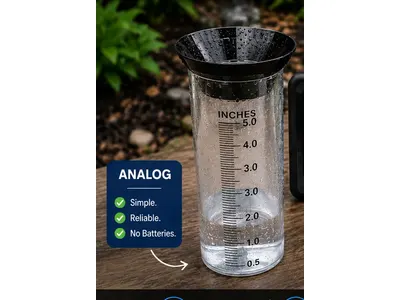
Strong fit for accurate manual readings
Stratus RG200
Why it fits a flood watch: a 4-inch manual gauge with 0.01-inch resolution, the classic standard design that CoCoRaHS volunteers use. No batteries, nothing to fail when the power goes out.
Research basis: our rain gauge article, the manufacturer's specifications and CoCoRaHS requirements.
Good fit if
- You want a simple manual gauge with 0.01-inch resolution
- You may report to CoCoRaHS
- You want something that works without power
Skip it if
- You do not want to go outside to read it
- You want automatic logging
- You want alerts
Check current price on Amazon
Check current price on AmazonStratus RG200 · opens in a new tabNot sure yet? Read our rain gauge article
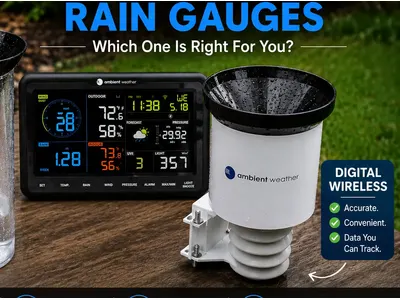
Strong fit for rain rate and more
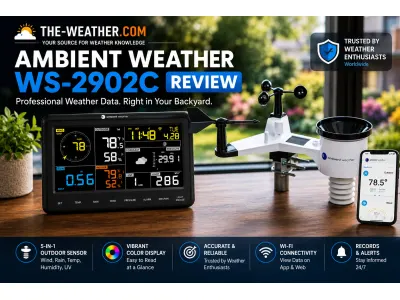
Ambient Weather WS-2902C
Why it fits a flood watch: a full weather station with a tipping-bucket rain gauge, rain totals and history on the console and in the app, and Weather Underground sharing. You also get wind, temperature and humidity.
Research basis: our WS-2902C review, Ambient Weather's documentation.
Good fit if
- You want rain data on your phone
- You want wind during storms too
- You like history to compare storms
Skip it if
- You only need rainfall
- You have no open spot for the array
- Your Wi-Fi is 5 GHz only
Check current price on Amazon
Check current price on AmazonWS-2902C · opens in a new tabNot sure yet? Read our WS-2902C review
Get Accurate Rain Readings
- Open sky above: away from trees, roofs and fences that block or drip rain into the gauge.
- Level and steady: a tilted gauge catches the wrong amount.
- Empty and clean: leaves and spider webs in the funnel cause low readings (see rain gauge not recording).
More detail in our article how rainfall is measured.
Flood Watch Rainfall FAQ
How much rain causes flash flooding?
It depends on how fast the rain falls, how wet the ground already is, and how much pavement is around. The National Weather Service estimates this as Flash Flood Guidance: how much rain over 1, 3 or 6 hours would make small streams flood in a given area, based on current soil moisture and stream flow.
Is the rain rate or the total more important?
Both matter. A high rainfall rate can be especially important because intense rain can overwhelm drainage and streams quickly, faster than the same amount spread over a day.
How often should I check my rain gauge during a flood watch?
During heavy rain, about once an hour is a good rhythm, from indoors when possible. Write down the time and amount so you can see whether the rain is speeding up. A digital gauge or weather station logs this automatically.
How deep does water need to be to sweep away a car?
According to the National Weather Service, just 12 inches of rushing water can carry away most cars, and 2 feet can carry away SUVs and trucks. Turn around, don't drown.
Update Log
- October 2, 2026: Page published. Flash Flood Guidance and flood safety figures checked against National Weather Service pages.
Sources
- National Weather Service: Flash Flood Guidance
- National Weather Service: Turn Around, Don't Drown
- Harris County Flood Control District: Flood Warning System
- Our articles and reviews: rain gauges, Ambient WS-2902C, Flash Flood Watch
See also: Flash Flood Watch · Best Weather Alert Radio for Houston Flooding · Best Rain Gauges