As an Amazon Associate, I earn from qualifying purchases.
In this article 13 sections
- Why Choose a Glass Rain Gauge Tube?
- Glass vs Plastic Rain Gauge Tube: Full Comparison
- How to Measure for the Right Glass Tube
- Best Glass Rain Gauge Replacement Tubes
- Winter Care: How to Prevent Your Glass Tube From Cracking
- Cleaning a Glass Rain Gauge Tube
- Which Glass Tube Fits My Rain Gauge Brand?
- Expected Lifespan of a Glass Rain Gauge Tube by Climate
- Common Reasons Glass Rain Gauge Tubes Break
- Can I Replace My Plastic Tube with a Glass One?
- Cost Comparison: Glass vs Plastic vs Kit
- Who Should Choose a Glass Rain Gauge Tube?
- Frequently Asked Questions

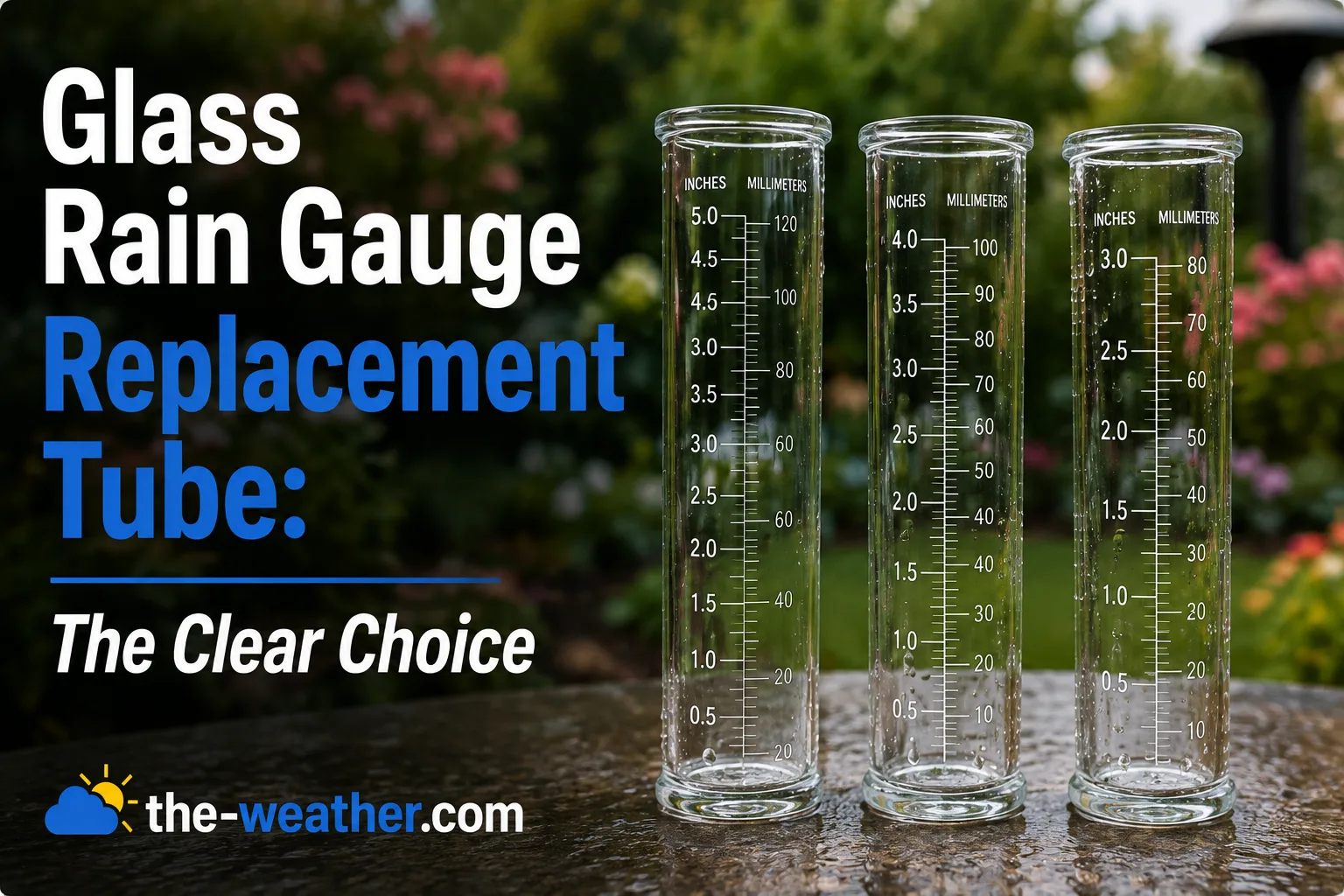
A glass rain gauge tube does one thing better than any plastic alternative: it stays clear. Plastic tubes yellow after two to five years of UV exposure, making the measurement scale progressively harder to read accurately. A glass tube stays optically clear indefinitely, and with one simple precaution each autumn, it will outlast any plastic tube you can buy.
This guide covers why glass is the better long-term choice for most gardeners, how to measure for the exact right size, the best glass tubes currently available on Amazon, and the one thing you must do before winter to prevent cracking.
A glass rain gauge replacement tube stays clear indefinitely and never yellows. It is the better long-term choice in mild and moderate climates. The only risk is cracking if left full of water during a hard freeze: empty it before the first frost and it will last for years. The most common size is 7 inches with a 2.24-inch opening. Always measure your existing tube before ordering.
Why Choose a Glass Rain Gauge Tube?
Plastic rain gauge tubes are perfectly functional when new. The problem is what happens over two to five years of outdoor UV exposure: the plastic slowly yellows and becomes cloudy, obscuring the measurement scale and making accurate readings increasingly difficult. Many gardeners blame their rain gauge for inaccuracy when the real problem is that they simply cannot read the faded scale on a yellowed tube.
Glass does not yellow. It does not become cloudy from UV exposure. The measurement scale stays as readable after ten years as it was on the first day. For anyone who wants a long-term, low-maintenance rain gauge solution, glass is the material that makes the most sense: provided you take one simple precaution before each winter.
- Stays optically clear indefinitely: no yellowing, no cloudiness from UV
- Measurement scale remains readable for far longer than plastic alternatives
- Resists mineral staining: glass absorbs less mineral deposit than plastic over time
- Premium look and feel: glass tubes sit naturally in traditional garden settings
- Easier to clean: smooth glass surface releases mineral deposits more readily than porous plastic
Glass vs Plastic Rain Gauge Tube: Full Comparison
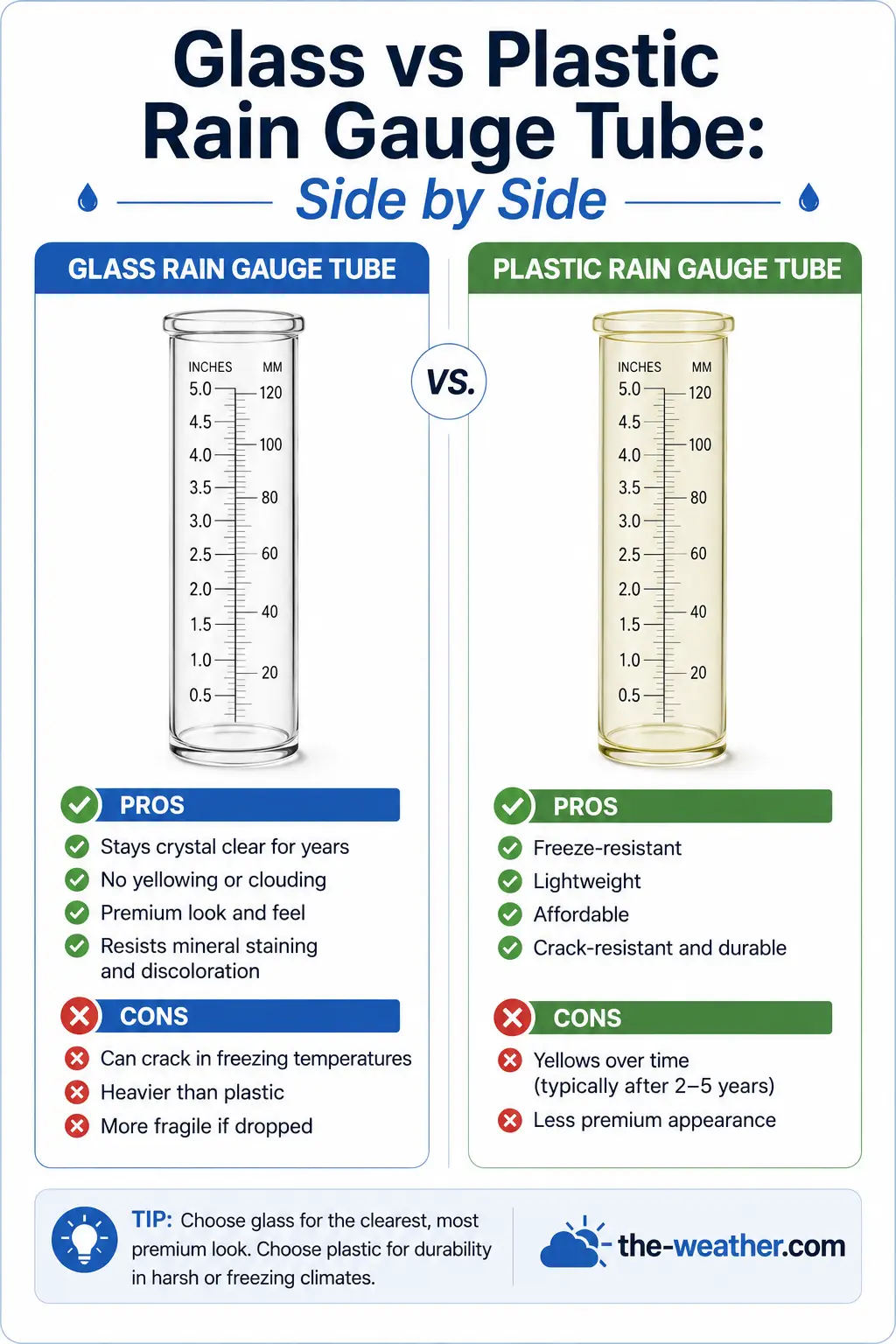
| Feature | Glass | Plastic |
|---|---|---|
| Long-term clarity | Stays clear indefinitely | Yellows after 2 to 5 years |
| Freeze resistance | Cracks if left full in a freeze | Flex-resistant, survives most freezes |
| Impact resistance | Shatters on hard impact | Flexes rather than shatters |
| Mineral deposit resistance | Smooth surface: easy to clean | Can absorb staining over time |
| UV resistance | Unaffected by UV | Degrades and yellows with UV exposure |
| Weight | Heavier | Lighter |
| Cost | Slightly higher | Lower |
| Lifespan | Indefinite if protected from freezing | 2 to 5 years typical |
| Winter maintenance required | Empty before each frost | None required |
| Best for | Mild climates, long-term clarity | Cold climates, low maintenance |
How to Measure for the Right Glass Tube
Glass tubes are not universal. The wrong size will either not fit your gauge housing or produce inaccurate readings because the scale is calibrated to a specific opening diameter. Measure three dimensions before ordering.
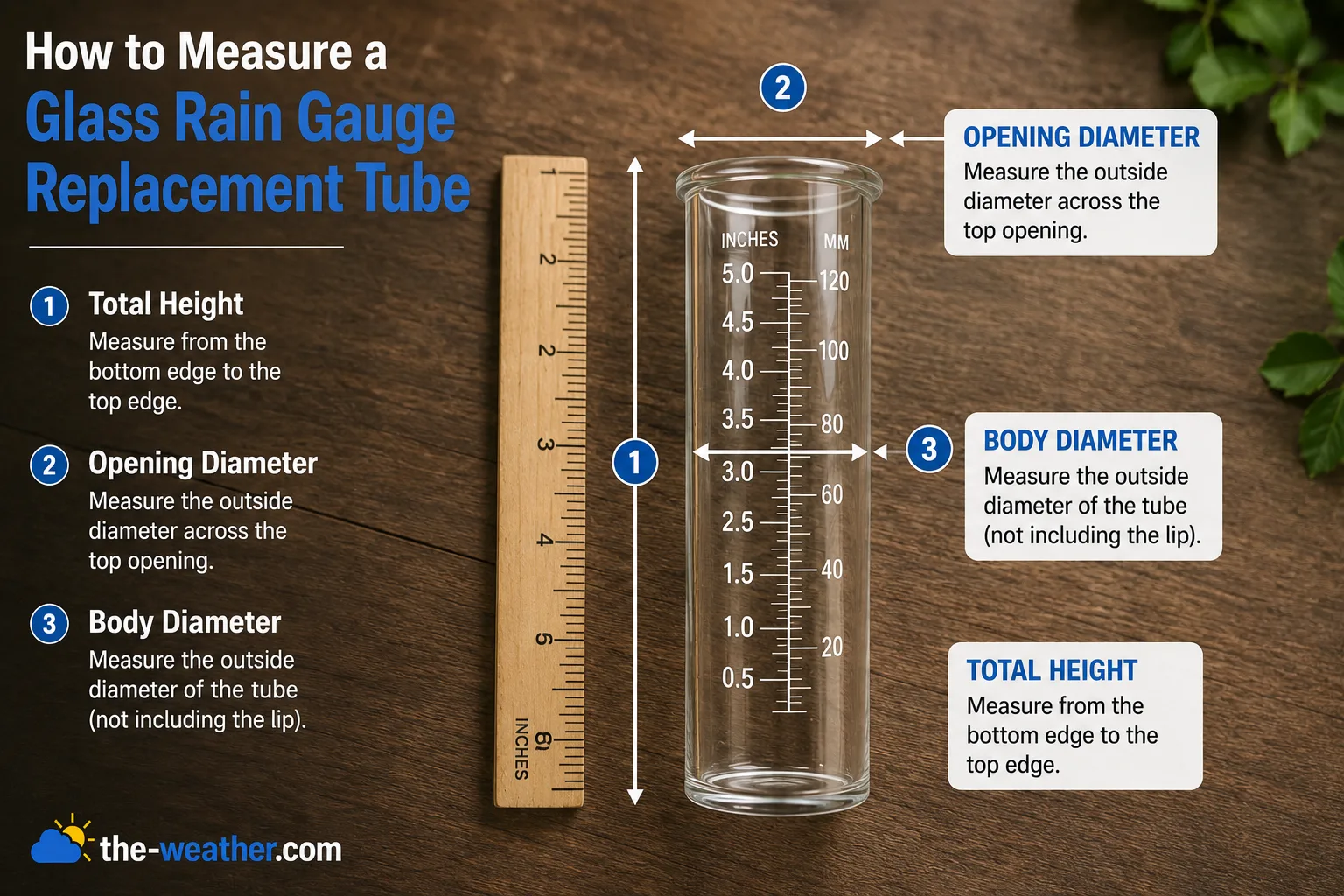
Measure from base to top lip. Most standard gauges use a 5-inch or 7-inch tube. The 7-inch is the most common size for glass replacement tubes.
Measure the inner diameter at the very top. Standard openings are 1.5 inches or 2.24 inches. This must match exactly: it affects reading accuracy.
Measure the outer diameter of the tube body. This must fit inside your gauge housing or bracket. Typically 0.75 to 1.25 inches.
| Common glass tube size | Opening diameter | Fits most |
|---|---|---|
| 5 inch glass tube | 1.5 in or 2.0 in | Smaller standard garden gauges |
| 7 inch glass tube | 1.5 in or 2.24 in | Most standard garden rain gauges |
| 8 inch glass tube | 2.0 in or larger | Larger capacity or professional gauges |
Best Glass Rain Gauge Replacement Tubes
Both glass options below are from the Amazon product set we reviewed for the main rain gauge replacement tube guide. They represent the best available glass options at their respective price points.
The best single glass tube for most standard garden rain gauges. The 2.24-inch opening diameter is the most common standard size, fitting the majority of rain gauge housings. The glass stays optically clear indefinitely and the measurement scale is easy to read at distance. A premium choice for gardeners in mild climates who want the best long-term clarity.
- Glass stays clear indefinitely
- 2.24" opening fits most standard gauges
- Clear, easy-to-read scale
- Premium look and feel
- Easy to clean
- Single unit: no spare included
- Must be emptied before hard freezes
- More fragile than plastic on impact
Best for: Gardeners in mild climates who want the best long-term glass tube and do not need a spare.
Check Price on Amazon As an Amazon Associate we earn from qualifying purchases at no extra cost to you.The JOYBee 2-pack is the better value choice for glass tube buyers. Two glass tubes means you always have a spare when the inevitable happens: a hard frost with the tube still full, a hailstorm, or an accidental knock. Standard 7-inch size fits most mid-size garden rain gauges. Both tubes include clear measurement markings that stay readable for years.
- Glass clarity and longevity
- 2-pack gives you a spare
- Better value per tube than single options
- Standard 7-inch size
- Must be emptied before hard freezes
- More fragile than plastic on impact
Best for: Glass tube buyers who want a spare on hand and live in a mild-to-moderate climate.
Check Price on Amazon As an Amazon Associate we earn from qualifying purchases at no extra cost to you.If you need both a new mounting solution and glass replacement tubes, this kit covers both in one purchase. The stainless steel post-mounting rack outlasts plastic brackets significantly in outdoor conditions. Two 5-inch glass tubes are included, giving you an immediate working setup and a spare. Best choice when both the tube and the original mounting have deteriorated.
- Complete solution: tubes and stainless mounting rack
- Two glass tubes included
- Stainless rack resists corrosion long-term
- No separate mounting purchase needed
- 5-inch capacity only
- Glass tubes need winter care in cold climates
- Higher price than tube-only options
Best for: Buyers who need both new glass tubes and a durable new mounting bracket in a single purchase.
Check Price on Amazon As an Amazon Associate we earn from qualifying purchases at no extra cost to you.Winter Care: How to Prevent Your Glass Tube From Cracking
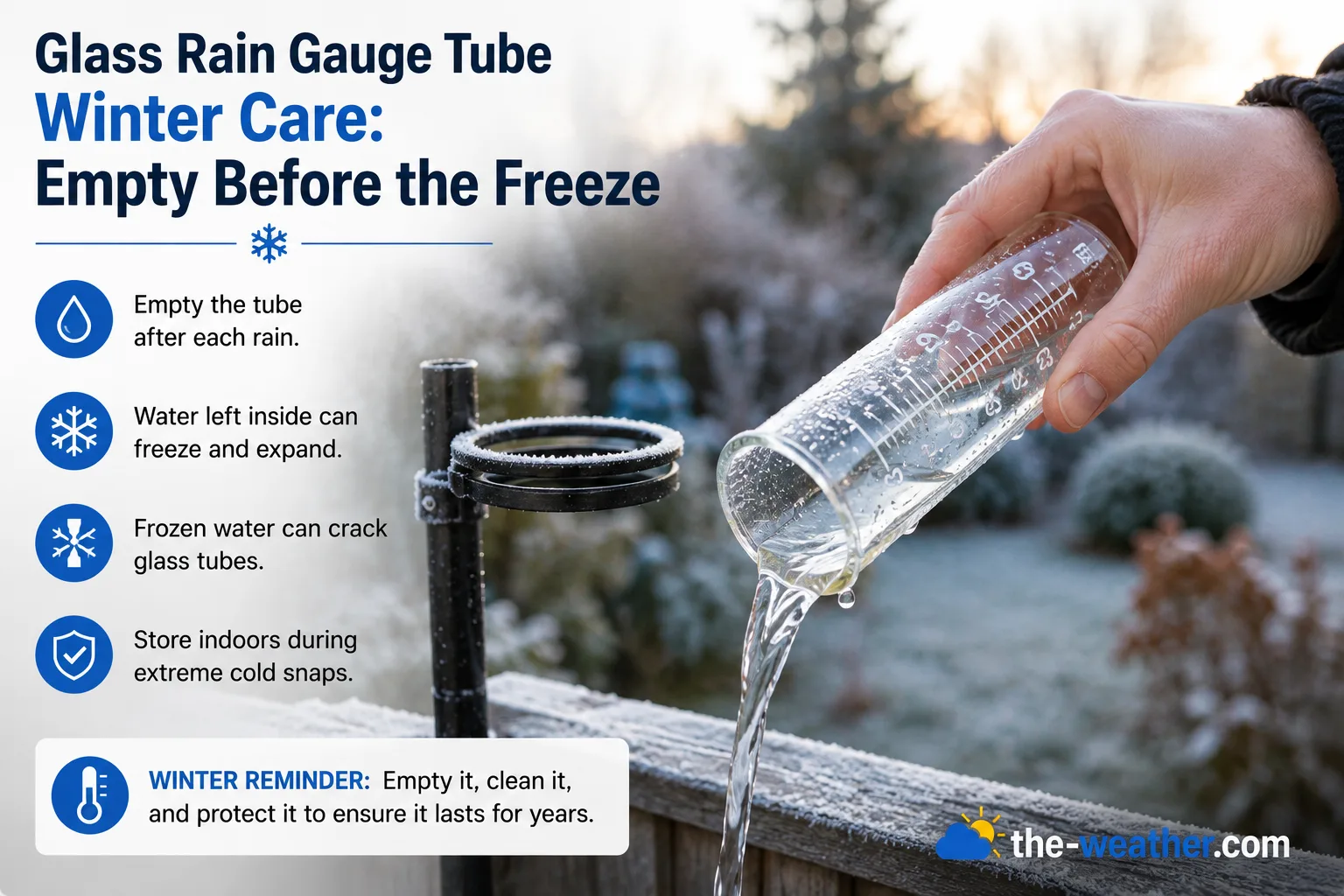
The only real risk with a glass rain gauge tube is freeze cracking. Water expands approximately 9 percent when it freezes: enough force to crack the glass from the inside if the tube is full. This is entirely preventable with one simple habit.
- Check the forecast each evening from October through March in cold climates
- Empty the tube any time overnight temperatures are forecast below 32°F (0°C)
- Do not rely on the tube being mostly empty, even a small amount of water can cause cracking if it pools at the base and freezes solid
- If your area experiences hard, repeated frosts in winter, bring the tube indoors for the season and reinstall in spring
- If you forget and the tube freezes but does not crack, do not force it: allow it to thaw naturally before checking for hairline cracks
- A cracked tube that appears intact may leak slowly: verify by filling with water over a sink before reinstalling
Cleaning a Glass Rain Gauge Tube
Glass is easier to clean than plastic because its smooth, non-porous surface does not absorb mineral deposits the way plastic can over time. Regular cleaning keeps the scale readable and the tube accurate.
- After each significant rainfall: Rinse with clean water to remove debris and insects that may have entered the funnel.
- Monthly: Check the inside of the tube for mineral scaling. Hard water areas produce white calcium deposits that can obscure the scale over time.
- For mineral deposits: Soak in one part white vinegar to three parts water for 30 minutes. The acid dissolves calcium deposits without scratching the glass surface. Scrub gently with a thin cleaning brush and rinse thoroughly.
- Do not use: Abrasive cleaners, steel wool, or harsh chemical solvents. These can scratch the glass surface, making the scale harder to read and creating surfaces where deposits accumulate faster.
- Algae growth: In shaded or humid environments, green algae can grow inside the tube. A diluted bleach solution (one part bleach to twenty parts water, soak for 15 minutes) eliminates algae without damaging glass. Rinse thoroughly before reinstalling.
Which Glass Tube Fits My Rain Gauge Brand?
Most standard garden rain gauge brands use one of two common tube sizes. Use this table as a starting point, then always measure your existing tube or housing to confirm before ordering.
| Brand | Typical glass tube size | Typical opening diameter | Notes |
|---|---|---|---|
| AcuRite (garden gauges) | 5 inch or 7 inch | 1.5 in or 2.24 in | AcuRite also sells official glass replacement tubes directly. Check model number on base. |
| Taylor | 5 inch | 1.5 in | Most Taylor garden gauges use a standard 5-inch tube. Measure housing inner diameter to confirm. |
| Headwind (Springfield) | 7 inch | 1.5 in or 2.0 in | Standard 7-inch glass tubes generally compatible. Measure existing tube first. |
| Gardener's Select | 7 inch | 2.0 in or 2.24 in | Most models accept standard 7-inch tubes. Decorative models may vary. |
| Evergreen Garden | 7 inch | 1.5 in | Standard 7-inch glass tubes typically fit Evergreen housings. |
| Toland | 7 inch | 2.0 in | Decorative gauges vary significantly. Measure housing inner diameter carefully before ordering. |
| Conant Custom Brass | 7 inch or 8 inch | 1.5 in | Traditional brass-mounted gauges often use narrow-opening glass tubes. Measure carefully. |
| SPI Home | 7 inch | 1.5 in or 2.0 in | Ornamental gauges: measure before ordering as sizes vary across their decorative range. |
Expected Lifespan of a Glass Rain Gauge Tube by Climate
A glass tube does not have a fixed lifespan the way a plastic tube does. It will last indefinitely unless it is cracked or broken. The question is how much winter management effort is required to protect it.
| Climate | Freeze risk | Expected glass tube life | Management required |
|---|---|---|---|
| Florida, Gulf Coast, Hawaii | Negligible | 10 to 20+ years | None, glass is the ideal choice here |
| California, Pacific Northwest | Low to moderate | 10 to 20+ years | Empty on the rare frost night |
| Arizona, New Mexico (low elevation) | Low | Effectively unlimited | Minimal, occasional winter empties |
| Mid-Atlantic, Carolinas | Moderate | 10+ years | Empty before forecast frost nights Oct–Mar |
| Midwest, Great Plains | High | Lifetime if emptied each freeze | Regular winter management required or bring indoors |
| Minnesota, Wisconsin, Michigan | Very high | Lifetime if stored indoors Nov–Mar | Easiest to bring inside for winter: reinstall in spring |
| Mountain West (high elevation) | Very high | Lifetime if stored indoors | Freeze risk too frequent for outdoor winter use |
Common Reasons Glass Rain Gauge Tubes Break
Most glass tube breakages are preventable. Here are the most common causes and how to avoid each one.
| Cause | How it happens | How to prevent it |
|---|---|---|
| Freeze cracking | Water left in the tube expands 9% when frozen, cracking the glass from inside | Empty the tube before any forecast frost. See the winter care section above. |
| Hail impact | Large hailstones strike the exposed tube during a severe storm | Bring the tube indoors during severe storm warnings. Keep a spare tube on hand: a 2-pack means you are back up in minutes. |
| Lawn mower or strimmer | Projectile debris or direct contact during garden maintenance | Ensure your rain gauge is mounted clear of lawn maintenance areas. Position it away from the lawn edge. |
| Dropping during cleaning | Glass slips from wet hands during removal or cleaning | Work over grass rather than paving when removing the tube. Dry your hands before handling glass. Consider cleaning in place with a long brush. |
| Overtightening the mounting bracket | Excessive clamping pressure on the tube body causes stress fractures | Tighten mounting brackets finger-tight only. Glass tubes do not need to be clamped hard: they sit by gravity in most standard housings. |
| Thermal shock | Pouring very hot water into a cold glass tube or vice versa | Always use room-temperature water when cleaning or testing. Avoid cleaning with boiling water. |
Can I Replace My Plastic Tube with a Glass One?
Yes, in most cases you can upgrade from a plastic rain gauge tube to a glass one without any modification to your gauge housing or bracket. The key is that the glass tube must match the same three dimensions as your existing plastic tube: total height, opening diameter, and body diameter.
The measurement scale on a rain gauge is calibrated to the opening diameter of the tube. As long as you replace with the same opening diameter, the new glass tube will read exactly as accurately as the original plastic one, and will stay readable for significantly longer.
| Question | Answer |
|---|---|
| Do I need to change the housing or bracket? | No, use the same housing. Only the tube itself changes. |
| Will the readings stay accurate? | Yes, provided the opening diameter matches your original tube exactly. |
| Will the glass tube be heavier? | Slightly, but not enough to affect how the gauge sits in its housing. |
| Do I need to recalibrate anything? | No, the scale is on the tube itself. A matching replacement tube needs no recalibration. |
| Is there any reason NOT to upgrade to glass? | Yes: if you live in a climate with frequent hard freezes and find winter emptying inconvenient, plastic is more practical. |
Cost Comparison: Glass vs Plastic vs Kit
Glass tubes cost slightly more than plastic but last significantly longer when properly maintained. The table below shows typical Amazon street prices across the main options.
| Type | Average price | Units | Cost per tube |
|---|---|---|---|
| Plastic tube (standard) | $6 to $12 | Single or 2-pack | $4 to $8 per tube |
| Glass tube (single) | $10 to $18 | Single | $10 to $18 per tube |
| Glass tube (2-pack) | $12 to $20 | 2-pack | $6 to $10 per tube |
| Stainless mounting kit with glass tubes | $20 to $35 | 2 tubes + rack | Varies, includes mounting hardware |
Over a 10-year period, a plastic tube typically needs replacing two to three times at $6 to $12 each, totalling $12 to $36 in replacement costs. A glass tube bought once at $10 to $18 and maintained properly costs nothing further for the same period: making glass the lower lifetime cost in mild climates.
Who Should Choose a Glass Rain Gauge Tube?
Freezes rarely or never. Glass gives the best long-term clarity with minimal maintenance.
Best value for glass buyers. Two tubes means you are covered when one breaks.
Complete replacement when both the tube and mount have deteriorated.
Frequent hard freezes make glass higher maintenance. See our freeze-proof plastic options.
Frequently Asked Questions
Will a glass rain gauge tube crack in winter?
Only if left full of water during a hard freeze. Water expands approximately 9 percent when frozen, which is enough to crack glass from the inside. The fix is simple: empty the tube before the first forecast frost of the season. An empty glass tube can withstand any winter temperature without damage.
Is a glass rain gauge tube more accurate than plastic?
Both are equally accurate when new. The practical long-term advantage of glass is clarity. Plastic yellows and becomes cloudy after 2 to 5 years of UV exposure, making the scale harder to read accurately. Glass stays optically clear indefinitely, maintaining reading accuracy for much longer.
What size glass rain gauge replacement tube do I need?
Measure three dimensions: total height (typically 5 or 7 inches), opening diameter at the top (typically 1.5 or 2.24 inches), and tube body outer diameter. All three must match your replacement. The most common glass replacement size is 7 inches with a 2.24-inch opening, which fits the majority of standard garden rain gauges.
How do I clean a glass rain gauge tube?
Rinse with clean water after each significant rainfall. For mineral deposits, soak in one part white vinegar to three parts water for 30 minutes, scrub gently with a thin cleaning brush, and rinse thoroughly. Avoid abrasive cleaners which can scratch the glass surface.
Can I leave a glass rain gauge tube out in winter?
Yes, as long as you empty it before each freeze. A glass tube that is empty cannot crack from freeze expansion. Check the forecast each autumn evening and empty the tube whenever overnight temperatures are predicted to drop below 32°F (0°C).
Are glass rain gauge tubes universal?
No. The critical dimensions are the opening diameter at the top and the total height. A tube with the wrong opening diameter will give inaccurate readings because the measurement scale is calibrated to a specific opening size. Always measure your existing tube or housing before ordering.
Sources
Product specifications from manufacturer listings on Amazon. Glass material properties and freeze expansion physics from standard materials science references. Rain gauge calibration principles from the World Meteorological Organisation. No manufacturer compensation was received. As an Amazon Associate we earn from qualifying purchases.
Lena Thornton
Weather Station Analyst and CWOP Contributor. Lena has researched, reviewed and analysed weather stations and instruments for over a decade. She contributes observation data to the Citizen Weather Observer Program (CWOP) and writes exclusively for the-weather.com.