
As an Amazon Associate, I earn from qualifying purchases.
In this article 6 sections
The Silent Sky: A Meteorologist Explains "Heat Lightning"
My Expert Insight: As a meteorologist, one of the most common questions I get on warm summer nights is about "heat lightning." The truth is, there is no such thing. Every silent flash you see illuminating the horizon is real lightning, produced by a real thunderstorm. The only reason you don't hear the thunder is because the storm is simply too far away. Understanding this isn't just a fun fact; it's an important piece of situational awareness.
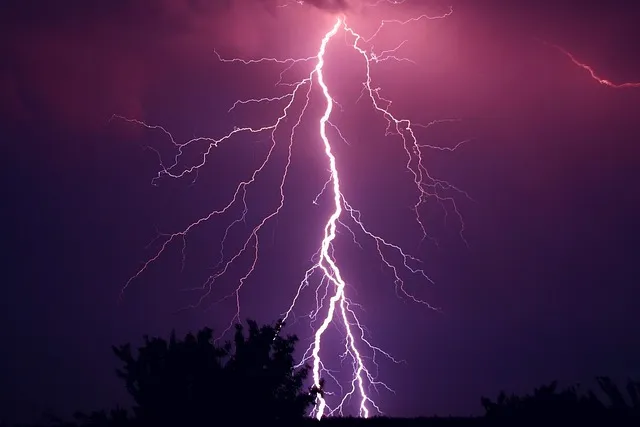
I'm Lena Thornton. There's something magical about a warm, humid summer evening, sitting on a porch and watching silent, flickering flashes of light paint the distant clouds. It's a phenomenon many of us grew up calling "heat lightning." The name itself evokes a sense of harmlessness: a natural light show caused by the day's oppressive heat, with no storm in sight. It's a beautiful and pervasive myth, but a myth nonetheless.
From a scientific standpoint, lightning is lightning. Every single flash, whether it's accompanied by a deafening crack of thunder or appears in complete silence, is the product of a powerful thunderstorm. In this guide, I'll use my meteorological expertise to pull back the curtain on this fascinating phenomenon. We'll explore the simple physics that separates the flash from the bang, assess the real (and often underestimated) risk, and explain why those silent flashes are a sign that you should be paying attention to the weather.
The Great Race: Light vs. Sound
The entire mystery of "heat lightning" can be solved by understanding a fundamental concept of physics: the vast difference in the speed of light and the speed of sound. This is the same principle you use to estimate a storm's distance when you see a flash and count the seconds until you hear the thunder.
- The Speed of Light: Light travels at an almost incomprehensible 186,282 miles per second (299,792 km/s). For any storm on Earth, the light from a lightning flash reaches your eyes virtually instantaneously.
- The Speed of Sound: Sound, on the other hand, is a relative slowpoke. It travels through the air at approximately 1,125 feet per second (343 m/s), or about one mile every five seconds.
When a thunderstorm is close, this time delay is just a few seconds. But what happens when the storm is very far away? The light still reaches you in a fraction of a second, but the sound of the thunder has a long journey. As the sound waves travel through the atmosphere, they lose energy, get scattered by the air, and can be refracted (bent) upwards away from the ground by layers of air at different temperatures. After about 10 to 15 miles, the sound has often dissipated so much that it becomes completely inaudible. The result? You see the brilliant flash of a lightning bolt, but the thunder never arrives.
Debunking the "Heat" in Heat Lightning
So why do we call it "heat lightning"? It's a classic case of confusing correlation with causation. This phenomenon is most often observed on hot, humid summer nights. But the heat isn't *creating* the lightning; the heat is creating the *thunderstorms* that produce the lightning.
| The Myth | The Meteorological Reality |
|---|---|
| Hot, humid air spontaneously creates silent flashes of lightning. | Hot, humid air is unstable and provides the fuel for powerful thunderstorms to develop. |
| The lightning itself is a different, harmless type. | The lightning is standard cloud-to-ground or in-cloud lightning from a distant storm. |
| Since there's no thunder, there's no storm. | The lack of thunder simply means the storm is more than 10-15 miles away. |
The powerful thunderstorms that form on these hot days can be massive, with tops reaching over 50,000 feet into the atmosphere. On a clear night, the light from a lightning flash inside one of these towering cumulonimbus clouds can be visible for a hundred miles or more, long after its thunder has faded to nothing.
Assessing the Real Risk: Silent but Not Always Safe
So, if the storm is over 10 miles away, you're completely safe, right? Not necessarily. While the immediate threat is low, seeing "heat lightning" is an important piece of situational awareness. It tells you that there is a powerful, active thunderstorm in your region. And as we've learned from studying common lightning myths, lightning doesn't always play by the rules.
The primary danger comes from a phenomenon known as a "bolt from the blue." This is a type of cloud-to-ground lightning strike that exits the side of a thunderstorm cloud, travels horizontally for many miles through clear air, and then strikes the ground far from the storm's core. These bolts can, and do, strike in areas where it is not raining and the sky directly overhead is clear.
While a strike 25 miles from the storm is rare, strikes at 10-15 miles, the exact range where thunder becomes inaudible, are much more common. This means that if you can see the lightning, you are on the outer edge of the potential strike zone. It's a sign to be vigilant, not complacent.
Video Guide: The Science of Thunder
To fully understand why thunder sometimes goes missing, it helps to understand what it is. This excellent video explains how the superheating of air by a lightning bolt creates the sonic boom we call thunder, and how that sound travels through the atmosphere.
From Visual Cue to Data Point: Using Technology for Safety
For centuries, "heat lightning" was just a visual curiosity. Today, we have tools that can turn that visual cue into hard data. This is where a modern home weather station with lightning detection becomes very useful. When you see those silent flashes on the horizon, you can check your weather app and get immediate, quantitative information.
A station like the WeatherFlow Tempest or the Ambient Weather WS-5000 will not only confirm the presence of lightning but will also tell you:
- The number of strikes per minute, indicating the storm's intensity.
- The estimated distance to the storm's leading edge.
My Final Thought: A Beautiful Warning
As a meteorologist, I find the silent dance of distant lightning to be one of nature's most beautiful displays. But my training also tells me to see it for what it is: a beautiful warning. It's a visual reminder that the atmosphere is charged with energy and that a powerful storm engine is at work somewhere over the horizon.
So, the next time you're enjoying a warm evening and see those silent flashes, by all means, appreciate the show. But also, let it be a trigger for awareness. Check your radar app. Glance at your personal weather station data. Know where the storm is and which way it's moving. By understanding the simple science behind "heat lightning," you can replace a harmless myth with a powerful tool for staying safe.