
Our picks in this guide
Compare the models in this guide
See today’s price, delivery options and customer reviews on Amazon.
As an Amazon Associate, I earn from qualifying purchases.In this article 8 sections
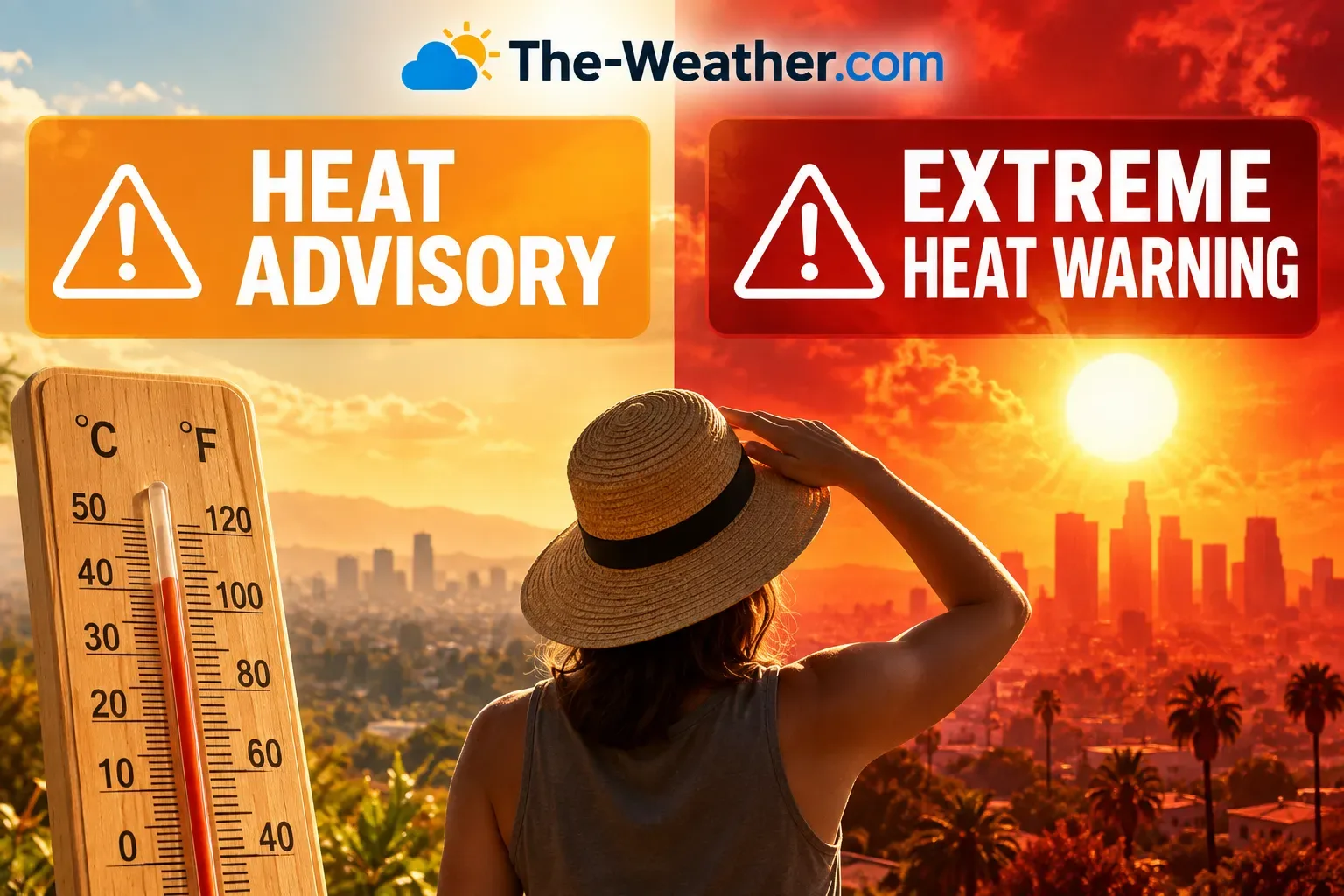
Your phone buzzes: "Heat Advisory". A day later it says "Extreme Heat Warning". Both sound hot, and both are. But they are not the same message, and the difference tells you how seriously to change your plans. Here is what each alert means, what to do, and how to keep an eye on the real temperature at your own home.
Short answer: A Heat Advisory means dangerous heat is expected, but not quite at warning level. An Extreme Heat Warning means extremely dangerous heat is expected or already happening, and everyone should take it seriously. An Extreme Heat Watch comes earlier: conditions could reach warning level in the next few days. The "Extreme" names replaced the older "Excessive Heat" names on March 4, 2025 (National Weather Service).
Editorial Research & Review
- Written by
- Lena Thornton, Weather Station Analyst & CWOP Contributor
- Based on
- National Weather Service and CDC guidance, the NWS HeatRisk tool, and our existing thermometer and weather station research
- Hands-on testing
- Not performed by The-Weather.com for the products on this page
- Research last verified
- October 2, 2026
The Three Heat Alerts, From Lower to Higher Risk
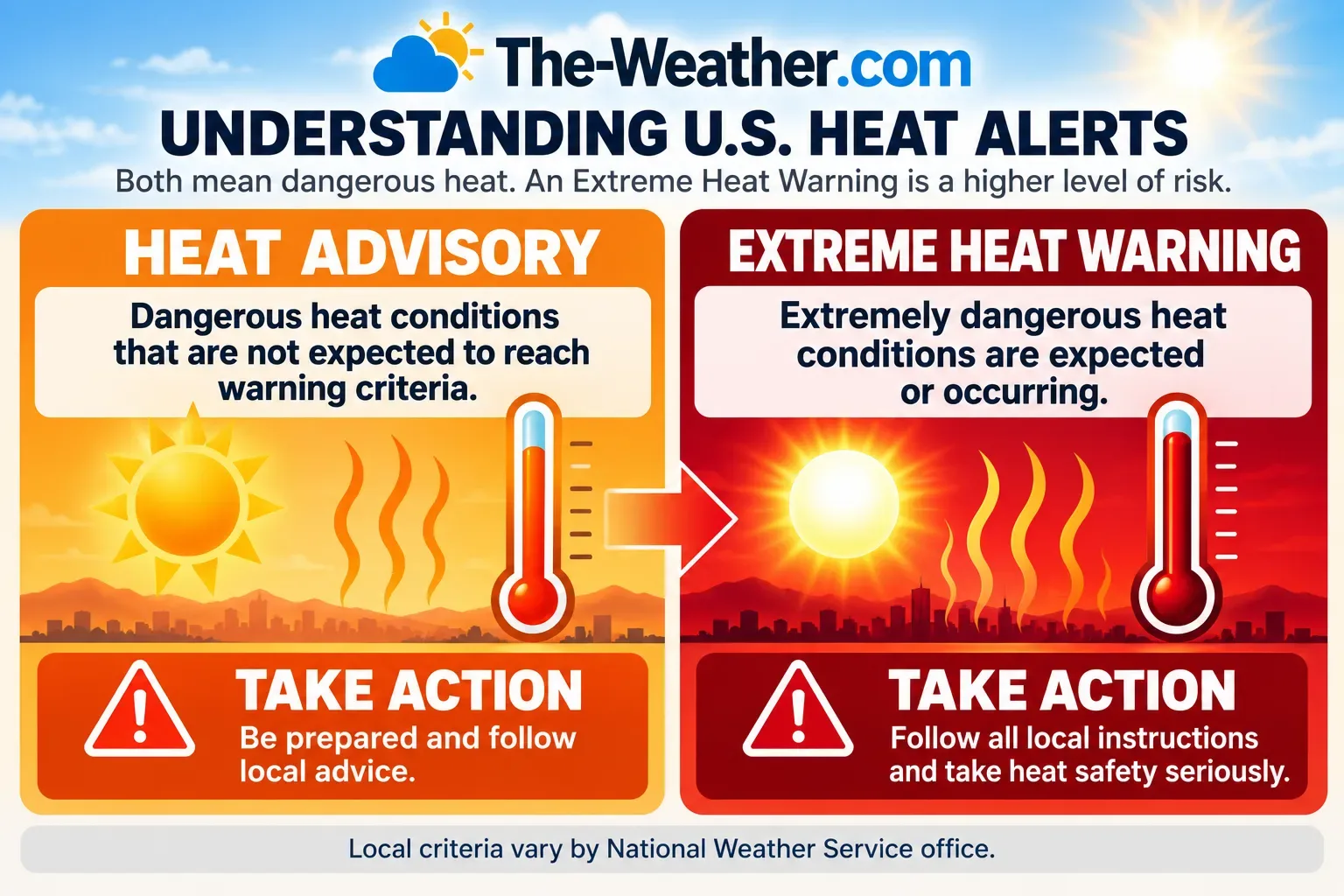
The National Weather Service (NWS) uses three heat alerts. Think of them as steps on a ladder: each step means more risk and more urgency.
The exact temperatures that trigger each alert are not the same everywhere. Every local NWS office sets its own criteria, because 95°F feels very different in Seattle than in Phoenix. That is why your neighbour in another state can get a warning at a temperature that would barely earn an advisory where you live.
One more thing changed recently. Until 2025 the two higher alerts were called "Excessive Heat Watch" and "Excessive Heat Warning". On March 4, 2025, the NWS renamed them "Extreme Heat Watch" and "Extreme Heat Warning" to make the message clearer and to match its extreme cold alerts. If you still see "Excessive" on an older page or app, it means the same thing.
Heat Advisory
Dangerous heat is expected, but it does not reach your area's warning criteria.
Do: take it easy outdoors, drink water, check on others.
Extreme Heat Watch
Extremely dangerous heat is possible in the next few days.
Do: make a plan for cooling, check your AC, move plans.
Extreme Heat Warning
Extremely dangerous heat is expected or happening now.
Do: stay in a cool place, limit time outside, follow local advice.
What to Do for Each Alert
About fans: a fan feels nice, but it is not a cooling device in extreme heat. The CDC advises using fans only when indoor temperatures are below 90°F; above that, a fan can actually raise your body temperature (CDC). That is one good reason to know the real temperature inside your home, not just outside.
The signs of heat exhaustion and heat stroke, and who is most at risk, are explained step by step in our What Is a Heat Wave? article. Heat stroke is a medical emergency: call 911.
HeatRisk: The Color Scale Behind the Alerts
Next to the alerts, the NWS publishes HeatRisk: a 0 to 4 color scale that shows how risky the coming heat is for health. It looks at how unusual the heat is for the time of year, how long it lasts, and whether nights stay warm. HeatRisk does not replace the alerts; it adds context (NWS HeatRisk fact sheet).
You can check the forecast HeatRisk for your address on the NWS HeatRisk map.
Why "Feels Like" Matters More Than the Thermometer
Alerts are often based on the heat index: how hot it feels when humidity is added to the air temperature. Humid air makes it harder for sweat to cool you down, so 92°F with high humidity can be more dangerous than 100°F in dry air.
The heat index is calculated for shade. The NWS notes that full sunshine can raise the heat index by up to 15°F (NWS heat index). In other words: the number on the news is often lower than what you feel on a sunny driveway. A thermometer with a humidity sensor at your own home shows the conditions where you actually are.
Tools That Help You Act on a Heat Alert
An alert tells you what is coming for your area. These three help you see what is happening at your home: outside, inside, and on your phone while you are away.
Find your match in 10 seconds
Strong fit for remote alerts
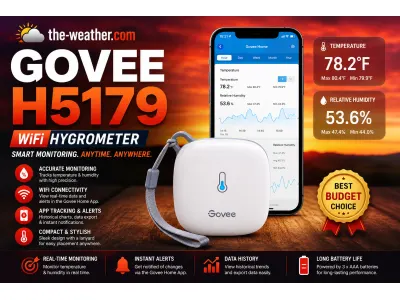
Govee H5179 Wi-Fi Thermometer Hygrometer
Why it fits a heat alert: it sends a phone alert when the temperature or humidity goes past a limit you set, from anywhere. Useful for a parent's home, a pet left at home or a hot upstairs bedroom.
Research basis: our Govee H5179 review, Govee's specifications.
Good fit if
- You want an alert on your phone, also when you are out
- You keep an eye on someone else's home
- You want history graphs of hot days
Skip it if
- Your Wi-Fi is 5 GHz only (it needs 2.4 GHz)
- You only want a simple display
- You need an outdoor sensor
Check current price on Amazon
Check current price on AmazonGovee H5179 · opens in a new tabNot sure yet? Read our Govee H5179 review
Strong fit for indoor + outdoor at a glance
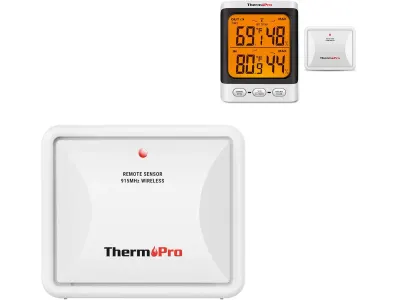
ThermoPro TP62
Why it fits a heat alert: a simple display shows indoor and outdoor temperature and humidity side by side, with up to 3 wireless sensors. No Wi-Fi, no app, no account.
Research basis: our ThermoPro TP62 review, ThermoPro's specifications.
Good fit if
- You want to see real numbers without a phone
- You want to compare rooms or inside and outside
- You want something easy for older relatives
Skip it if
- You want phone alerts
- You want a heat index reading built in
- You need wind or rain data
Check current price on Amazon
Check current price on AmazonThermoPro TP62 · opens in a new tabNot sure yet? Read our ThermoPro TP62 review
Strong fit for full outdoor data
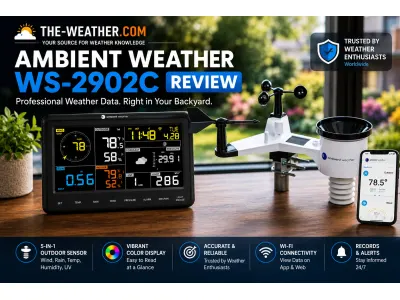
Ambient Weather WS-2902C
Why it fits a heat alert: a full weather station with temperature, humidity, solar radiation and a dedicated UV sensor in a shielded outdoor array, plus a colour console and the awnet app.
Research basis: our WS-2902C review, Ambient Weather's documentation.
Good fit if
- You want the full outdoor picture, including sun and UV
- You like history and alerts in an app
- You also want rain and wind
Skip it if
- You have no place to mount an outdoor sensor
- You only care about indoor temperature
- Your Wi-Fi is 5 GHz only
Check current price on Amazon
Check current price on AmazonWS-2902C · opens in a new tabNot sure yet? Read our WS-2902C review
Heat Alert FAQ
What is the difference between a Heat Advisory and an Extreme Heat Warning?
Both mean dangerous heat. A Heat Advisory is issued when heat is dangerous but below your area's warning criteria. An Extreme Heat Warning is the higher level: extremely dangerous heat is expected or happening, and everyone should take steps to stay cool.
What happened to the Excessive Heat Warning?
It was renamed. On March 4, 2025, the National Weather Service changed "Excessive Heat Watch" and "Excessive Heat Warning" to "Extreme Heat Watch" and "Extreme Heat Warning". The meaning stayed the same.
What temperature triggers a heat warning?
There is no single national number. Each local NWS office sets its own criteria based on what is unusual and dangerous for that area, often using the heat index rather than the air temperature alone.
Is a fan enough during an Extreme Heat Warning?
Often not. The CDC advises using fans only when indoor temperatures are below 90°F. Above that, a fan can raise body temperature. Air conditioning or a cooling center gives the most protection.
What is NWS HeatRisk?
HeatRisk is a 0 to 4 color scale from the National Weather Service that shows the health risk of the forecast heat, based on how unusual it is, how long it lasts and how warm the nights stay. It adds context to the official alerts but does not replace them.
Update Log
- October 2, 2026: Page published. Alert names and HeatRisk checked against National Weather Service sources; fan guidance checked against the CDC.
Sources
- National Weather Service: changes to heat watches and warnings (2025)
- National Weather Service: heat index
- National Weather Service: HeatRisk fact sheet and HeatRisk map
- CDC: heat and health
- Our reviews: Govee H5179, ThermoPro TP62, Ambient WS-2902C
See also: What Is a Heat Wave? · Why Your Yard Can Be Hotter Than the Forecast · Track Indoor Temperature and Humidity During a Heat Wave
Ready to decide?
Find your pick on Amazon
Prices and stock change daily. Check the current price, delivery options and what owners say in their reviews.
Our top picksCompare our picks on AmazonToday's price, delivery & owner reviews on Amazon
Check on Amazon →