
As an Amazon Associate, I earn from qualifying purchases.
In this article 4 sections
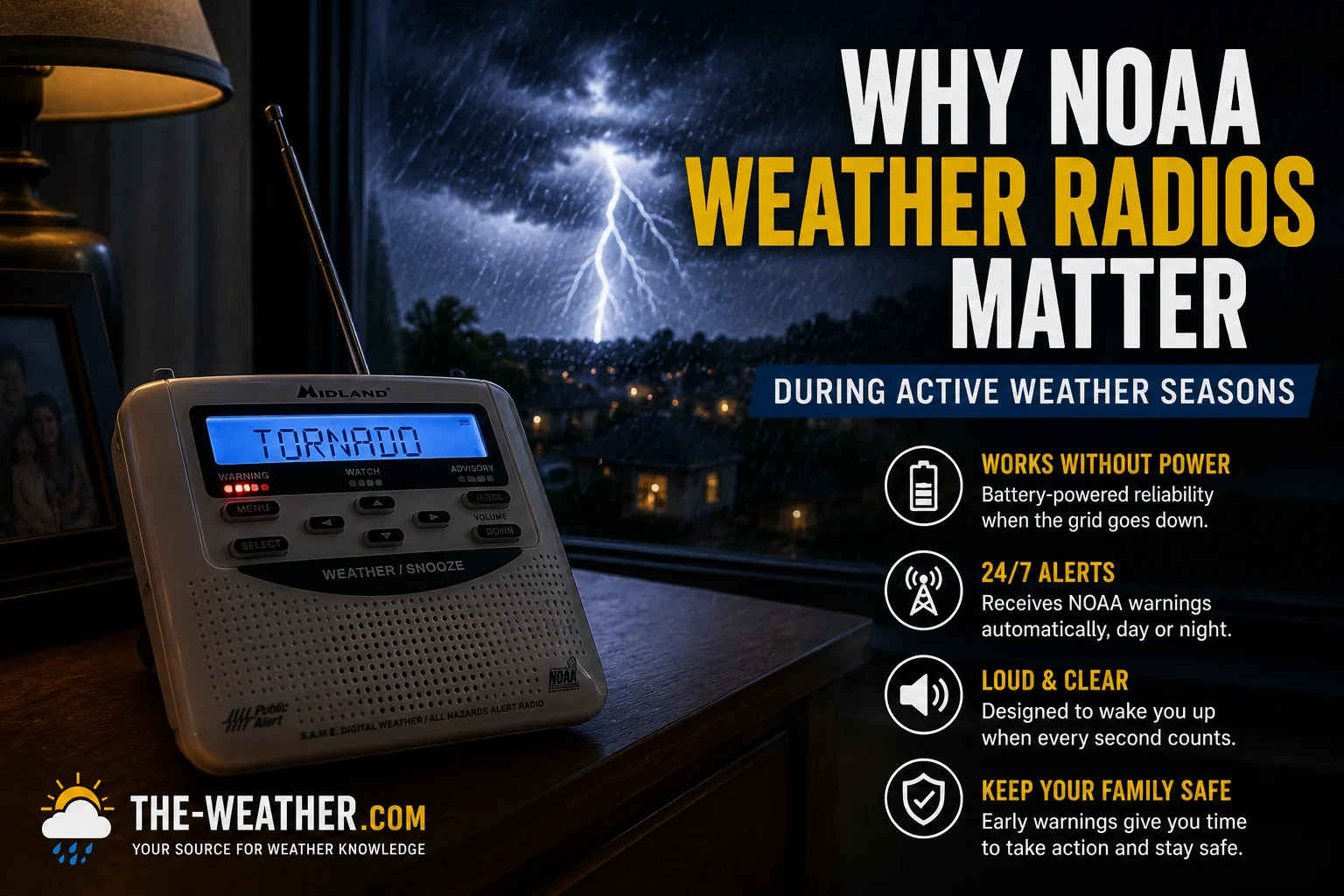
The short answer: Smartphone Wireless Emergency Alerts depend on cell towers and battery charge: both frequently disrupted exactly when severe weather is most dangerous. A NOAA weather radio receives official National Weather Service broadcasts via dedicated VHF frequencies, independent of cellular networks, Wi-Fi, and the power grid when running on battery backup. During an active hurricane season, that independence is the difference between receiving a 2am tornado warning and sleeping through it.
- Cell towers can fail from power loss, physical damage, or call volume overload during major storms
- NOAA weather radios receive broadcasts directly: no internet, carrier, or app required
- S.A.M.E. county programming prevents alarm fatigue from irrelevant distant alerts
- Battery backup means the radio keeps working through extended power outages
- A weather radio complements, not replaces, smartphone alerts: redundancy is the goal
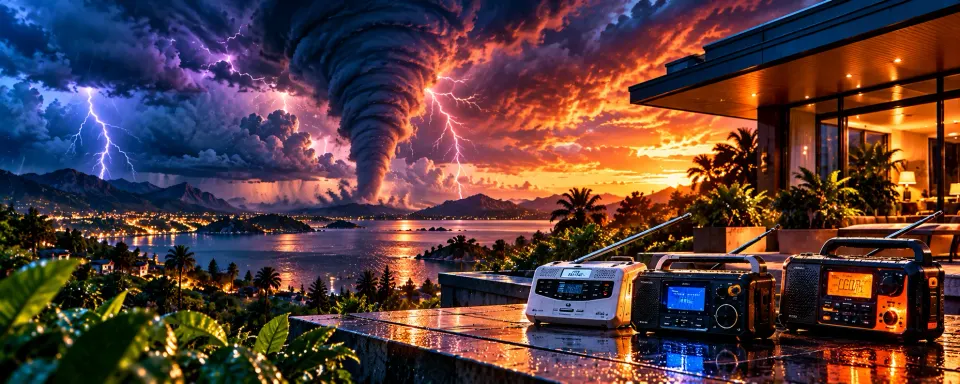
A NOAA weather radio works through the exact conditions, power outages, overloaded cell networks, when you need an alert most.
This page covers exactly why smartphone alerts alone are not enough, how NOAA weather radios solve that gap, what S.A.M.E. technology does, and which radio to buy. For full product reviews see our Midland WR400 review and best emergency weather radios roundup.
Why Smartphone Alerts Alone Are Not Enough
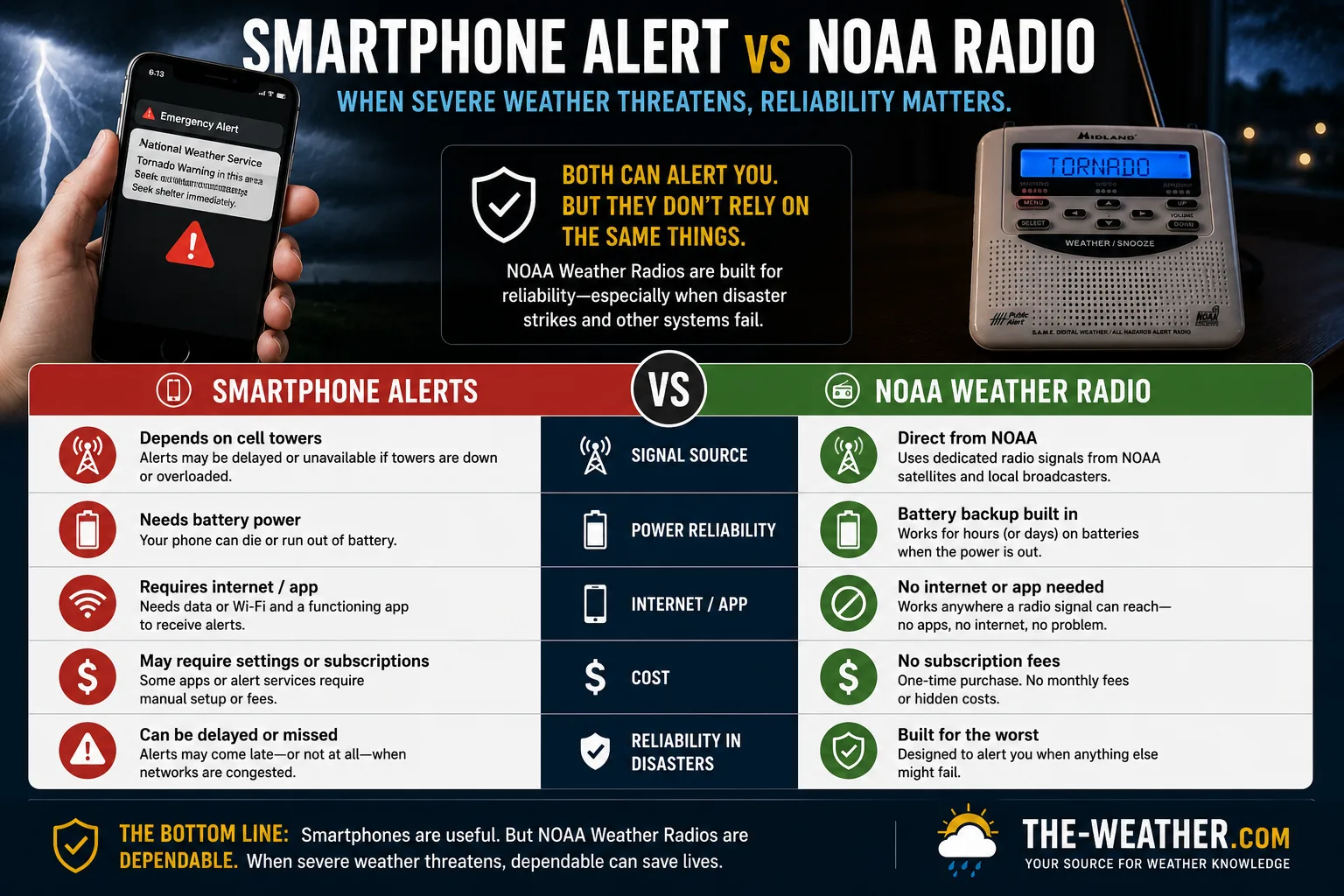
The core difference: smartphone alerts depend on infrastructure that fails during severe weather. NOAA radio does not.
Wireless Emergency Alerts (WEA) on smartphones are a genuinely valuable system, but they depend on a chain of infrastructure that is precisely what severe weather threatens. A cellular tower needs power, a functioning antenna, and capacity to handle the message load. Severe storms routinely compromise all three at once.
Cell towers can lose grid power during a storm and switch to battery or generator backup: both of which have limited runtime, often measured in hours rather than days. Following a major hurricane, generator fuel resupply can be delayed by blocked roads, leaving towers offline for extended periods even after the storm itself has passed. Physical damage from high winds, falling trees, or flooding can take towers offline directly. And during widespread emergencies, networks can become congested as everyone in an affected area tries to call, text, and check alerts simultaneously.
Cell tower backup batteries and generators typically run for hours to a few days, not the full duration of an extended outage.
High winds, falling debris, and flooding can damage tower infrastructure directly, taking coverage offline in affected areas.
Everyone calling and texting simultaneously during an emergency can overload remaining network capacity.
Even with a working network, a dead phone battery during an extended outage means no alerts reach you at all.
NOAA Weather Radio vs Smartphone Alerts
| Factor | NOAA Weather Radio | Smartphone WEA |
|---|---|---|
| Requires cellular network | ✗ No | ✓ Yes |
| Requires internet/Wi-Fi | ✗ No | Sometimes |
| Works on battery backup | ✓ Yes | Limited, until phone battery dies |
| County-specific filtering | ✓ S.A.M.E. programming | ✓ Location-based |
| Wakes you while asleep | ✓ Audible siren | If phone is on and nearby |
| Source | Direct from NWS | Relayed via carrier network |
| Subscription required | ✗ No | ✗ No |
The goal is not to replace one with the other: it is redundancy. Use both. A weather radio is the backup that keeps working when the system your phone depends on does not.
S.A.M.E. Why It Matters for Practical Use
Without S.A.M.E. (Specific Area Message Encoding), a weather radio sounds for every NWS alert across your entire state, including events hundreds of miles away. This causes alarm fatigue, leading many owners to mute or unplug the radio entirely, defeating its purpose.
Every radio we recommend includes S.A.M.E. it is non-negotiable for practical daily use.
Recommended NOAA Weather Radios
S.A.M.E. for up to 25 counties, 80+ alert types, DSP receiver for stronger signal sensitivity, adjustable siren, and USB charging port. The strongest dedicated home alert radio at the mid-range price.
S.A.M.E. alert coverage with noticeably better audio quality for daily AM/FM listening and clearer spoken alert announcements.
For the full comparison including portable hand-crank options see our Midland weather radio hub and best emergency weather radios roundup.
Frequently Asked Questions
Why do I need a NOAA weather radio if I have a smartphone?
Smartphone Wireless Emergency Alerts depend on cell tower function and device battery charge, both frequently disrupted during severe weather and extended power outages. A NOAA weather radio receives broadcasts directly via dedicated VHF frequencies, independent of cellular networks, Wi-Fi, and the power grid when running on battery backup.
Do cell towers fail during hurricanes?
Yes, frequently. Cell towers can lose power, sustain physical damage from wind, or become overwhelmed by call volume during major storms. Extended power outages can also drain backup generators at cell sites within days, leaving areas without cellular service for extended periods.
What is S.A.M.E. technology on a weather radio?
Specific Area Message Encoding allows you to programme a weather radio to only sound an alarm for alerts affecting your specific county, rather than every broadcast across your entire state. This is essential for practical use and prevents alarm fatigue from irrelevant distant alerts.
Track the developing El Niño event and the 2026 Atlantic hurricane season outlook.
Pair your alert radio with a weather station tracking local pressure, wind, and rainfall.
Sources
- NOAA Weather Radio All Hazards: Official network information
- NOAA NWR County Coverage: S.A.M.E. county code lookup
- Midland USA: Official product documentation for WR400DSP
No manufacturer compensation received. Product specifications may change: verify on manufacturer websites before purchasing.

Lena Thornton
Weather Station Analyst & CWOP Contributor. Lena researches weather alert systems and emergency preparedness equipment for The-Weather.com. Updated June 2026.