
We may earn a commission when you buy through links on this page, at no extra cost to you. Learn more
In this article 9 sections
- Lightning Myths vs. Meteorological Facts
- Myth #1: Lightning Never Strikes the Same Place Twice
- Myth #2: The Rubber Tires on a Car Will Protect You
- Myth #3: Lightning is Only Dangerous When It's Raining
- Myth #4: If You're Caught Outside, Lie Flat on the Ground
- Video Guide: Understanding Lightning Safety
- Myth #5: A Lightning Victim Carries an Electrical Charge
- From Myth to Measurement: The Role of Technology
- My Final Thought: Respect, Don't Fear
My Expert Insight: Lightning is one of nature's most awe-inspiring and misunderstood phenomena. As a meteorologist, I've dedicated my career to separating atmospheric fact from fiction. Many of the "common sense" rules we learn about lightning are dangerously outdated or simply wrong. Understanding the real science behind this powerful force isn't just an academic exercise; it's a critical component of personal safety that can, without exaggeration, save your life.
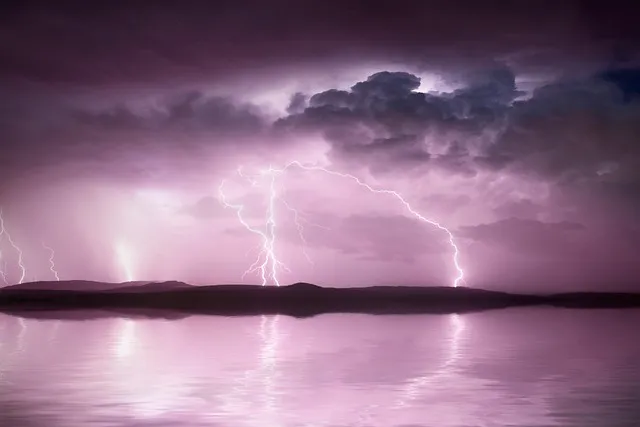
I'm Lena Thornton. There's a raw, primal power to a lightning strike that commands respect. A single bolt can be hotter than the surface of the sun, carry a billion volts of electricity, and travel at one-third the speed of light. It's no wonder that a phenomenon this extreme has spawned centuries of folklore, proverbs, and well-intentioned but misguided safety advice.
The problem is, believing these myths can have deadly consequences. Every year, people are injured or killed because they underestimate the danger or follow incorrect safety protocols. My goal in this guide is to bring my professional meteorological knowledge to bear on the most common and dangerous lightning myths. We will dissect each one, replace it with scientific truth, and provide clear, actionable safety advice based on the latest research from institutions like The National Severe Storms Laboratory.
Lightning Myths vs. Meteorological Facts
Let's start by putting the most common misconceptions head-to-head with the scientific reality. This table serves as a quick reference for the truths we'll be exploring in detail.
| Common Myth | Scientific Fact |
|---|---|
| Lightning never strikes the same place twice. | Lightning frequently strikes the same place, especially tall objects. |
| Rubber tires on a car protect you. | The car's metal body (a Faraday cage) protects you, not the tires. |
| You're only in danger if it's raining. | Lightning can strike over 10 miles away from the parent storm in clear sky. |
| If you're outside, lie flat on the ground. | Lying flat increases your risk from ground current; the "lightning crouch" is safer. |
| A lightning victim is electrified and dangerous to touch. | The human body does not store electricity. A victim needs immediate medical aid. |
Myth #1: Lightning Never Strikes the Same Place Twice
This is perhaps the most famous weather proverb, and it is categorically false. Not only can lightning strike the same place twice, but it also does so with predictable frequency. Lightning is a discharge of static electricity seeking the path of least resistance to neutralize a charge difference between the cloud and the ground.
Tall, conductive objects, skyscrapers, radio towers, even tall trees, provide a much shorter and easier path for this electricity to travel. The Empire State Building, for example, is a lightning magnet. It is struck an average of 25 times per year, and has been hit multiple times in a single storm. It's not a matter of luck; it's a matter of physics. Believing this myth can give you a false sense of security around an object that has already been struck during a storm.
Myth #2: The Rubber Tires on a Car Will Protect You
This is a classic case of mistaking correlation for causation. A hard-topped metal vehicle is indeed a very safe place to be during a thunderstorm, but the rubber tires have almost nothing to do with it. A few inches of rubber is no match for a billion-volt electrical discharge.
The real protection comes from a scientific principle known as the Faraday cage effect. The car's metal body conducts the electricity around the occupants on the outside of the vehicle and safely directs it into the ground. For this to work, you must be fully inside the metal shell. This means convertibles, motorcycles, golf carts, and vehicles with fiberglass bodies offer zero protection. To be safe in a car, you must have the windows rolled up and avoid touching any metal parts of the interior, like the door handles or radio.
Myth #3: Lightning is Only Dangerous When It's Raining
This is one of the most lethally deceptive myths. The danger from lightning can extend far beyond the area of falling rain. I've seen this firsthand in my storm analysis work. A phenomenon known as a "bolt from the blue" is a lightning strike that can travel horizontally for many miles away from the side of a cumulonimbus cloud, eventually turning downwards and striking the ground in an area with clear, blue skies.
These strikes can occur 10, 15, or even 25 miles away from the parent thunderstorm. This is why the official safety slogan from The National Weather Service is so important: "When Thunder Roars, Go Indoors." If you can hear thunder, you are close enough to the storm to be struck by lightning, regardless of whether it's raining on you. This is a critical piece of information for anyone who enjoys outdoor activities, and it's why having a reliable weather alert radio is so important for campers and hikers.
Myth #4: If You're Caught Outside, Lie Flat on the Ground
This was once common advice, but modern meteorological science has proven it to be dangerous. While lying flat does reduce your height, it dramatically increases your exposure to a more common and insidious threat: ground current.
When lightning strikes the ground, the electrical energy doesn't just disappear. It spreads out across the surface like ripples in a pond. If you are lying flat, the current can easily travel up one part of your body and down another, passing through your vital organs. This is a major cause of lightning-related injuries and fatalities.
The current, correct procedure, if you are caught in the open with absolutely no shelter, is the "lightning crouch." You should:
- Squat down low to the ground, balancing on the balls of your feet.
- Keep your feet as close together as possible.
- Tuck your head towards your knees and cover your ears with your hands.
Video Guide: Understanding Lightning Safety
This video from the National Weather Service provides a clear, authoritative visual guide to lightning safety, reinforcing many of the scientific principles we've discussed.
Myth #5: A Lightning Victim Carries an Electrical Charge
This is a tragic myth that can cause people to hesitate in providing life-saving aid. The human body is a conductor of electricity, not a capacitor. It does not store an electrical charge. A person who has been struck by lightning is completely safe to touch.
They are a medical emergency and need immediate help. The most common cause of death from a lightning strike is cardiac arrest. If you encounter a victim, call 911 immediately and, if you are trained, begin CPR. Your quick action could be the difference between life and death. There is absolutely no danger to you from touching them.
From Myth to Measurement: The Role of Technology
Our understanding of lightning has evolved from folklore to precise science, thanks in large part to technology. Modern home weather stations have brought sophisticated detection capabilities into our backyards. High-end models like the Ambient Weather WS-5000 or the WeatherFlow Tempest include integrated lightning detectors.
These sensors don't just tell you if lightning is nearby; they can count the number of strikes and estimate the distance to the storm's leading edge. This provides real, actionable data that replaces the guesswork of old rules like the "30/30 rule." Seeing a strike count begin to climb and the distance decrease on your app or console is a definitive, data-driven reason to seek shelter immediately. It's the perfect marriage of personal observation and technological confirmation.
My Final Thought: Respect, Don't Fear
My goal as a meteorologist isn't to make you afraid of thunderstorms. It's to replace fear with a healthy and informed respect for their power. Lightning is a predictable physical phenomenon that follows understandable rules. By letting go of the myths and embracing the science, you empower yourself to make smart, safe decisions.
The next time a storm approaches, remember these truths. Seek proper shelter early. Stay away from conductors. And know that your safety is not a matter of luck, but a matter of knowledge. The sky tells a story, and understanding the language of lightning is one of its most important chapters.