
In this article 11 sections
- Editorial Assessment
- Nearcast Technology: How the AI Forecasting Actually Works
- The Haptic Rain Sensor: Genuinely Innovative, With Real Limitations
- Head-to-Head: Tempest vs WS-5000 vs Davis Vantage Vue
- Pros & Cons
- Who Should NOT Buy the Tempest
- The Tempest '26: What's New in the 2026 Model
- Smart Home Integration: Among the Most Complete Available
- Official Setup Walkthrough
- Frequently Asked Questions
- Analyst's Final Verdict
WeatherFlow Tempest Review (2026): What the Evidence Says About Rain, Power and Forecasts
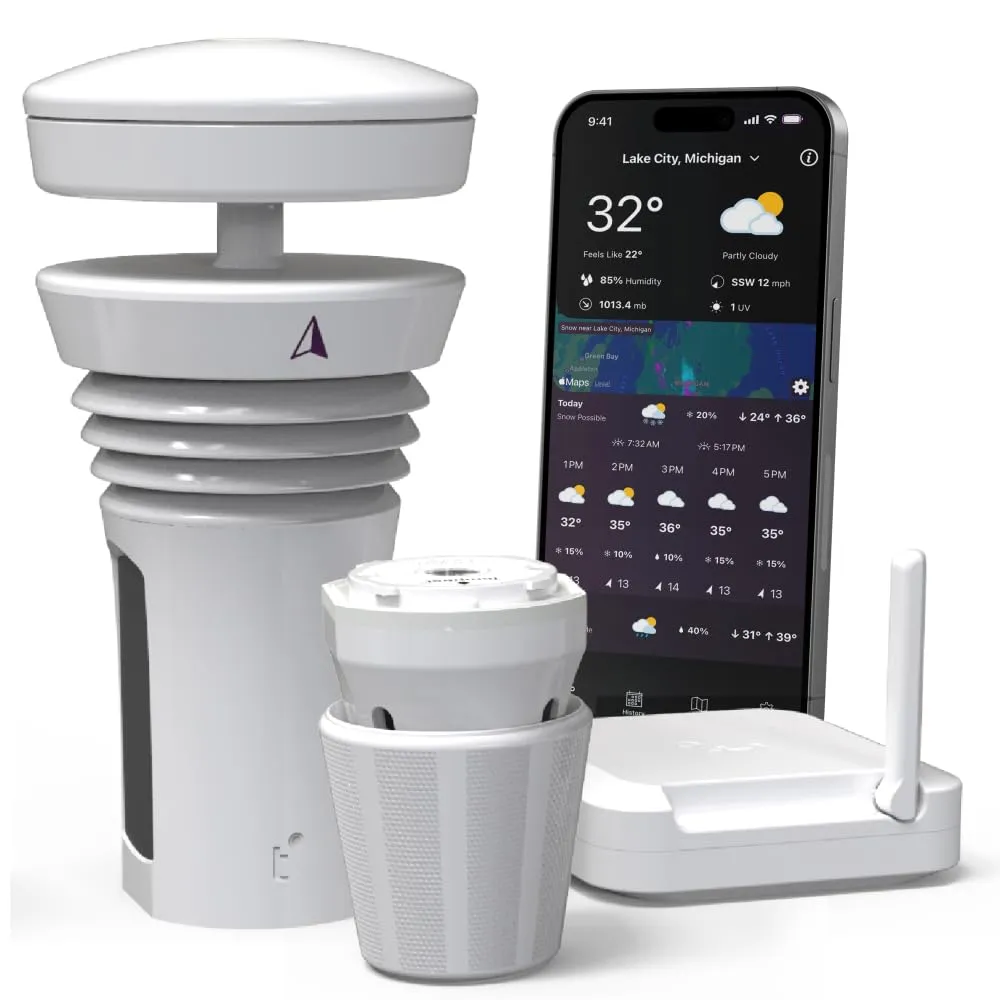
Product covered in this analysis
WeatherFlow Tempest
See today’s price, delivery options and customer reviews on Amazon.
As an Amazon Associate, I earn from qualifying purchases.
Is the Tempest worth it? Yes, if you want AI-powered hyper-local forecasting, near-zero maintenance, and deep smart home integration with no subscription. No, if you need a physical display, precise rainfall measurement, or an expandable sensor ecosystem.
I'm Lena Thornton, a weather station analyst. Most home weather stations answer one question: what is the weather right now? The WeatherFlow Tempest tries to answer a harder one: what will it be, specifically at my address? That ambition, backed by real AI infrastructure and a network of 85,000+ stations (as reported by WeatherFlow), is what makes it unlike anything else in the consumer market.
This review is based on research, not on our own test unit: it draws on specifications from WeatherFlow's official documentation, and documented user reports to give you an accurate picture of what the Tempest delivers, and where its real-world limitations lie. It also covers the Tempest '26, the updated model launched in November 2025 with upgraded solar panels and a redesigned charging system.
Or buy direct: shop.tempest.earth, no affiliate link.
Shopping during Black Friday? See which home weather stations are worth buying at a sale price, and how to tell a real deal from a dressed-up one: Black Friday Weather Station Deals 2026.
Editorial Research & Review
- Reviewed by
- Lena Thornton, Weather Station Analyst
- Review basis
- Extensive research and comparative analysis
- Hands-on testing
- Not performed by The-Weather.com
- Research reviewed
- WeatherFlow documentation and support pages, the Tempest owner community, independent long-term reviews, comparison with the Ambient WS-5000 and Davis Vantage Vue
- Research last verified
- October 1, 2026
Editorial Assessment
No star score: we did not use this station ourselves, so we rate each factor in words and show what the rating is based on.
| Factor | Assessment | Why we say this |
|---|---|---|
| Wind sensor | Excellent | Ultrasonic, no moving parts, rated to about 100 mph (WeatherFlow). Owners rarely report wind faults compared with rain and power issues. |
| Rain accuracy | Moderate | The haptic sensor has no bucket to clog, but owners and independent testers report under-reading in heavy rain. The app also shows "NearCast Rain" by default, a radar-corrected estimate rather than your own sensor (see below). |
| Temperature and humidity | Good | Specified at about ±0.5 °C. Because every sensor sits in one unit, the mounting spot is a compromise between wind exposure and a shaded, well-ventilated temperature reading. |
| Forecast (Nearcast) | Very good | The machine-learning forecast uses your own data plus models and nearby stations. WeatherFlow backs it with a written "Better Forecast Guarantee" for 8 months after purchase, which is unusual. It improves over weeks, and less so where few Tempests are nearby. |
| Power in winter | Moderate | Solar-only. Owners at high latitudes report stations going offline in short winter days; WeatherFlow sells a power booster accessory for this. The Tempest '26 has larger solar panels and a redesigned charging system. |
| Smart home and data | Excellent | Open API, Home Assistant, Alexa, IFTTT and Rachio irrigation, all without a subscription. |
| Expandability | Weak | Closed all-in-one system: no add-on soil, extra indoor or air-quality sensors, and no console. |
| Value | Very good | For a smart-home or app user. Less so if you need exact rainfall totals, then a station with a tipping bucket fits better. |
Claim → Evidence → Verdict: rain accuracy
Claim: WeatherFlow says a well-sited, calibrated Tempest measures rain accumulation with roughly 90 to 100% accuracy compared with a conventional gauge.
What we found: Owners in the Tempest community and independent reviewers report under-reading in heavy downpours and missed light drizzle; in one community thread an owner's Tempest showed 0.15″ while a calibrated gauge next to it collected more than 2″. A 2024 comparison with NearCast Rain switched off found the station within 0.05″ of a reference gauge in very heavy rain, while leaving NearCast Rain on made the total less accurate at that site.
Our conclusion: Rain from the Tempest is good enough for "did it rain, and roughly how much". For gardening totals, CoCoRaHS-style reporting or flood monitoring, add a manual 4-inch gauge or choose a station with a tipping bucket. We treat the 90 to 100% figure as a best-case specification, not as independently verified accuracy.
Where the evidence disagrees
Many reviews quote the Tempest's rain total as if it were the station's own measurement. WeatherFlow's help pages explain that the app shows NearCast Rain by default: a blend of your sensor with radar and nearby data. That explains why two owners can describe the same sensor as "very accurate" and "useless": one compares the radar-corrected value, the other the raw sensor. You can switch NearCast Rain off in the app settings if you want your own measurement.
What we'd change
- An optional wired or tipping-bucket rain input for people who need exact totals.
- A clearer label in the app when a rain value is radar-corrected rather than measured.
- A small optional display or console; today it is phone and web only.
Reported long-term issues (from the Tempest community forum and long-term reviews, not our own test)
- Winter power: the most common complaint, mainly at northern latitudes and in shaded spots.
- Rain sensor after hail or in high wind: false or missed rain has been reported; readings usually recover.
- Support: owners generally describe warranty replacements as quick.
Sources: Tempest help: rain data and NearCast Rain · Tempest community: rain accumulation accuracy · The Weather Station Experts: long-term Tempest review · Tempest community: battery life in winter · Tempest: sales, refund terms and Better Forecast Guarantee · Tempest FAQ (specifications)
Key Specifications at a Glance
Nearcast Technology: How the AI Forecasting Actually Works
The Tempest uses AI (Nearcast Technology) to combine live sensor data from your backyard with professional forecast models and a global station network, then learns your microclimate over weeks to produce increasingly accurate local forecasts. WeatherFlow offers an 8-month money-back guarantee if the forecast does not measurably improve on publicly available alternatives.
The Tempest uses ultrasonic transducers, not spinning cups, to measure wind speed and direction every 3 seconds with no moving parts. But its most distinctive feature is not hardware: it is the cloud-based AI system called Nearcast Technology.
Here is how the system works in practice:
- Your station streams data every 3 seconds to WeatherFlow's servers: temperature, humidity, wind, rain, pressure, UV, solar radiation, and lightning.
- WeatherFlow combines it with satellite imagery, radar, professional forecast models, and data from nearby Tempest stations in the global network.
- The AI learns your microclimate. Over weeks of operation it discovers, for example, that your yard is consistently 2°F cooler on calm nights than the nearest airport sensor, or that your hilltop location gets gusts 15 minutes before the valley below.
- The forecast refines continuously. The longer your station runs, the more accurate the local forecast becomes, for your specific address.
WeatherFlow backs this with a genuine guarantee: if the Tempest forecast is not measurably better than publicly available forecasts within 8 months, you can request a full refund. That is an unusually strong commitment for a consumer weather product.
WeatherFlow states its data may contribute to broader forecasting systems via networks such as Weather Underground: the exact nature and extent of any integration with official agencies like NOAA may vary.
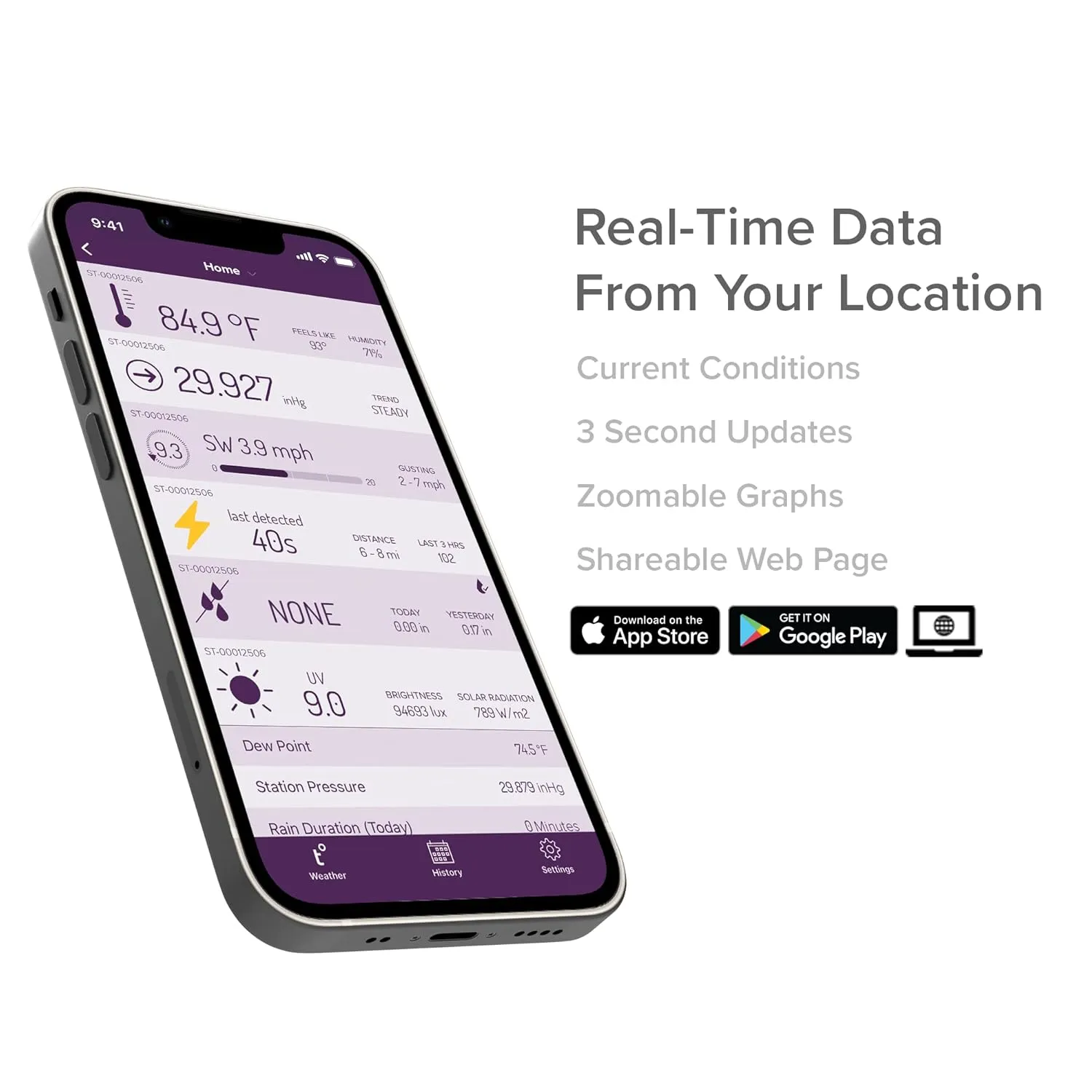
Figure 1: All sensors integrated into a single solar-powered unit.
The Haptic Rain Sensor: Genuinely Innovative, With Real Limitations
The haptic rain sensor is maintenance-free and cannot be fouled by debris: a real advantage over tipping-bucket gauges. In light to moderate rainfall it is often comparable to tipping-bucket gauges, but some users report it can under-report in very heavy rainfall events. This is the Tempest's most significant hardware trade-off.
The Tempest's haptic rain sensor is patented and unlike anything else in the consumer weather station market. Instead of a tipping bucket that can clog with leaves, bird droppings, or ice, the top of the Tempest unit detects the vibration energy of individual raindrops striking the surface. Algorithms filter out false signals, passing lorries, low-flying aircraft, and calculate rain intensity and accumulation in real time.
Based on WeatherFlow's documentation and independent long-term reviews, the honest picture is:
- Light to moderate rain: Accuracy is often comparable to a standard tipping-bucket gauge in these conditions, according to independent comparisons against reference gauges.
- Very light drizzle: The haptic sensor can miss or under-report fine mist that does not create enough vibration energy to register reliably.
- Heavy rainfall events: A haptic sensor can read lower than a tipping-bucket gauge in heavy downpours. This can occur when large drops and high intensity saturate the sensor's signal processing. WeatherFlow continues to push firmware calibration updates to address this.
- Wind interference: Very high wind speeds can temporarily cause erroneous wind readings as water accumulates in the sensor gap. Readings return to normal as the unit dries.
The maintenance advantage is real, no debris fouling, no seasonal cleaning, but if precise rainfall measurement is your primary requirement, a traditional tipping-bucket station may serve you better.
Head-to-Head: Tempest vs WS-5000 vs Davis Vantage Vue
The Tempest wins on AI forecasting, 3-second update speed, built-in lightning detection, and simplicity. The WS-5000 wins on rain accuracy, physical display, and add-on expandability. The Davis Vantage Vue wins on traditional accuracy and a proven track record in agriculture. Your choice depends entirely on which of those priorities matters most.
The Tempest competes in a different lane to traditional stations. Its strengths are software and simplicity; its weaknesses are hardware expandability and rain accuracy. Here is how it stacks up against the two closest alternatives.
| Feature | Ambient WS-5000 | WeatherFlow Tempest | Davis Vantage Vue |
|---|---|---|---|
| Wind Sensor | Ultrasonic | Ultrasonic | Mechanical cups & vane |
| Rain Sensor | Tipping bucket (separate gauge) | Haptic (no debris fouling) Can under-report in heavy rain |
Tipping bucket |
| Update Rate | 4.9 seconds | 3 seconds Among fastest available |
~2.5 seconds (config-dependent) |
| AI Forecasting | No | Yes, Nearcast Technology Unique in class |
No |
| Display | Included TFT console | App & web only No physical console |
Included LCD console |
| Add-on Sensors | Up to 8 (soil, lightning, PM2.5) | None, all-in-one only | Limited (leaf/soil via WeatherLink) |
| Subscription | None | None, lifetime included | WeatherLink Cloud optional |
| Best For | Data hobbyists, cold climates | Smart home, simplicity, AI forecast | Agricultural users, traditionalists |
Pros & Cons
In short: buy the Tempest for its AI forecasting, 3-second updates, and smart home depth. Avoid it if you need a display, precise rain measurement, or expandable sensors.
The Tempest's strengths are concentrated in software, simplicity, and smart home depth. Its weaknesses are hardware: no display, no add-ons, and rain accuracy that depends on conditions.
The Pros
- AI-powered hyper-local forecast: Nearcast Technology is genuinely unique: no other consumer station offers a machine-learning forecast that learns your specific microclimate over time.
- Among the fastest update rates available: 3 seconds to the app: significantly faster than the WS-5000 (4.9 s) or most traditional stations (16–60 s).
- Completely solid-state: No moving parts anywhere. Ultrasonic wind, haptic rain, no cups, no vanes, no bearings to seize or wear.
- Solar-powered LTO battery: The lithium titanate battery handles ~50,000 charge cycles: far exceeding standard lithium-ion. Designed to outlast the station itself.
- Built-in lightning detection: Detects strikes up to 40 km away: included as standard, not an add-on. Generally considered highly reliable in independent tests, and can detect distant storms earlier in some cases.
- No subscription, ever: Lifetime weather data, forecasts, and app access included in the purchase price.
- Superior smart home depth: Rachio irrigation integration, open API for developers, Alexa, IFTTT, Google Assistant, Homey, Home Assistant.
- Fast installation, typically 5–10 minutes: Single unit, no separate rain gauge, no separate wind mast. Mount it on any standard pole and connect via the app.
The Cons
- No physical display: Entirely app and web-based. If you want to glance at a console on the wall, look at the WS-5000 or Davis Vantage Vue instead.
- Haptic rain sensor limitations: Documented under-reporting in very heavy rainfall and very light drizzle. Not suitable if precise tipping-bucket rain accuracy is a priority.
- Single siting compromise: Because everything is in one unit, you must choose a mounting location that balances wind exposure and temperature accuracy: you cannot optimally place each sensor separately.
- No add-on ecosystem: Unlike the WS-5000 which supports soil moisture, extra thermo-hygrometers, and PM2.5 sensors on the console, the Tempest is a closed all-in-one system.
- AI forecast needs time: Nearcast takes weeks to months to learn your microclimate. The forecast improves with time: it is not at its best immediately after installation.
Who Should NOT Buy the Tempest
Skip the Tempest if you need a physical console, if precise rainfall measurement is critical, or if you want to expand with additional sensors. The Ambient WS-5000 or Davis Vantage Vue will serve you better in those cases.
The Tempest is a highly capable system, but it is not the right station for every buyer. Consider the Ambient WS-5000, the WS-2902C vs WS-5000 comparison, or another station from our full ranked guide instead if:
- You want a physical display: There is no console option for the Tempest. The app experience is excellent, but if you need to see data on a wall-mounted screen without reaching for your phone, look elsewhere.
- Precise rain measurement is your priority: If you track rainfall totals for gardening, agriculture, or CWOP/Weather Underground data quality, a separate tipping-bucket rain gauge will be more reliable than the haptic sensor in heavy events.
- You want to expand with additional sensors: The Tempest is a closed system. There are no add-on soil moisture sensors, extra indoor/outdoor thermo-hygrometers, or PM2.5 monitors that connect to it.
- You live somewhere the Tempest network is sparse: Nearcast AI is most powerful when neighbouring Tempest stations are within a few miles. In very remote locations, the AI advantage is reduced.
The Tempest '26: What's New in the 2026 Model
The Tempest '26 (launched November 2025) adds upgraded temperature, humidity and rain sensors, bigger solar panels with a redesigned charging system, a replaceable battery and better weather resistance. Existing owners continue to receive software updates.
In November 2025, WeatherFlow launched the Tempest '26: an updated version of the original hardware. Key changes confirmed by WeatherFlow:
- Larger solar panels with a completely redesigned charging system for better performance on overcast days.
- Improved weather and water-resistant coating on the sensor unit, plus an anti-bacterial agent for high-humidity or harsh environments.
- Upgraded temperature, humidity and rain sensors for sharper, more reliable readings (per Tempest).
- Removable, replaceable battery: on the original Tempest the battery could not be removed.
- Upgraded temperature, humidity and rain sensors for sharper, more reliable readings (per Tempest).
- Removable, replaceable battery: on the original Tempest the battery could not be removed.
- Upgraded temperature, humidity and rain sensors for sharper, more reliable readings (per Tempest).
- Removable, replaceable battery: on the original Tempest the battery could not be removed.
- Upgraded temperature, humidity and rain sensors for sharper, more reliable readings (per Tempest).
- Removable, replaceable battery: on the original Tempest the battery could not be removed.
- Upgraded temperature, humidity and rain sensors for sharper, more reliable readings (per Tempest).
- Removable, replaceable battery: on the original Tempest the battery could not be removed.
- Upgraded temperature, humidity and rain sensors for sharper, more reliable readings (per Tempest).
- Removable, replaceable battery: on the original Tempest the battery could not be removed.
- Upgraded temperature, humidity and rain sensors for sharper, more reliable readings (per Tempest).
- Removable, replaceable battery: on the original Tempest the battery could not be removed.
- Upgraded temperature, humidity and rain sensors for sharper, more reliable readings (per Tempest).
- Removable, replaceable battery: on the original Tempest the battery could not be removed.
- Redesigned hub with a lower-profile, modern look.
- 40% less packaging material, now completely plastic-free.
Source: Tempest's announcement (November 13, 2025). The announcement does not list changes to the ultrasonic wind sensor or to the Nearcast forecast. Existing Tempest owners continue to receive software and firmware updates on the original hardware.
Smart Home Integration: Among the Most Complete Available
The Tempest integrates with Rachio for automatic irrigation control, supports Alexa, Google Assistant, IFTTT, and Home Assistant, and exposes a full open API: all with no subscription. For smart home users, this depth of integration is its strongest selling point.
The Tempest's smart home integration is among the most comprehensive available in the consumer market. Key integrations confirmed as working:
- Rachio smart irrigation: Uses your real-time Tempest wind, rain, and freeze data to automatically skip or adjust irrigation schedules. This is one of the most capable weather-station-to-irrigation integrations available in the consumer market.
- Amazon Alexa and Google Assistant: Ask for live conditions, forecasts, and lightning alerts by voice.
- IFTTT: Trigger automations based on any Tempest parameter: temperature threshold, rain onset, wind speed, UV index.
- Home Assistant: Integrates locally via the Tempest UDP API (no cloud dependency) or through the REST API with a token from tempestwx.com.
- Open API: Full developer access to real-time and historical station data in JSON format. A growing third-party app ecosystem exists specifically for Tempest data.
- Weather Underground: Submit your data to the PWS network via the app settings.
Official Setup Walkthrough
The Tempest has one of the fastest installation processes of any full-featured weather station. This official video shows the complete setup from unboxing to live data in the app, typically under 10 minutes.
Seen enough? The Tempest ships from Amazon: check if it is in stock today.
Order on AmazonFrequently Asked Questions
Does the WeatherFlow Tempest come with a display screen?
No. The Tempest is entirely app-based: there is no physical console. All data is accessed through the Tempest app on a smartphone or tablet, or via the web at tempestwx.com. If a wall-mounted display is important to you, look at the Ambient WS-5000 or Davis Vantage Vue instead.
How does the haptic rain sensor work, and how accurate is it?
The haptic sensor detects the vibration energy of raindrops striking the top of the unit and calculates intensity and accumulation from that signal. It is maintenance-free and cannot be fouled by debris. In light to moderate rain it is often comparable to tipping-bucket gauges. In very heavy downpours, some long-term users report under-reporting of up to 20–30% compared to reference gauges in heavy downpour conditions. WeatherFlow continues to push firmware calibration updates to improve this. For precision rain measurement, a separate tipping-bucket gauge remains more reliable.
How fast does the Tempest update?
The Tempest delivers real-time updates every 3 seconds to the app and web interface: among the fastest available in the consumer market. Most traditional stations update every 16 to 60 seconds.
Does the Tempest require a subscription?
No. Lifetime weather data, forecasts, app access, and smart home integrations are all included in the purchase price. There is no ongoing subscription fee.
What is Nearcast Technology and does it really work?
Nearcast Technology is WeatherFlow's proprietary AI and machine learning system. It combines real-time data from your Tempest with satellite, radar, and professional forecast models, then learns the specific microclimate of your location over weeks of operation. WeatherFlow backs it with a genuine 8-month satisfaction guarantee: if the Tempest forecast is not measurably better than publicly available forecasts, you can request a full refund. WeatherFlow states that station data may contribute to broader forecasting systems via networks such as Weather Underground: the exact nature of any integration with official agencies may vary.
How does the Tempest compare to the Ambient WS-5000?
They serve different needs. The Tempest wins on AI forecasting, update speed (3 s vs 4.9 s), built-in lightning detection, simplicity, and lower price. The WS-5000 wins on rain accuracy (separate tipping-bucket gauge), physical display console, and expandability (up to 8 add-on sensors). Read our full Tempest vs WS-5000 comparison for a deeper breakdown.
Analyst's Final Verdict
Based on WeatherFlow specifications and independent long-term reviews, the WeatherFlow Tempest stands out as one of the most forward-thinking home weather stations available under $400. Its Nearcast AI forecasting is genuinely unique in the consumer market, and the combination of a 3-second update rate, solar-powered solid-state design, and no-subscription lifetime access represents exceptional value.
The honest trade-offs, no display, haptic rain sensor limitations in heavy events, no add-on sensor ecosystem, mean it is not the right station for everyone. But for smart home enthusiasts, anyone who values a genuinely intelligent local forecast, and users who prize simplicity over hardware complexity, the Tempest is the standout choice in its price bracket.
Prefer to buy direct? View on shop.tempest.earth: no affiliate link.
Review Methodology
Which Home Weather Station Is Worth Buying in 2026?
We compared five home weather stations head to head on accuracy, sensor quality, AI forecasting, and long-term reliability. See which one we recommend for most homeowners.

Lena Thornton
Weather Station Analyst at The-Weather.com. Lena has spent years analysing personal weather station data across sensor technologies and data networks. She covers sensor accuracy, storm preparedness, AI forecasting systems, and smart home weather integration.
Ready to decide?
Get the WeatherFlow Tempest
Prices and stock change daily. Check the current price, delivery options and what owners say in their reviews.