We may earn a commission when you buy through links on this page, at no extra cost to you. Learn more
In this article 14 sections
- Weather Radio Offline Cheat Sheet
- Internet vs. Radio: The Emergency Showdown
- Why Radio Waves Beat Fiber Optics in a Crisis
- How to Set Up Your Radio for Offline Success
- Handheld vs. Desktop vs. Smartphone
- The Anatomy of a Power Outage
- Common Mistakes People Make with Radios
- Is Your Radio Ready for a Blackout?
- The Danger of "Digital Dependence"
- Frequently Asked Questions
- Watch: Why Midland is the Official Choice
- More Life-Saving Weather Guides
- Reliable Meteorological Sources
- Updates & Revisions
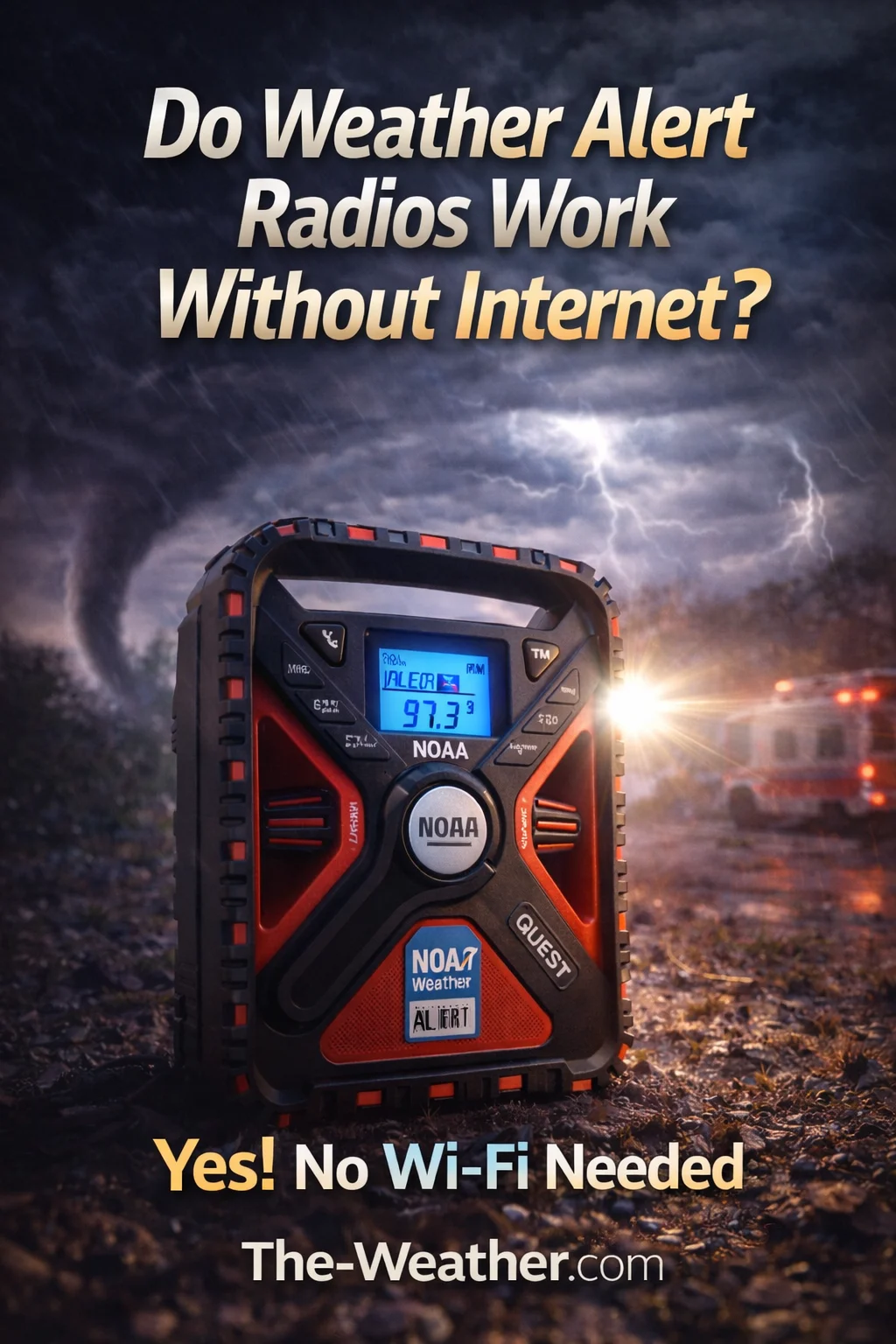
Let's be real, sugar: we live in a world where we think we need Wi-Fi to breathe. But when the sky turns that nasty shade of green and the power lines start dancing, your high-speed internet is usually the first thing to say goodbye. That is exactly when the big question pops up: do weather alert radios actually work without the internet? The short answer is a big, beautiful yes! These life-saving gadgets rely on old-school radio waves that don't care one bit about your router or your data plan.
Weather Radio Offline Cheat Sheet
Uses RF signals from NOAA towers.
Works during total grid failure.
Certified for emergency reliability.
Signal comes straight from the NWS.
Towers have massive backup power.
99% coverage across North America.
Internet vs. Radio: The Emergency Showdown
| Feature | Smartphone/Internet | NOAA Weather Radio | Winner |
|---|---|---|---|
| Signal Source | Cell Towers/Fiber Optics | VHF Radio Waves | Radio |
| Power Dependency | Needs charged phone + active ISP | Batteries/Hand Crank/Solar | Radio |
| Network Congestion | High (networks crash in panic) | None (one-way broadcast) | Radio |
| Alert Speed | Can lag by minutes | Instantaneous | Radio |
| Indoor Reception | Depends on Wi-Fi/Cell signal | Excellent (with antenna) | Radio |
Honey, I love my smartphone as much as the next girl, but it has a glass jaw when it comes to storms. When everyone in town tries to check the radar at the same time, the cell towers get overwhelmed and just give up. A weather alert radio doesn't have that problem. It’s a one-way street. The National Weather Service sends out a signal, and your radio just catches it. No "searching for signal," no spinning loading wheels, just the facts when you need them most.
While your home weather station is great for telling you how much rain fell in your garden, it usually needs Wi-Fi to send that data to your phone. If the internet goes out, your fancy app might go dark. That is why I always tell people that a dedicated emergency radio is the "insurance policy" for your safety kit. It fills the gap that modern tech leaves behind.
Why Radio Waves Beat Fiber Optics in a Crisis
VHF Frequency
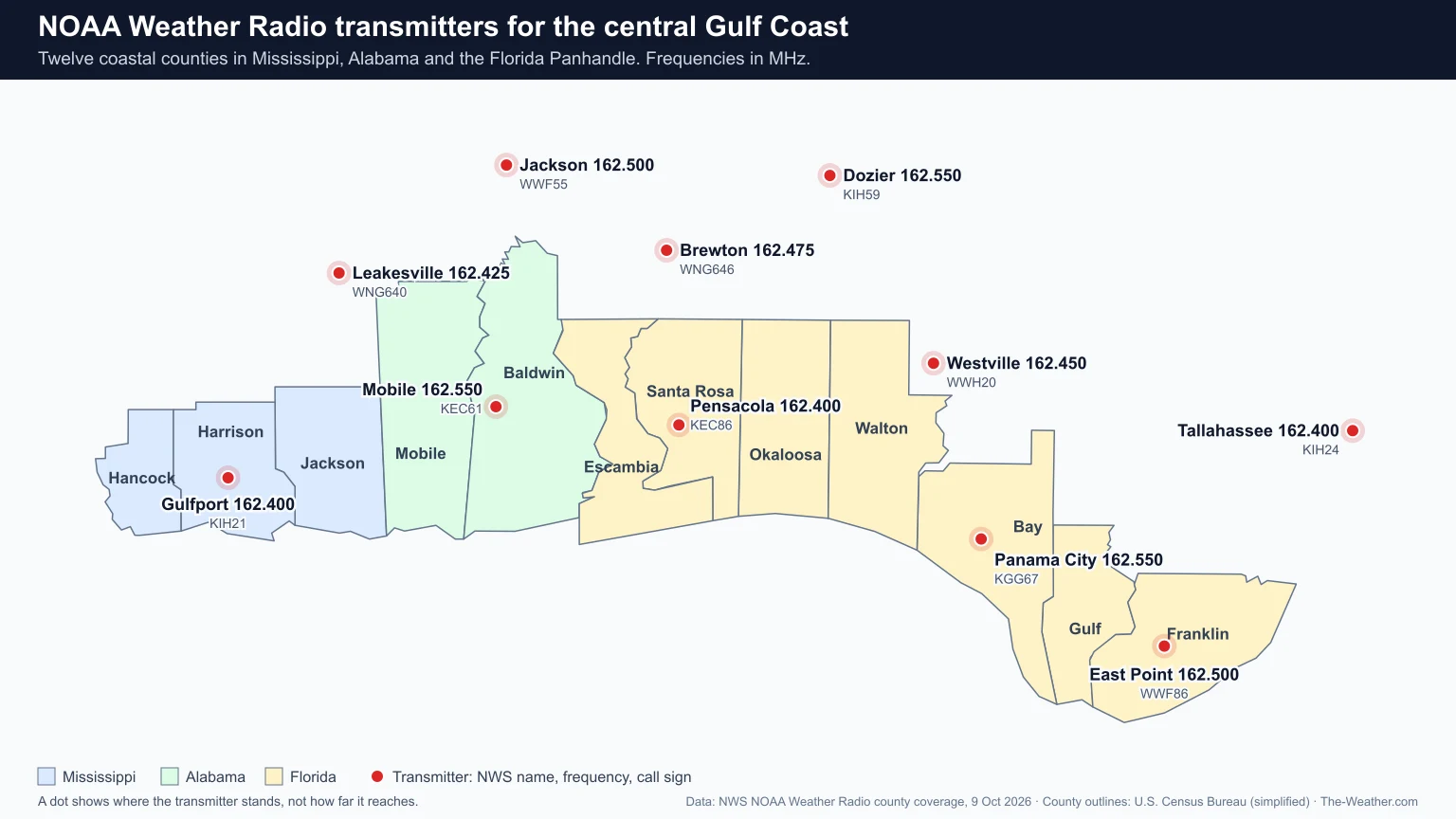
NOAA broadcasts on the VHF band (162.400 to 162.550 MHz). These waves travel long distances and can penetrate walls much better than your 5GHz Wi-Fi signal ever could.
Redundant Power
Most emergency radios have four or five ways to stay powered. If your house is dark, you can use AA batteries, a hand crank, or even the sun to keep the alerts coming.
NOAA transmitter towers are built like fortresses. They have massive diesel generators and are designed to stay upright when the rest of the world is falling down.
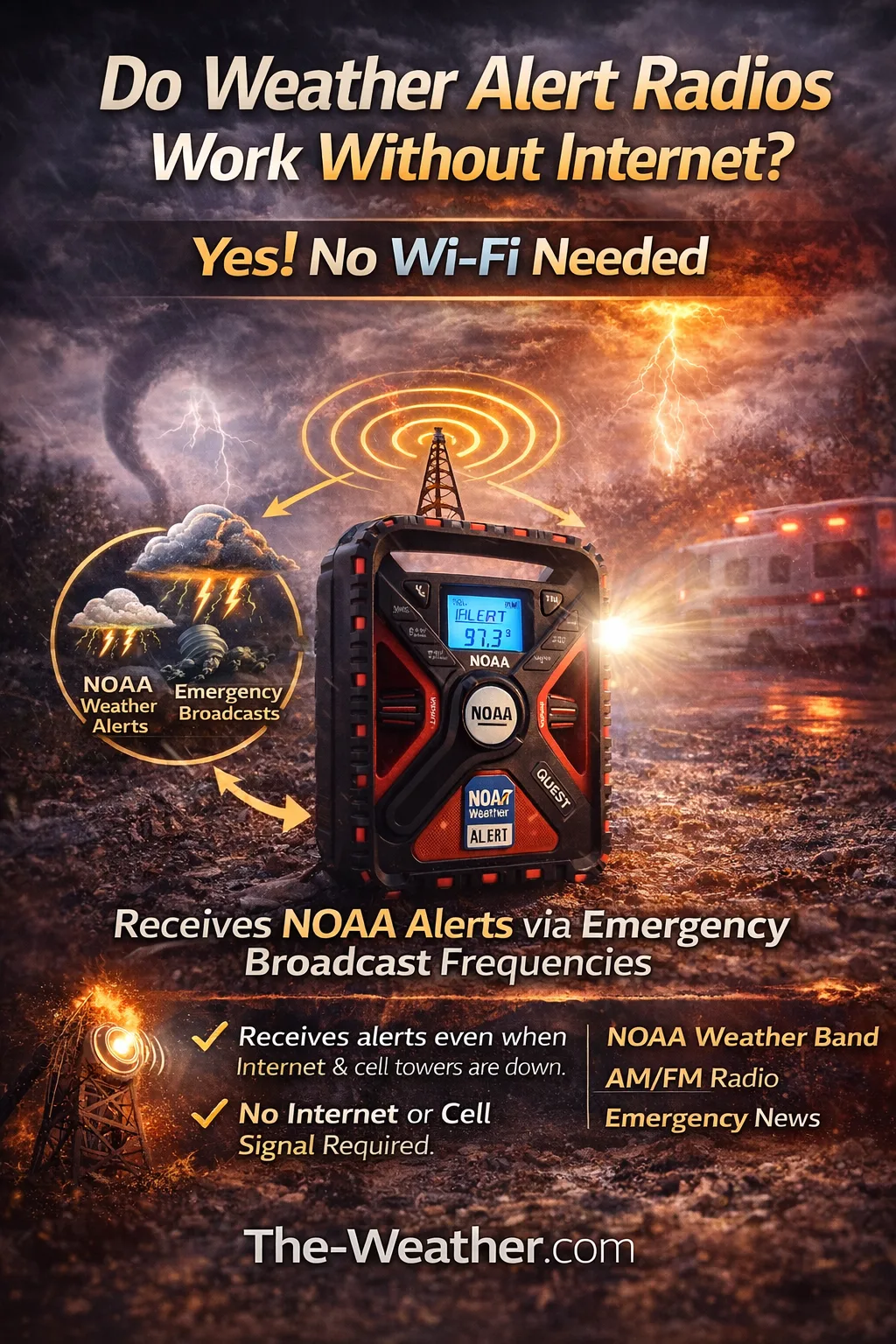
The Path of a Life-Saving Alert
It’s actually a very simple and beautiful process, sugar. You don't need a single byte of data for this to work. Here is how that alert gets from the meteorologist to your kitchen counter:
- Step 1: The NWS detects a threat (like a tornado).
- Step 2: They send a digital signal to a local transmitter.
- Step 3: The transmitter broadcasts a VHF radio wave.
- Step 4: Your radio's antenna catches the wave.
- Step 5: The SAME code triggers your radio's siren.
This system is so reliable that it's been the gold standard for decades. Even if you have a high-end setup like the one mentioned in my AcuRite Optimus review, you still need that radio for the official word from the government.
How to Set Up Your Radio for Offline Success
- Choose the Right Spot: Place your radio near a window if you live in a rural area. This helps the antenna grab that VHF signal without interference from your home's structure.
- Install Fresh Batteries: Even if you keep it plugged into the wall, put in those backup batteries! Power outages happen in the blink of an eye, and you don't want to be fumbling in the dark.
- Find Your Channel: There are 7 NOAA channels. Cycle through them until you hear a clear voice. If it’s static-y, adjust the antenna.
- Program Your SAME Code: This is the secret sauce. By entering your county's Specific Area Message Encoding (SAME) code, your radio will only scream at you for threats in your actual neighborhood.
- Test the Siren: Most radios have a test button. Use it! You need to know that the sound is loud enough to wake you up from a deep sleep.
Handheld vs. Desktop vs. Smartphone
Best for the home. Units like the Midland WR120B stay plugged in and act as a silent guardian until a threat is detected. They have the best speakers and largest antennas.
Best for the "Go-Bag." These are portable and usually include a flashlight and phone charger. They are perfect for taking to the basement or a storm shelter when you have to leave your living room.
Best for "Blue Sky" days. Great for looking at pretty radar maps when the sun is out, but they are the least reliable option when a major disaster strikes and the towers go down.
The Anatomy of a Power Outage
The lights go out. Your Wi-Fi router dies instantly. Your smartphone switches to LTE/5G, but the signal is already getting weak as everyone else does the same.
Thousands of people are trying to load weather websites. The local cell tower is "choking" on the data. Your weather app shows a "Connection Error" spinning wheel.
Your NOAA weather radio, running on its backup batteries, detects the SAME code. It emits a loud 90-decibel siren and broadcasts the tornado warning clearly.
You are already in the basement with your family, listening to the live NWS broadcast, while your neighbors are still on the porch trying to get their Twitter feed to refresh.
Common Mistakes People Make with Radios
- Thinking "I have an app for that": Apps are great until they aren't. Internet infrastructure is fragile; radio waves are solid.
- Leaving the antenna down: That silver stick isn't for decoration, honey. Pull it all the way out to ensure you catch the signal.
- Forgetting the SAME code: If you don't program your county, the radio might alert you for a storm 100 miles away, leading to "alert fatigue."
- Ignoring the "Low Battery" light: Check your backup batteries every time you change your smoke detector batteries.
Is Your Radio Ready for a Blackout?
Lena's Verdict: A weather radio is the only piece of tech that works better when the world is at its worst. Don't skip this!
The Danger of "Digital Dependence"
Bless your heart, I know we love our gadgets. But relying solely on the internet for life-saving information is a dangerous game. In major events like hurricanes or massive tornado outbreaks, fiber optic cables can be cut and cell towers can be knocked over. A NOAA weather radio is a direct link to the experts that doesn't rely on any middleman. It is the most important tool in your emergency kit, period.
Lena’s Storm Story
A few years back, we had a straight-line wind event that took out the power for three days. My daughter was frantic because she couldn't get her weather app to load. I just sat there with my little red crank radio, listening to the updates and knowing exactly when the second wave of storms was going to hit. We even used the radio's USB port to give her phone just enough juice to send a text to her husband. That day, she finally understood why Mom is so obsessed with "old" technology!
Frequently Asked Questions
Do I need to pay a subscription for NOAA alerts?
Not a penny, sugar! The National Weather Service provides this broadcast for free as a public service. Once you buy the radio, the information is yours forever.
Will a weather radio work in a basement?
It can be tricky. Radio waves have a hard time passing through thick concrete and dirt. I always recommend getting a radio with an external antenna port if you plan on spending a lot of time in a deep shelter.
Can I just use a regular AM/FM radio?
While some AM/FM stations broadcast weather, they aren't "always on" and they won't wake you up with a siren in the middle of the night. Only a dedicated NOAA radio has the "Public Alert" feature.
How far away can I be from a tower?
Most NOAA transmitters have a range of about 40 miles. If you are in a very remote area, you might need a high-gain antenna mounted on your roof to catch the signal.
Watch: Why Midland is the Official Choice
More Life-Saving Weather Guides
Reliable Meteorological Sources
Which NOAA Weather Alert Radio Should You Buy?
We put five NOAA weather alert radios head to head on alert coverage, S.A.M.E. county programming, siren volume, and battery backup. See which one we recommend for most homes.
Updates & Revisions
Last Updated: January 14, 2026. This article was reviewed to ensure all technical details regarding VHF radio propagation and SAME code programming are accurate according to the latest NWS guidelines.

Lead Reviewer at The-Weather.com
I've spent over a decade tracking storms and researching weather gear. When I'm not analyzing barometric pressure trends, you can find me in my garden or teaching my grandkids how to stay safe during a storm. I believe that being prepared is the best way to stay calm!