
As an Amazon Associate, I earn from qualifying purchases.
In this article 7 sections
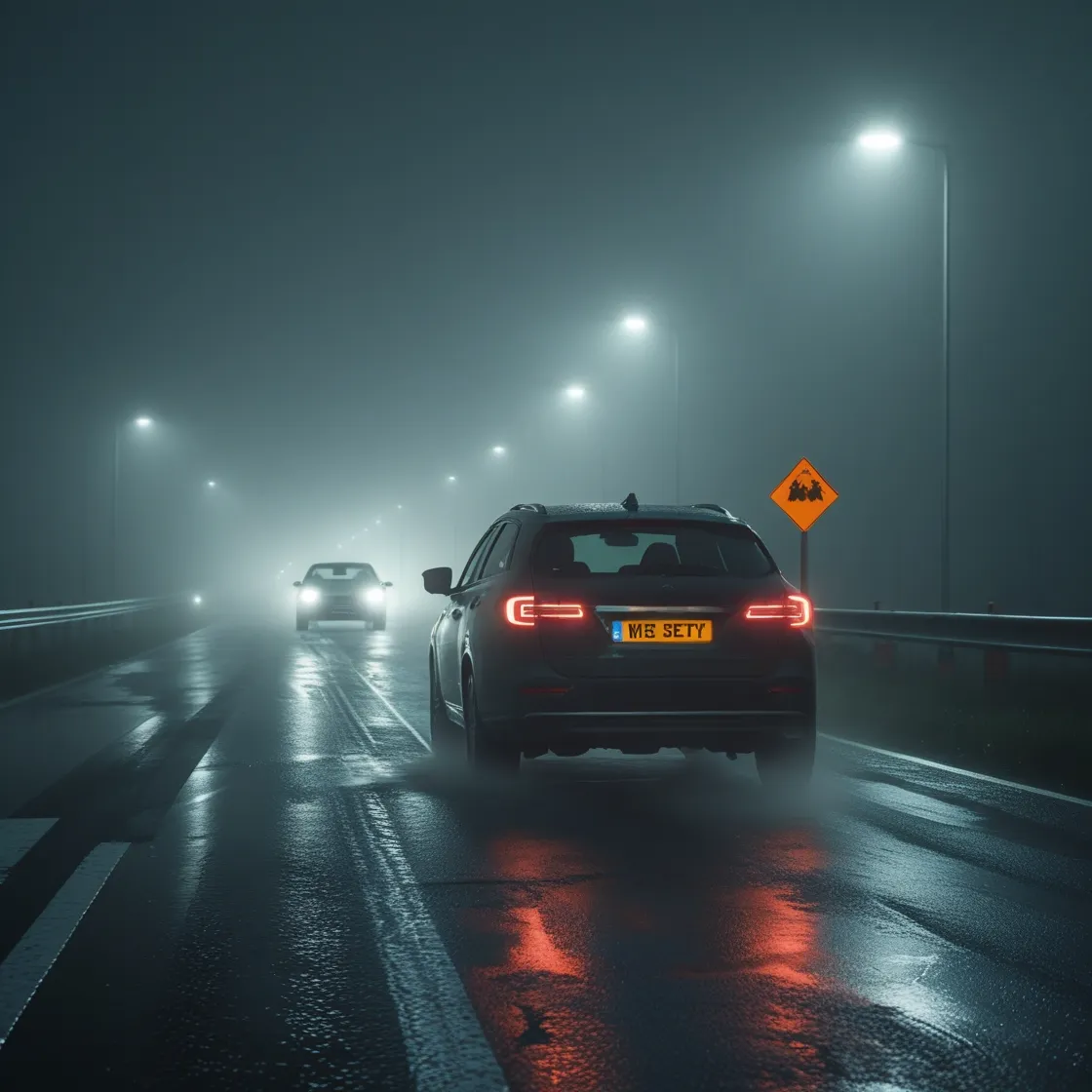
You wake up, look out the window, and the neighbor's house is gone. Not really, of course: it is fog. When it gets thick enough, the National Weather Service puts out a Dense Fog Advisory. Here is exactly what that means, why it is mostly a driving alert, and what to do on the road.
Short answer: a Dense Fog Advisory is issued for "widespread or localized fog reducing visibilities to 1/4 mile or less" (NWS Instruction 10-515, May 2025). A quarter mile is 1,320 feet. At highway speed, that is not much road to see a stopped car in. Slow down, use your low beams, and leave plenty of space.
Editorial Research
- Written by
- Lena Thornton, Weather Station Analyst & CWOP Contributor
- Based on
- National Weather Service Instruction 10-515 (non-precipitation weather products, May 16, 2025), the NWS glossary and the NWS "Driving in Fog" safety page
- Research last verified
- November 23, 2026
Is there one where you are? Check your ZIP code or location: weather alerts near me shows every advisory, watch and warning for your exact spot right now.
What a Dense Fog Advisory Means
The Weather Service's rules for these alerts are short: a Dense Fog Advisory is for "widespread or localized fog reducing visibilities to 1/4 mile or less". The glossary puts it the same way: "This product is issued when fog reduces visibility to 1/4 mile or less over a widespread area."
It is an advisory, not a warning. In Weather Service language that means: be careful, this can cause trouble, but it is not the take-cover kind of alert. The trouble with fog is almost all on the road. As one example advisory in the Weather Service's own rules puts it under IMPACTS: "Hazardous driving conditions due to low visibility."
How Far Is a Quarter Mile in Fog?
A quarter mile is 1,320 feet. Our own quick math, to make that real:
| Speed | Feet per second | Time to cover 1,320 feet |
|---|---|---|
| 30 mph | 44 | 30 seconds |
| 45 mph | 66 | 20 seconds |
| 65 mph | 95 | about 14 seconds |
Simple arithmetic (1 mph = 1.467 feet per second). At the edge of an advisory, a quarter mile is the most you can see; in patches it can be much less.
That sounds like plenty of time, until you remember that the thing you suddenly see may be a car that has stopped. That is why the Weather Service's advice is all about going slower and being seen.
How to Drive in a Dense Fog Advisory
From the National Weather Service's Driving in Fog page:
- "Slow down and allow extra time to reach your destination."
- "Make your vehicle visible to others both ahead of you and behind you by using your low-beam headlights"
- "Use fog lights if you have them."
- "Never use your high-beam lights."
- "Leave plenty of distance between you and the vehicle in front of you to account for sudden stops or changes in the traffic pattern."
- "To ensure you are staying in the proper lane, follow the lines on the road with your eyes."
If you can barely see at all: "In extremely dense fog where visibility is near zero, the best course of action is to first turn on your hazard lights". Then get off the road: pull into a parking lot or driveway, and "If there is no parking lot or driveway to pull into, pull your vehicle off to the side of the road as far as possible." The same page says to then turn off all lights except the hazard flashers, set the emergency brake and take your foot off the brake, so your brake lights are not lit.
Related Fog and Smoke Alerts
Dense Fog Advisory
Fog, 1/4 mile or less
"Widespread or localized fog reducing visibilities to 1/4 mile or less."
Do: slow down, low beams, more space.
Freezing Fog Advisory
Fog that leaves ice
"Very light ice accumulation from freezing fog."
Do: drive as if roads may be slick.
Dense Smoke Advisory
Smoke, 1/4 mile or less
"Widespread or localized smoke reducing visibilities to 1/4 mile or less."
Do: the same fog driving rules.
Quotes: NWS Instruction 10-515 (May 16, 2025), table of non-precipitation advisories. On the water, a Dense Fog Advisory uses "regionally or locally defined limitations not to exceed 1 nautical mile" (NWS glossary).
Why Fog Forms (and Why It Loves Mornings)
Fog is a cloud at ground level: the air cools until it can't hold all its water vapor, and tiny droplets form. That is also why fog advisories often run through the morning, like the example in the Weather Service's own rules: "Dense Fog Advisory in effect until 9 am EST this morning". The full story, with the different kinds of fog, is on our page what causes fog. Want to see fog coming at home? A rising humidity reading and a temperature that drops close to the dew point on your weather station can be a clue.
How to Know Before You Drive
Dense fog advisories are not on the list of alerts the Weather Service sends to phones as Wireless Emergency Alerts (NWS), so your phone will usually stay quiet. Before an early drive, check your route on our weather alerts near me tool or on weather.gov.
Quick Answers
What does a dense fog advisory mean?
Fog has cut, or is expected to cut, visibility to a quarter mile (1,320 feet) or less. It is mainly a driving alert.
Is a dense fog advisory serious?
It is an advisory, not a warning, but fog is a real driving danger: the Weather Service's example text calls it "Hazardous driving conditions due to low visibility."
Should I use high beams in fog?
No. The Weather Service: "Never use your high-beam lights." Use low beams and fog lights if you have them.
How long does a dense fog advisory last?
Each advisory has its own end time. Many fog advisories run through the morning hours, but check the "until" time for your area.
What is the difference between fog and a dense smoke advisory?
Same visibility limit, a quarter mile or less, but caused by smoke instead of water droplets.
Sources: NWS Instruction 10-515 (WFO Non-Precipitation Weather Products, May 16, 2025) · NWS glossary: Dense Fog Advisory · NWS: Driving in Fog · NWS: Wireless Emergency Alerts