
Product covered in this analysis
Unseen Hero
See today’s price, delivery options and customer reviews on Amazon.
As an Amazon Associate, I earn from qualifying purchases.In this article 7 sections
- The Critical Importance of a Stable Platform
- A Close Look at the Hardware: The Difference is in the Steel
- The Genius of the Pivot: Solving Awkward Installations
- Comparing Mounting Solutions
- Installation Guide: A Visual Walkthrough
- Analyst's Recommendation: The Smart Choice for a Tough Job
- My Review Methodology
Expert Verdict & Key Takeaways: The CEKAY Universal Pole Mount is proof of thoughtful, heavy-duty engineering. Based on its design and specifications, this is far more than a simple bracket; it's a versatile and incredibly solid mounting platform. Its standout features are the exceptionally thick steel construction and the highly adaptable pivot bracket, which together solve a multitude of complex installation challenges. For anyone needing to securely mount a weather station, Starlink dish, or other valuable antenna to a tricky surface like a sloped roof or eave, this J-mount provides an uncompromisingly stable and reliable solution.
I'm Lena Thornton, a weather station analyst who has seen countless expensive instruments rendered useless by a single, overlooked detail: a flimsy mount. The stability of your platform is essential, whether you're capturing wind data with a home weather station or pulling down a satellite signal from space. This brings us to a true workhorse of the installation world: the J-mount.
The CEKAY Universal Pole Mount is a prime example of this design, but with a clear focus on heavy-duty application and versatility. It's engineered not just to hold equipment, but to hold it securely against the forces of nature. This expert review will dissect its construction, from the gauge of its steel to the design of its pivot, to determine if it truly provides the universal, rock-solid foundation that modern, high-performance equipment demands.
The Critical Importance of a Stable Platform
Before we analyze the mount itself, we must understand why it matters. Any instrument mounted outdoors is subject to constant wind load. This force creates vibration, sway, and torsional (twisting) stress. For sensitive equipment, this is a data-killer.
- For Weather Stations: A vibrating mast can cause false rain gauge tips and corrupt wind speed data. A mount that isn't perfectly plumb (vertically level) will lead to inaccurate rainfall collection.
- For Starlink & Satellite Dishes: These require a precise, stable alignment with satellites in orbit. A mount that flexes or shifts in high winds can cause intermittent signal loss or complete dropouts, a frustrating issue for anyone relying on the service for work or communication.
- For Directional Antennas (TV, WiFi, 5G): Like satellite dishes, these need to be aimed accurately at a source. A wobbly mount means a wandering signal and poor performance.
A professional mount isn't just about preventing your equipment from falling; it's about creating a foundation so stable that the instrument can perform its job without interference. This is a core principle of data collection, recognized by scientific bodies from NOAA to university atmospheric science departments.
A Close Look at the Hardware: The Difference is in the Steel
The first thing that stands out in the CEKAY mount's specifications is the thickness of the steel. It's a detail that many manufacturers obscure, but it's the most important factor in a mount's strength.
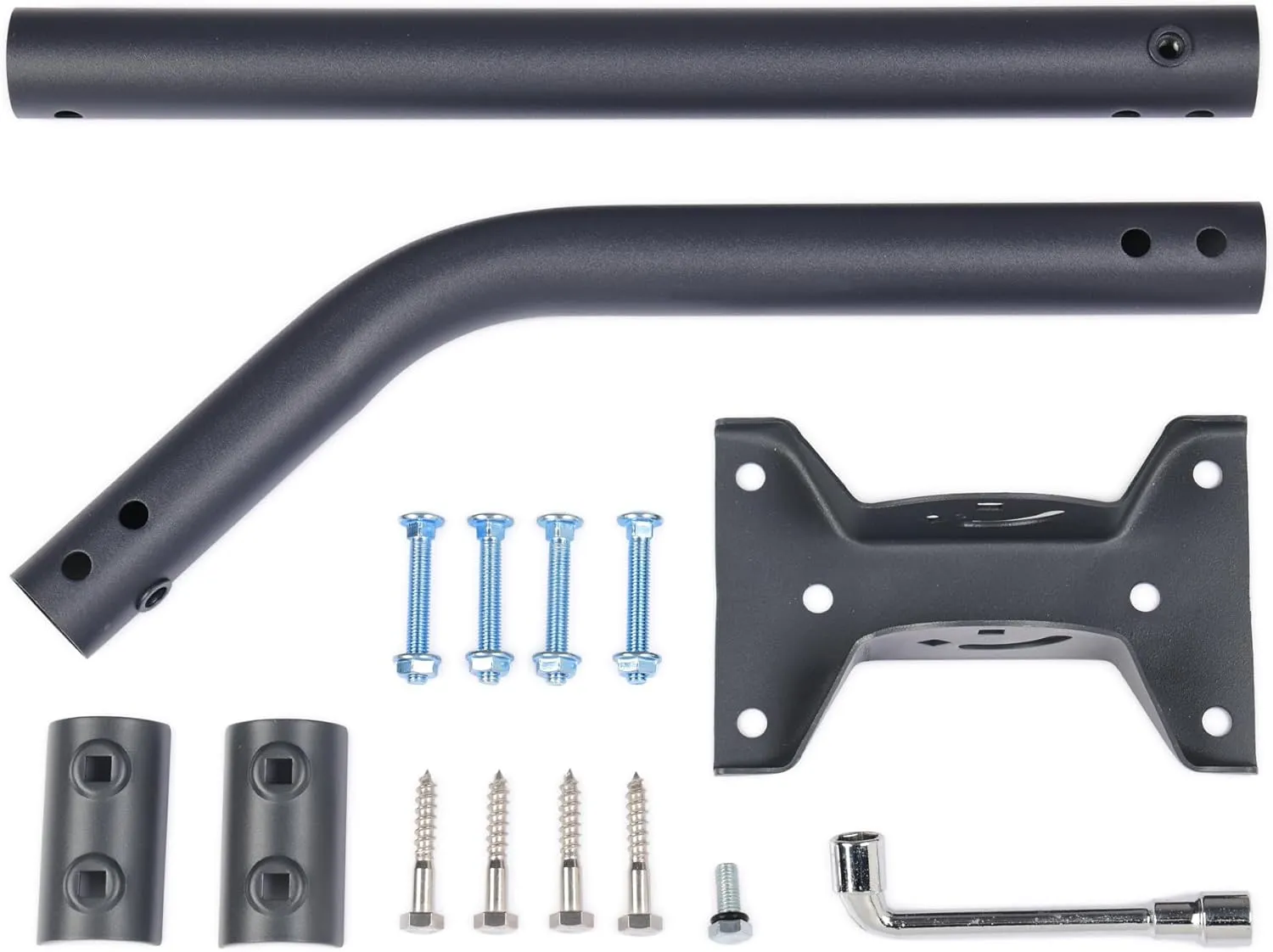
- The Pole (16-gauge): The 35-inch J-pole itself is made from 1.5mm thick, or approximately 16-gauge, steel. This is substantially thicker and more rigid than the thin-walled tubing often included with antennas.
- The Bracket (14-gauge): Even more impressively, the mounting bracket, the part that takes the most stress, is made from 2.0mm thick, or approximately 14-gauge, steel. This is exceptionally solid and provides a solid anchor point that resists flexing under load.
This heavy-gauge, powder-coated steel construction is what gives the mount the structural integrity to confidently support a heavy Starlink dish during a windstorm. It's a level of durability that far exceeds the requirements for a simple TV antenna, making it a perfect choice for more demanding applications.
The Genius of the Pivot: Solving Awkward Installations
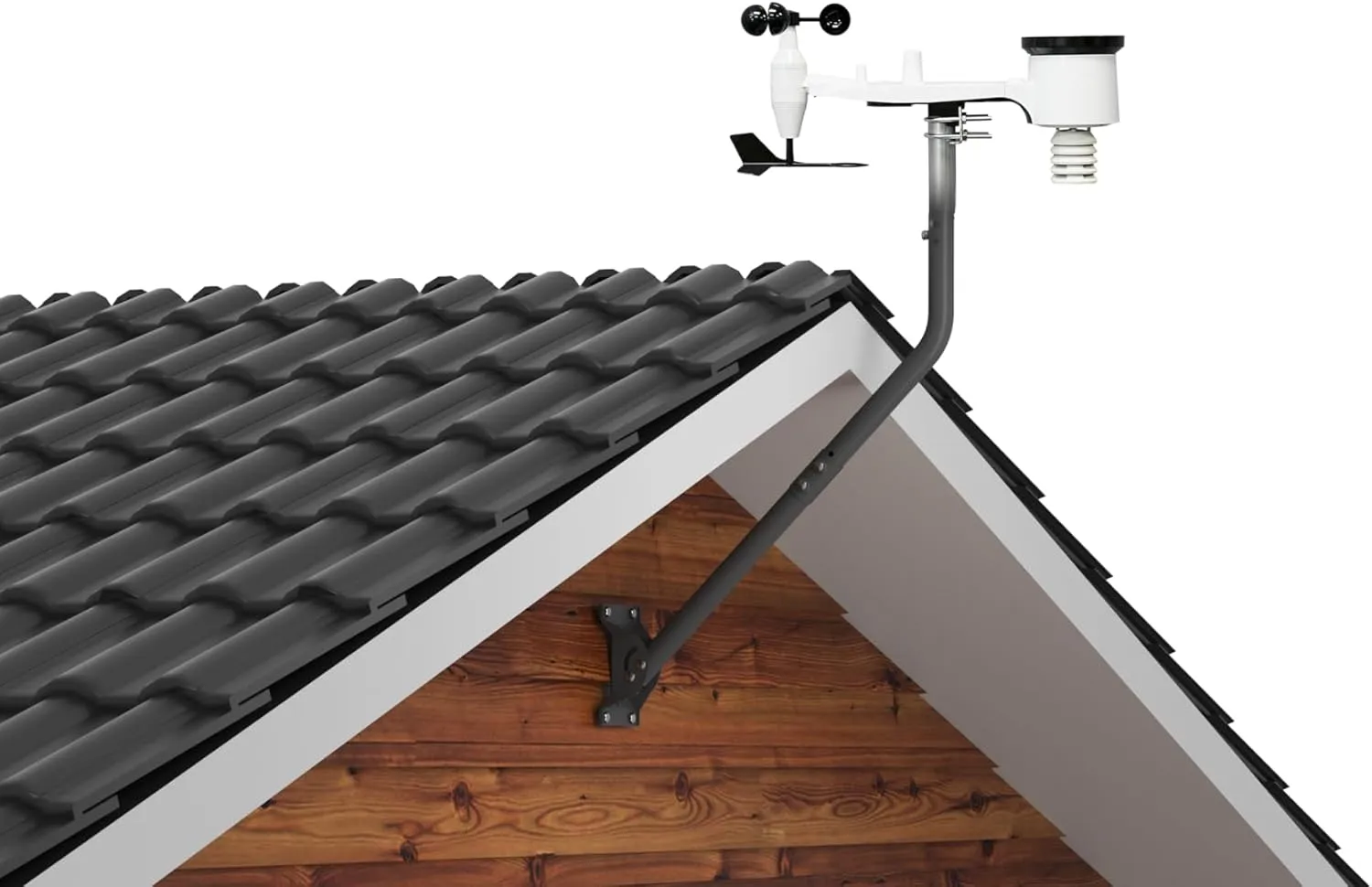
The CEKAY mount's most versatile feature is its adjustable pivot bracket. Many basic J-mounts have a fixed 90-degree angle, which means they only work perfectly on a perfectly vertical wall. The CEKAY's bracket can be mounted to nearly any surface, and then the mast can be rotated a full 180 degrees and locked into place.
This solves a host of common installation headaches:
- Sloped Roofs: You can mount the base flat against the roof sheathing and then pivot the mast until it is perfectly plumb.
- Angled Eaves & Fascia: No matter the angle of your roof's overhang, you can achieve a vertical mast.
- Wall Mounting with Clearance: The reversible J-pole design gives you two standoff distances from the wall, allowing you to choose the one that best clears your gutters or eaves.
This adaptability makes it a true "universal" mount, capable of providing a professional-quality installation in locations where a fixed mount would be impossible to use correctly.
Comparing Mounting Solutions
Let's see how the CEKAY J-Mount compares to other common options for mounting sensitive equipment.
| Mounting Method | Strength & Durability | Installation Versatility | Best Use Case |
|---|---|---|---|
| Included "Kit" Mount | Low - Thin metal, small hardware. | Low - Usually for vertical surfaces only. | Lightweight TV antennas. |
| Non-Penetrating Roof Mount | Good - Uses ballast, no holes. | Fair - Requires a flat roof surface. | Commercial roofs, renters. |
| CEKAY Universal J-Mount | Excellent - Heavy-gauge steel. | Excellent - Pivoting bracket fits any angle. | Weather Stations, Starlink, Heavy Antennas. |
Installation Guide: A Visual Walkthrough
While this video demonstrates a mast-to-mast installation, it perfectly illustrates the principles of stability that the CEKAY J-mount is designed to provide. The key takeaway is the importance of a rigid, immovable base, which this mount achieves through its heavy-duty bracket and secure locking pin.
Analyst's Recommendation: The Smart Choice for a Tough Job
After a thorough analysis of its design and materials, I can confidently recommend the CEKAY Universal Pole Mount as a top-tier solution for challenging installations. Its heavy-duty construction provides the peace of mind that your valuable equipment is secure, while the brilliantly designed pivot bracket offers the versatility to achieve a perfect installation on almost any surface.
Whether you are setting up a popular weather station like the WS-2902C, installing a Starlink dish for critical internet access, or mounting a directional antenna for the best possible signal, this J-mount provides the stable, reliable foundation you need. It is an investment in performance and durability that will pay dividends for years to come.
Mounting an Ambient Weather station? See our page on the Ambient Weather EZ2-35W2MC pole mounting kit.
My Review Methodology
This review is a comprehensive analysis grounded in my expertise in meteorology and scientific instrumentation. My assessment is based on manufacturer-provided material specifications, principles of structural engineering, and installation best practices from organizations like The National Severe Storms Laboratory. The goal is to provide an expert, evidence-based assessment of the product's role in achieving a stable and reliable platform for data-sensitive equipment.
Ready to decide?
Get the Unseen Hero
Prices and stock change daily. Check the current price, delivery options and what owners say in their reviews.