
As an Amazon Associate, I earn from qualifying purchases.
In this article 9 sections
- Fog Wisdom: Quick Road Insights
- The Danger of Fog on the Road
- What Causes Fog on the Road? Understanding the Science
- What Should You Do When Driving in Fog? Essential Safety Measures
- When Driving in Fog, It Is Best to Drive With What?
- What Is the Safest Way to Drive in Fog? Pro Driving Tips
- What Are the Safety Tips for Fog? A Quick Checklist
- Staying Safe When Driving in Fog
- Fog Driving FAQs: Your Top 5 Questions Answered
WHAT CAUSES FOG AND HOW TO DRIVE SAFELY IN IT
Uncover the mysteries of mist and master the road: A comprehensive guide to understanding fog and navigating low-visibility conditions safely.

Fog Wisdom: Quick Road Insights
Before you hit the road, grasp these essential facts and safety measures for driving in misty conditions. Click on any insight to get quick tips!
Slow Down
Reduced visibility demands drastically lower speeds to give you time to react.
Read More →Low Beams Only
High beams reflect off fog droplets, creating blinding glare; stick to low beams.
Read More →Increase Distance
Double your following distance to compensate for delayed reaction time and braking.
Read More →Pull Over If Needed
If visibility is near zero, find a safe off-road spot and wait it out for safety.
Read More →The Danger of Fog on the Road
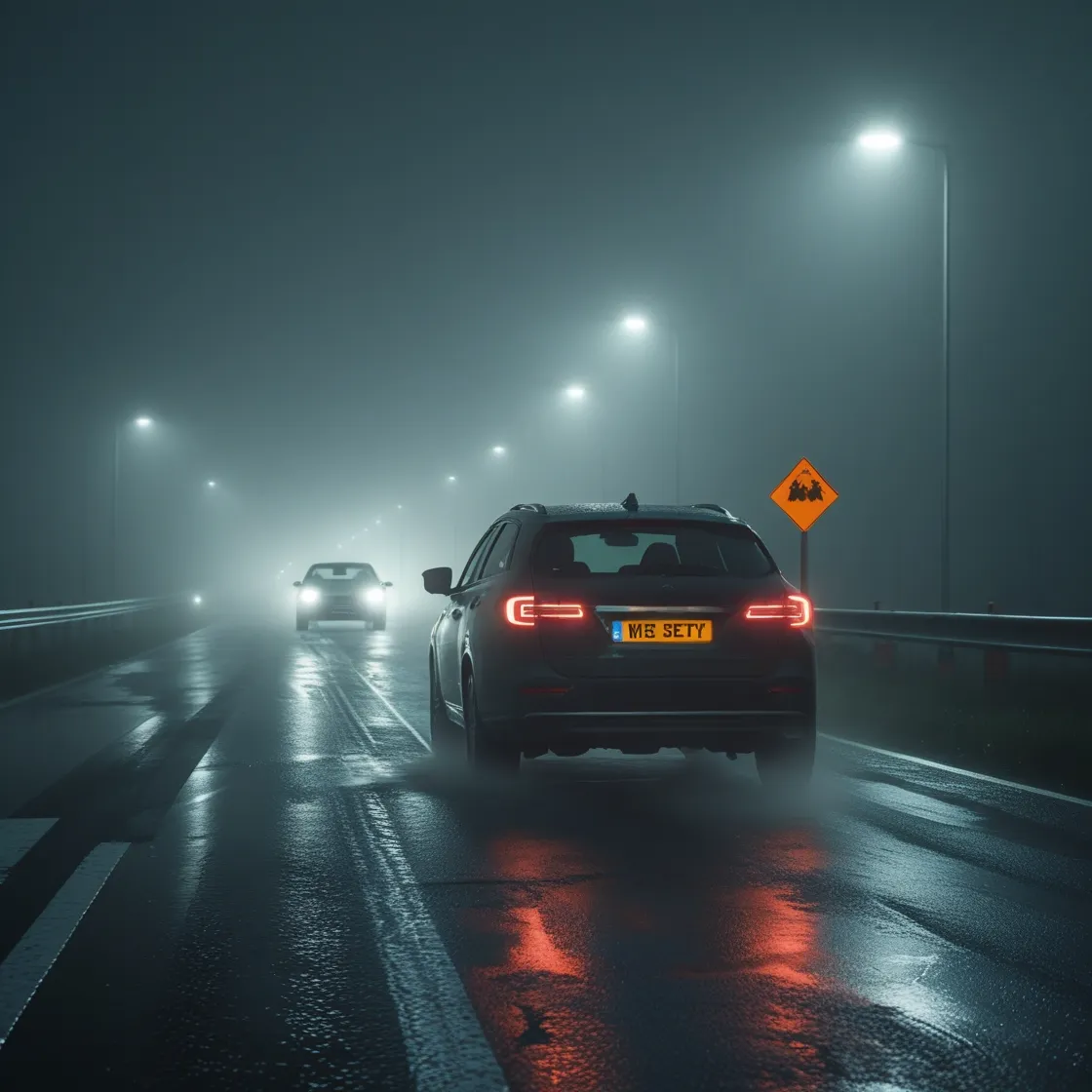
Imagine cruising along, coffee in hand, when fog sneaks in like a silent bandit. Suddenly, you can’t spot the car ahead, road signs, or even lane lines. It’s not just creepy: it’s a real hazard. The National Highway Traffic Safety Administration (NHTSA) says fog-related crashes often spiral into pileups because drivers misjudge distance or speed. In 2022, over 31,000 weather-related wrecks involved fog, mist, or low visibility, per NHTSA stats. Why’s fog such a beast? It shrinks your world fast. The National Weather Service calls visibility under 1/4 mile “dense fog”: conditions where even careful drivers might miss a stalled truck or sharp turn. Take California’s Central Valley: tule fog there has triggered chaos like the 2007 I-5 pileup with 100+ vehicles. Fog doesn’t care about your schedule: it demands caution. Understanding what causes fog at night or what causes heavy fog can shift the odds in your favor. It’s not just about surviving; it’s about mastering the drive. So, how do we beat it? First, the science, then safety tips to nail what is the safest way to drive in fog? Pair this with our guide on How to Tell If a Storm Is Coming Without a Forecast for extra road-ready skills.What Causes Fog on the Road? Understanding the Science
Fog’s like a cloud that forgot to float: a thick layer of water droplets (or ice crystals in cold snaps) hovering near the ground. It happens when air gets so saturated that vapor condenses, hitting the dew point. But what sets it off? Let’s unpack the types you’ll face, answering what causes fog in the morning to what causes fog over water.- Radiation Fog: Your dawn nemesis (what causes morning fog?). Clear, calm nights let the ground shed heat, cooling the air above. When it hits the dew point, fog forms, especially in valleys where cold air pools.
- Advection Fog: Warm, moist air slides over a cold surface, like a lake or wet road. That’s your coastal culprit (what causes fog on the coast?) or over water (what causes fog over the ocean?). Think San Francisco’s famous haze.
- Upslope Fog: Winds push air up hills or mountains, cooling it as it rises. Fog follows: common in places like the Rockies.
- Freezing Fog: In winter (what causes fog in winter?), supercooled droplets freeze on contact, icing up roads. Slippery and brutal.
Fog Types
- Radiation Fog (Very Common)
- Advection Fog (Common)
- Upslope Fog (Regional)
- Freezing Fog (Seasonal/Hazardous)
What Should You Do When Driving in Fog? Essential Safety Measures
Fog hits: now what? Flip on your low-beam headlights. High beams bounce off those droplets (what causes mist and fog), blinding you with glare. The AAA says low beams cut through better, lighting the road without kickback. Slow down, way down, and double your following distance. Can’t see the car ahead’s taillights? You’re too close. Got fog lights? Use them: they’re angled to pierce thick fog. Stay in your lane, signal early, and glide smooth: no jerky moves. Fog muffles sound, so crack a window to hear traffic. In fog-prone spots like Autauga County, a weather alert radio or local setup (Autauga County Weather Stations) can tip you off early. Still pondering what should you do when driving in fog? Let’s zoom into lighting next.When Driving in Fog, It Is Best to Drive With What?
So, when driving in fog, it is best to drive with what? Low beams, no question. High beams turn fog into a glowing wall: those droplets scatter light back at you. The Insurance Institute for Highway Safety (IIHS) agrees: low beams focus down, giving you a shot at seeing the road. Fog lights, if you’ve got ‘em, slice under the haze. Keep your windshield clear: fog loves to steam it up. Blast the defroster and wipers to stay sharp. Sound’s muffled, so skip the radio and listen for horns. Hazard lights? Only if you’re stopped or inching along: overuse confuses others. A weather alert radio can ping you before heavy fog thickens.What Is the Safest Way to Drive in Fog? Pro Driving Tips
Here’s the core: what is the safest way to drive in fog? Stay calm, visible, and steady. Hug the right lane unless passing: fewer curveballs there. Use road reflectors or lines as guides; they shine through when thick fog blanks out the rest. The Texas DOT loves this: follow the right edge line to stay on track. Skip lane changes or overtaking unless it’s a must: fog hides too much. When it’s brutal, like what causes fog at night with zero visibility, pull over. Find a rest stop or wide shoulder, not the roadside where you’re a target. Keep hazards on and wait. Patience beats panic. For more weather hacks, our Weather Education page is gold. Check this out: Strangest Weather on Earth: Dubai Fog. This clip shows fog swallowing Dubai’s skyline, a wild example of how heavy fog can transform any drive.What Is the Most Common Mistake While Driving in the Fog?
So, what is the most common mistake while driving in the fog? Speeding tops the list. Drivers think they can muscle through, but fog doesn’t budge. Your reaction time vanishes when visibility’s shot. High beams are next: they glare back in thick fog. Tailgating’s a killer, too: fog tricks your depth perception, especially in what causes fog at night darkness. Sudden braking without signals? That’s pileup bait. Avoid these, and you’re golden. Pair this with How to Tell If a Storm Is Coming Without a Forecast.Fog Driving Mistakes
- Speeding (Highest Risk)
- Using High Beams (High Risk)
- Tailgating (Significant Risk)
- Sudden Braking/Turns (Moderate Risk)
- No Turn Signals (Lower Risk but still dangerous)
What Are the Safety Tips for Fog? A Quick Checklist
Ready for what are the safety tips for fog? Here’s your checklist, split for prep and action.Before You Drive
- Check Ahead: Use The Weather Channel’s satellite map or a home weather station to spot fog.
- Test Lights: Ensure headlights and fog lights work: don’t get caught dark.
- Plan B: Map a fog-free route, dodging spots prone to what causes fog over water.
While Driving
- Stay Cool: Panic’s your enemy: focus and glide.
- Clear Glass: Defrosters and wipers fight inside fog.
- Watch Junctions: Intersections vanish in thick fog: creep and listen.
When It’s Bad
- Pull Over: Can’t see 50 feet? Find a safe spot off-road.
- Hazards On: Signal you’re stopped, not moving.
- Wait It Out: Fog lifts: give it time.
Staying Safe When Driving in Fog
Fog’s a crafty mix of cool air, moisture, and geography, from what causes fog on the ocean to what causes fog in the morning. It turns roads into mysteries, but you’ve got the playbook: low beams, slow pace, and pulling over when thick fog wins. Recap, keep lights low, distance long, and cool intact. Safety first, always. Explore our site for tools like home weather stations or weather alert radios from our site and stay tuned to the sky’s wild symphony!
Fog Driving FAQs: Your Top 5 Questions Answered
Fog still foggy? Here’s a fresh take on your top 5 questions about driving in these tricky conditions.
Why’s fog thicker at night?
Nighttime typically brings cooler temperatures and calmer winds, especially in valleys or low-lying areas. This allows the ground to cool significantly and the air above it to reach its dew point, leading to more condensation and thus denser fog. The lack of sunlight also means fog can persist longer and appear more opaque.
Does radar cut through fog?
Not perfectly. Weather radar is designed to detect larger precipitation particles like rain, snow, or hail. Fog consists of extremely tiny water droplets that are generally too small to be effectively detected by conventional radar. While specialized research radars might detect some fog characteristics, your car’s sensors (like adaptive cruise control or collision avoidance) can also struggle in dense fog, as they often rely on radar or lidar that can be interfered with by thick mist.
What’s the nastiest fog type?
Freezing fog is arguably the nastiest type of fog. It occurs when supercooled water droplets (which remain liquid despite being below freezing) freeze instantly upon contact with any surface, including roads, car windows, and power lines. This creates a treacherous layer of ice that can be extremely slippery and dangerous, far more so than regular liquid fog.
When’s fog too bad to drive?
The general safety guideline is: if you cannot see more than 100 feet (approximately 30 meters) ahead of your vehicle, it’s considered too dangerous to drive. This means you should safely pull over to a rest stop, gas station, or a wide, well-lit shoulder (away from traffic lanes) and wait for conditions to improve. Pushing through zero-visibility fog significantly increases your risk of a collision.
Why’s fog worse in some spots?
Fog often forms or becomes denser in specific geographical locations due to factors that promote condensation and trapping of moist air. Valleys and low-lying areas, especially near rivers or large bodies of water (like oceans or lakes), are prone to severe fog because cold, dense air sinks into these areas, and moisture is readily available. Coastal regions often experience dense advection fog as warm, moist ocean air moves over colder land or water. Topography and proximity to moisture sources are key.