

As an Amazon Associate, I earn from qualifying purchases.
In this article 13 sections
- Quick Navigation: Discover “Little Wonders Weather”
- Why Weather Education Matters for Kids: Building Early Environmental Awareness
- What Makes Little Wonders Weather a Standout Choice?
- Beyond Play: How “Little Wonders Weather” Enhances Learning
- What Weather Topics Does “Little Wonders Weather” Cover?
- Fun Weather Activities to Pair with “Little Wonders Weather”
- Why Parents and Educators Enthusiastically Love “Little Wonders Weather”
- Tips for Parents: Maximizing the Book's Impact for Early Learning
- Why Weather is Perfect for Early Childhood Learning: A Natural Classroom
- Why “Little Wonders Weather” Deserves a Spot in Your Home or Classroom
- The Little Wonders Book Series: Beyond Weather
- Your Questions Answered: Little Wonders Weather & Early Learning FAQ
- Final Thoughts: Sparking Wonder in Every Child
Little Wonders Weather: Interactive Board Book Review for Kids – 2025
Sparking Curiosity: A Playful Journey into the World of Weather and Nature for Little Learners
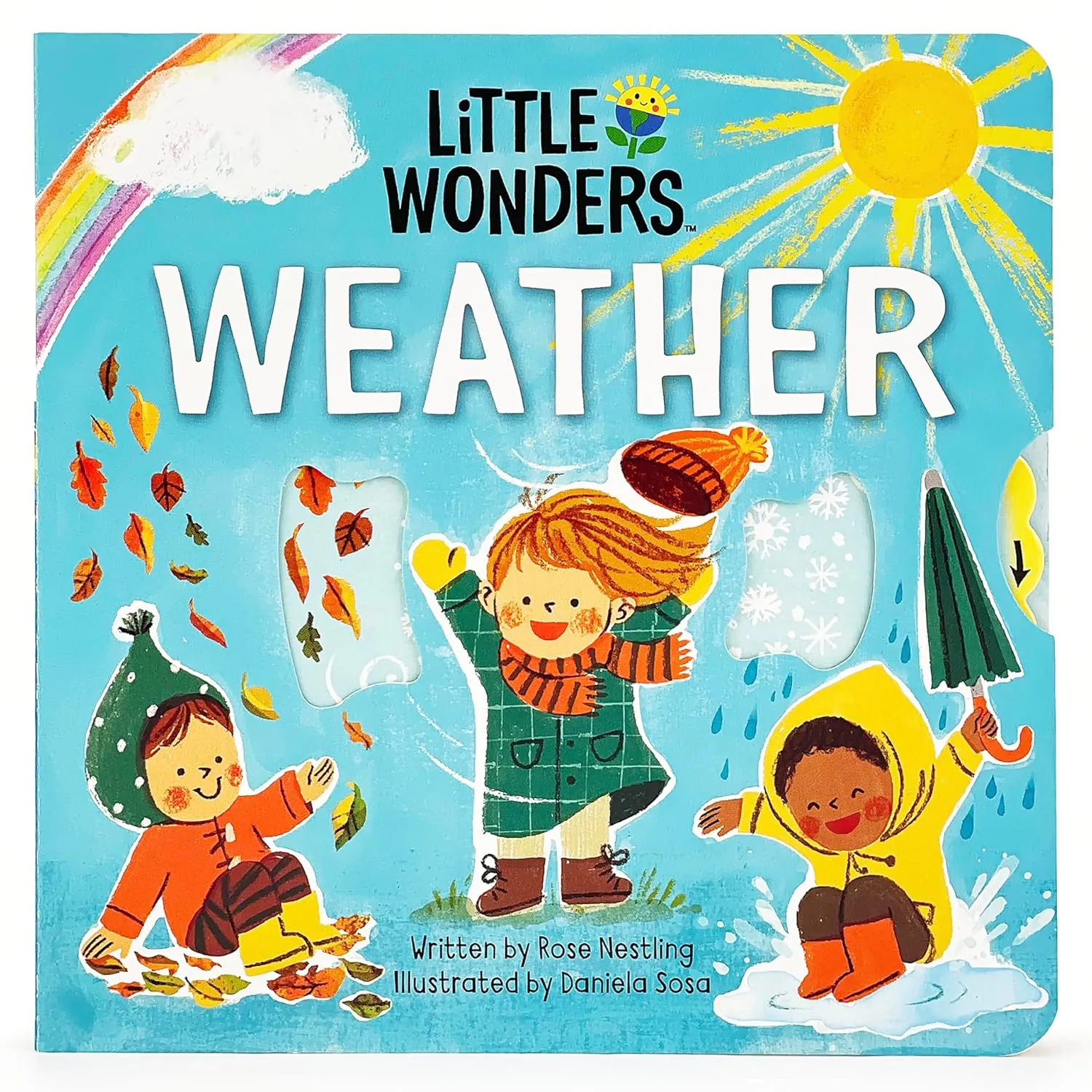
Weather is an endlessly fascinating subject for children, and introducing them to its captivating wonders at a tender age is a fantastic way to build innate curiosity, cultivate early scientific thinking, and build a deeper, more meaningful connection to the natural world. ”Little Wonders Weather: Introduction to the World of Weather and Nature” by acclaimed author Rose Nestling and brilliant illustrator Daniela Sosa stands out as an exceptional board book that masterfully transforms fundamental weather education into a delightfully playful, hands-on, and memorable experience for the youngest learners. Let’s start an exploration of precisely why this book is the absolutely perfect choice for your little meteorologists-in-training in 2025.
In a world increasingly driven by screens, this tactile book offers a refreshing return to interactive, physical learning. It’s designed to captivate tiny hands and burgeoning minds, guiding them through the concepts of sunshine, rain, wind, and snow in a way that’s both educational and incredibly fun. From the moment little fingers touch the sturdy pages and pull the engaging tabs, a journey of discovery begins. This review will look at its unique features, educational benefits, and how it smoothly integrates into early childhood development, making it a cornerstone for foundational STEM learning.
Expert Insight:
Early childhood exposure to STEM concepts like weather builds critical thinking and a lifelong appreciation for science. Interactive books make this learning both accessible and incredibly engaging for toddlers.
Why Weather Education Matters for Kids: Building Early Environmental Awareness
Weather is arguably one of the very first and most profoundly observable aspects of nature that children innately notice and begin to interact with: be it the rhythmic patter of raindrops on their windowpane, the comforting sensation of warm sunshine bathing their skin, or the ephemeral beauty of snowflakes melting on their tiny mittens. Introducing children to the foundational concepts of weather at an early age provides a multitude of developmental and educational benefits:
- Build Environmental Awareness and Stewardship: Understanding how weather works, where it comes from, and its impact on the world around them builds a deep-seated respect and inherent care for the planet. Kids begin to see themselves as part of a larger, interconnected ecosystem.
- Develop Early Science and Critical Thinking Skills: Engaging with weather naturally introduces fundamental scientific concepts like condensation (rain), air pressure (wind), and states of matter (snow, ice) in an accessible and engaging way. It encourages observation, prediction, and cause-and-effect thinking.
- Encourage Outdoor Play and Exploration: Learning about different types of weather inspires children to eagerly explore and embrace outdoor activities, regardless of the conditions. A rainy day becomes an opportunity for puddle jumping, a snowy day for building snowmen, and a sunny day for understanding shadows. This connection to the outdoors is important for physical and mental well-being.
- Boost Vocabulary and Communication: Discussing weather introduces new words (e.g., barometer, precipitation, humidity, frost) and helps children articulate their observations and feelings about the environment.
- Promote Safety and Preparedness: Basic weather knowledge can also lay the groundwork for understanding severe weather alerts and safety measures later in life, building a sense of preparedness without fear.
In 2025, as climate patterns become increasingly dynamic, early weather education is more vital than ever, equipping the next generation with the knowledge to understand their world.
What Makes Little Wonders Weather a Standout Choice?
“Little Wonders Weather: Introduction to the World of Weather and Nature” is not just another board book; it is a carefully crafted interactive experience specifically designed for toddlers and young children (typically aged 1-3). Its unique blend of educational content and playful design elements sets it apart, making it an exceptional tool for early childhood development:
- Engaging Interactive Elements: The book is brimming with delightful flaps to lift, sturdy wheels to spin, and fun tabs to pull. These hands-on components keep little fingers constantly engaged, transforming reading into an exciting exploratory adventure. Beyond entertainment, these actions actively boost important fine motor skills, hand-eye coordination, and finger dexterity, which are foundational for future writing and other complex tasks.
- Accessible and Simple Language: Complex meteorological concepts, such as how rainbows form, the sensation of wind, or the magical transformation of water into snow, are distilled into refreshingly simple, age-appropriate language. This ensures that even toddlers with developing vocabularies can grasp the core ideas without feeling overwhelmed, building early comprehension and confidence.
- Vivid and Captivating Illustrations: Daniela Sosa’s artwork is truly a highlight. Her colorful, detailed, and expressive illustrations are designed to immediately captivate young readers and hold their attention effortlessly. Each page is a visual feast, making the learning process a joyful and immersive experience, enhancing visual literacy and imaginative play.
- Exceptional Durability: Recognizing the enthusiastic (and sometimes rigorous) play style of toddlers, this board book is built with solid materials. Its thick, sturdy pages and well-constructed interactive mechanisms are designed to withstand enthusiastic handling, repeated tugs, and even occasional drool, ensuring it remains a beloved educational tool for years to come.
- Concept Repetition with Variation: The interactive elements often reinforce concepts through repeated exposure in different contexts, which is a powerful learning technique for young children.
For more insights on building a lifelong love for learning about nature and the environment, explore our dedicated Weather Education Page, which offers resources for various age groups.
Beyond Play: How “Little Wonders Weather” Enhances Learning
Research consistently demonstrates that interactive books are incredibly powerful tools for early childhood education, significantly enhancing learning outcomes. “Little Wonders Weather” masterfully uses these principles to create a dynamic and effective learning experience:
- Promoting Active Engagement: Unlike passive screen time or traditional picture books, the hands-on activities within “Little Wonders Weather” demand active participation from children. Lifting flaps, spinning wheels, and pulling tabs keep kids physically and mentally interested and focused on the content, transforming them from passive listeners into active explorers. This active engagement has been proven to lead to deeper learning.
- Encouraging Natural Curiosity: The interactive features are not just for fun; they are carefully designed to spark genuine curiosity. When a child lifts a flap to reveal a hidden image or spins a wheel to change a scene, it naturally prompts questions like “What’s under here?” or “Why does it do that?” This innate questioning is the very foundation of scientific inquiry and critical thinking.
- Improving Information Retention: Kids remember lessons far more effectively and for longer periods when they can actively participate in the learning process. The multi-sensory experience of touching, seeing, and doing, combined with simple, repetitive language, reinforces concepts in a memorable way. This active recall strengthens neural pathways, making learned information more accessible.
- Developing Problem-Solving Skills: Even simple actions like figuring out how a flap works or which way to spin a wheel engage basic problem-solving skills, building early cognitive development.
- Enhancing Language Development: The book encourages conversation between child and caregiver. As children interact, parents can describe actions, ask questions, and introduce new vocabulary, supporting language acquisition and comprehension.
With ”Little Wonders Weather”, kids aren’t just passively absorbing information: they’re actively experiencing the profound joy of discovery, building a solid foundation for future STEM learning and a lifelong love for exploring the world around them.
What Weather Topics Does “Little Wonders Weather” Cover?
This delightful board book serves as a fantastic introductory primer, gently introducing young readers to a foundational variety of essential weather concepts. The content is carefully curated to be age-appropriate, ensuring that complex ideas are simplified without losing their core scientific accuracy. The book covers:
- Rain: What it is, why it falls from the sky, and its gentle, nurturing role in nature. Interactive elements might show raindrops or puddles.
- Wind: How it moves objects, makes leaves dance, and feels on the skin. A spinning wheel might demonstrate wind’s effect on a pinwheel or kite.
- Snow: Why it’s cold, the beauty of snowflakes, and the fun activities associated with winter play. A tab might reveal a snowman or a snowy scene.
- Rainbows: The magical phenomenon created by the unique combination of sun and rain, depicted with vibrant colors and simple explanations of light. A flap might reveal a hidden rainbow.
- Sunshine/Clouds: Basic understanding of sunny days and different types of clouds.
These foundational meteorological concepts are explained with refreshingly simple, age-appropriate language and paired with wonderfully engaging and vibrant visuals, ensuring that even abstract ideas become easy for toddlers to understand and relate to their everyday experiences. The book effectively lays the groundwork for more advanced weather topics as children grow.
Fun Weather Activities to Pair with “Little Wonders Weather”
To truly cement the concepts introduced in ”Little Wonders Weather” and make learning about meteorology even more memorable and impactful, pair the book with these simple, highly engaging, and fun activities. These hands-on experiences bridge the gap between the book’s pages and the real world, enhancing comprehension and making science come alive for young children:
- Rainbow Science at Home:
- After reading about rainbows in the book, grab a spray bottle filled with water and find a sunny spot indoors or outdoors. With the sun behind you, gently mist the air in front of you. Watch as tiny rainbows appear, just like magic! Talk about how sunlight and water create this beautiful phenomenon.
- Wind Explorations with Simple Tools:
- Take a pinwheel, a kite, a ribbon on a stick, or even just a feather outside on a breezy day. Encourage your child to observe how the wind moves these objects. Talk about how the wind feels on their face, what sounds it makes, and what other things it moves (e.g., leaves on trees, flags).
- Daily Weather Journals:
- Encourage your child to draw a picture of the weather each day (even simple scribbles for very young children). You can help them label it with the weather type (sunny, rainy, cloudy, windy). Over time, this activity helps them notice patterns, track changes in weather, and connect daily observations to the book’s lessons.
- Cloud Gazing and Identification:
- On a cloudy day, lie down outside with your child and look up at the sky. Talk about the shapes and colors of the clouds. Are they puffy like cotton balls (cumulus)? Flat and gray (stratus)? Can you make a game of finding shapes in the clouds?
- Rainy Day Puddle Play:
- When it rains, put on rain boots and a jacket and let your child safely splash in puddles. Talk about how the rain makes the ground wet and helps plants grow. You can even float small paper boats in puddles.
These activities transform abstract concepts into tangible experiences, deepening your child’s understanding and building a lifelong love for science and the natural world.
Why Parents and Educators Enthusiastically Love “Little Wonders Weather”
“Little Wonders Weather” has consistently garnered glowing reviews and enthusiastic praise from both parents and early childhood educators alike. Its remarkable success lies in its masterful ability to smoothly blend genuine fun with solid educational content. Here’s a deeper look into why this book has become a beloved staple in homes and classrooms in 2025:
- “My two-year-old is absolutely fascinated by the flaps and wheels! It’s the first book she asks for every morning.” – A delighted Parent. This highlights the book’s exceptional ability to capture and sustain a toddler’s fleeting attention.
- “It’s incredibly colorful, wonderfully interactive, and introduces complex science concepts in such a wonderfully simple and approachable way that even my youngest students grasp them.” – An Early Childhood Educator. This speaks to the book’s pedagogical effectiveness and age-appropriateness.
- “Fantastic for building fine motor skills and keeping kids engaged during story time. It’s a definite win!” – A Parent of an active toddler. The tactile elements provide important developmental benefits beyond just learning.
- Encourages Bonding Moments: The book’s interactive design naturally encourages intimate bonding moments as parents and children read, explore, and discover together. It provides a shared sensory experience that builds communication and connection.
- Durability for Repeated Use: Educators, in particular, appreciate the book’s solid construction. Its ability to withstand enthusiastic, repeated handling by multiple children means it’s a long-lasting resource in a classroom setting, proving its value over time.
- Foundation for STEM Learning: Many educators note that the book serves as an excellent foundational introduction to STEM (Science, Technology, Engineering, Math) concepts, sparking early interest that can be built upon in preschool and kindergarten.
The collective sentiment confirms that “Little Wonders Weather” is more than just a book; it’s a valuable educational tool that makes learning an joyful, active, and shared experience for young children and their caregivers.
For even more top-rated educational tools and resources to spark early learning, check out related weather-themed products and the entire series here on Amazon.
Tips for Parents: Maximizing the Book’s Impact for Early Learning
To truly unlock the full educational potential of ”Little Wonders Weather” and turn every reading session into a powerful learning opportunity, consider incorporating these practical tips into your routine. These strategies will help deepen your child’s comprehension and connection to the concepts presented:
- Incorporate Outdoor Activities (Connect to Real Life):
- After reading about rain, bundle up and let your child safely splash in puddles or observe raindrops on a window. If it snows, encourage them to feel the snow, catch snowflakes on their mittens, or build a snowman. These direct, sensory experiences help connect the book’s lessons to real-life phenomena, making learning tangible and memorable.
- Ask Open-Ended Questions (Build Curiosity):
- Instead of just reading, engage your child with questions that encourage thought and observation. For example, ask, “Why do you think it rains?” or “What makes a rainbow appear?” “How does the wind make the leaves dance?” Even if they don’t know the answer, the act of thinking and discussing sparks genuine curiosity and critical thinking skills.
- Explore Related Topics (Expand Knowledge):
- Use the book as a natural gateway to look at related topics. After discussing clouds, look at different cloud shapes in the sky. Talk about the different seasons and how weather changes throughout the year. Introduce the basic idea of the water cycle as water goes up, forms clouds, and comes back down as rain or snow.
- Use Descriptive Language:
- As you read and interact with the book, use rich, descriptive language. Describe the “fluffy” clouds, the “pitter-patter” of rain, or the “gusty” wind. This expands your child’s vocabulary and helps them build a stronger mental image of weather concepts.
- Read Repeatedly (Reinforce Learning):
- Young children thrive on repetition. Don’t be afraid to read the book multiple times. Each reading session can reveal new details, reinforce concepts, and provide opportunities for deeper engagement with the interactive elements.
For a curated collection of highly recommended weather books and engaging activities for young children, explore this Amazon link, where you can find excellent price deals and expand your child’s learning library.
Why Weather is Perfect for Early Childhood Learning: A Natural Classroom
Weather stands out as one of the most accessible, relatable, and continuously observable parts of nature for young children. This makes it an ideal topic for early childhood learning, transforming the world outside their window into a natural, dynamic classroom. Engaging with weather provides a wealth of unique educational opportunities:
- Direct Real-Life Connections: Unlike abstract concepts, weather is something children can directly experience every single day. They can feel the sun’s warmth, hear the rain’s patter, see the wind rustle leaves, or taste a snowflake. This direct, sensory connection makes learning tangible and immediately relevant to their world.
- Multi-Sensory Engagement: Weather naturally appeals to multiple senses, creating a rich and immersive learning experience. It engages sight (clouds, rainbows, lightning), sound (rain, thunder, wind), touch (cold, warm, wet, breezy), and even smell (the fresh scent after rain). This multi-sensory input aids in comprehension and memory retention.
- Daily Relevance and Observation: Every day offers a new, spontaneous opportunity to observe and learn about weather. Children can actively track changes in conditions, building skills in observation, comparison, and prediction. Whether it’s sunny, rainy, cloudy, or snowy, there’s always something new to notice and discuss.
- Introduction to Patterns and Cycles: Learning about weather naturally introduces the concept of patterns (e.g., seasons, daily temperature changes) and cycles (e.g., the water cycle), laying foundational understanding for more complex scientific concepts later on.
- Promotes Vocabulary and Description: Discussing weather encourages children to expand their vocabulary as they learn words like “drizzle,” “gust,” “overcast,” and “precipitation,” and empowers them to describe their observations with greater precision.
By using weather, parents and educators can easily tap into children’s innate curiosity about the world around them, making learning a continuous and joyous adventure.
Why “Little Wonders Weather” Deserves a Spot in Your Home or Classroom
”Little Wonders Weather: Introduction to the World of Weather and Nature” is far more than just a simple board book; it’s an immersive educational experience carefully designed to ignite and nurture a child’s natural wonder and curiosity about the natural world. With its ingeniously engaging interactive format, captivatingly vibrant illustrations, and thoughtfully integrated hands-on activities, it stands as a truly fantastic and highly effective way to introduce complex weather concepts to toddlers and young preschoolers in a manner that is both profoundly fun and deeply educational.
Whether you’re a dedicated parent eagerly looking to inspire a lifelong curiosity about science in your child, or a committed educator striving to build a dynamic, weather-themed lesson plan for your classroom, this book is an absolute must-have addition to your educational toolkit. Its unique blend of durability, simplicity, and interactive learning makes it a very useful resource for early childhood development. It not only teaches facts but also builds a love for discovery and exploration.
Discover more about this engaging resource and explore the full Little Wonders series here on Amazon, and watch your little ones start their exciting journey to explore the wonders of weather with unbridled joy and endless excitement.
The Little Wonders Book Series: Beyond Weather
The Little Wonders book series offers an incredible, expansive opportunity for children to explore various fascinating aspects of the world through a collection of engaging, highly interactive board books. Alongside the beloved *Little Wonders Weather*, this exceptional series thoughtfully includes other captivating titles, each designed to spark curiosity and support early learning in a hands-on way:
- Little Wonders Bugs: An exciting and delightful introduction to the surprisingly complex world of insects. This book comes complete with clever flaps and pull-tabs that reveal fun and surprising facts about various bugs, from tiny ants to colorful butterflies.
- Little Wonders Space: A cosmic journey through our vast solar system where children can actively explore planets, sparkling stars, and the enduring mysteries of space with engaging wheels to spin and pull-tabs that reveal new celestial bodies.
Each individual book in the Little Wonders series is carefully designed to spark innate curiosity, significantly improve important fine motor skills, and actively encourage early learning in a delightfully fun and hands-on manner. They all share the same solid, toddler-friendly construction and vibrant illustrative style, ensuring a consistent and high-quality learning experience across the entire series.
Video Spotlight: Discover the Little Wonders Series
Get a closer look at the magic of the Little Wonders series and see its interactive features in action with this captivating video:
This video beautifully shows the interactive elements like flaps, wheels, and tabs found throughout the Little Wonders book series. It emphasizes how these thoughtfully designed features make learning incredibly engaging and exceptionally fun for toddlers and preschoolers, transforming passive reading into an active adventure of discovery.
Why Choose the Little Wonders Series for Your Child?
- Interactive Learning at Its Best: Each book is packed with dynamic activities that keep little hands busy and young minds deeply engaged, building a love for active participation in learning.
- Diverse Educational Topics: The series covers essential early learning themes spanning foundational scientific concepts like weather and space, to the fascinating world of living creatures like bugs.
- Uncompromising Durable Design: Perfectly suited for the energetic exploration of toddlers and preschoolers, with sturdy pages and solid interactive elements that are built to withstand enthusiastic wear and tear, ensuring longevity.
- Builds Early STEM Skills: By engaging with scientific topics in a playful way, children begin to develop foundational STEM skills (Science, Technology, Engineering, Math) that are important for future academic success.
Discover the complete Little Wonders series and bring the magic of interactive learning to your child’s hands today! Buy it now and explore great price deals here on Amazon.
Your Questions Answered: Little Wonders Weather & Early Learning FAQ
Still have questions about “Little Wonders Weather” or how to approach early childhood weather education? Here are some common inquiries and their expert answers.
What age group is “Little Wonders Weather” ideal for?
“Little Wonders Weather” is primarily designed for toddlers aged 1–3 years old. Its simple concepts, sturdy construction, and solid interactive pages are perfectly suited for the developmental stage and play style of this age group. It can also be enjoyed by younger preschoolers.
How does this book specifically help with fine motor skills development?
The book’s interactive elements, the flaps to lift, wheels to spin, and tabs to push and pull, are intentionally designed to engage little hands. These actions require precise finger movements and hand-eye coordination, actively strengthening the small muscles in the hands and fingers, which are important for developing fine motor skills necessary for future tasks like writing and drawing.
Can “Little Wonders Weather” be effectively used in classroom settings?
Absolutely! Early childhood educators consistently praise “Little Wonders Weather” for its interactive nature, making it an excellent resource for both group story time sessions and individual learning centers. Its durability also makes it a practical choice for repeated use by multiple children in a classroom environment.
Is the book suitable for bilingual learning or introducing English to young children?
Yes, the book’s simple language, clear concepts, and strong visual cues make it highly suitable for bilingual learning environments. It can effectively introduce basic English vocabulary related to weather to children who are learning English as a second language, by associating words with concrete actions and vibrant illustrations.
Where can I find more educational resources like this book?
You can explore more weather-themed books and interactive learning activities for young children by visiting the Amazon link provided in this article: here. Also, check out our website’s Weather Education section for broader resources.
How can I make the learning from the book more engaging for my child?
Beyond simply reading, try connecting the book’s concepts to real-life experiences. After reading about wind, go outside with a pinwheel. After rain, splash in puddles. Ask open-ended questions like “What do you see when it’s cloudy?” or “How does the sun feel on your skin?” This reinforces learning through sensory engagement.
Does this book teach about severe weather like thunderstorms or tornadoes?
No, “Little Wonders Weather” is an introductory book designed for very young children (1-3 years old) and focuses on basic, gentle weather concepts like sun, rain, wind, and snow. It intentionally avoids severe weather topics, which are more appropriate for older children to prevent anxiety and introduce concepts at an age-appropriate developmental stage.
Are there other books in the “Little Wonders” series?
Yes! The “Little Wonders” series includes other engaging titles such as “Little Wonders Bugs” (introducing insects) and “Little Wonders Space” (exploring the solar system). All books in the series share the same interactive format and durable design, making them great companions for early learning.
How does the book encourage curiosity about science?
The interactive elements spark curiosity by inviting children to explore and discover. When they lift a flap or spin a wheel, they are actively engaging in discovery. This hands-on process naturally leads to questions and a desire to understand “how” and “why” things happen, which is fundamental to scientific inquiry.
Is the book’s content accurate scientifically for young children?
Yes, while simplified for a toddler’s comprehension, the book introduces foundational weather concepts that are scientifically accurate at an age-appropriate level. It focuses on observable phenomena and basic cause-and-effect relationships without overcomplicating the science, providing a solid and factual basis for future learning.
Final Thoughts: Sparking Wonder in Every Child
”Little Wonders Weather: Introduction to the World of Weather and Nature” is an exceptional board book that serves as a very useful tool for early childhood education in 2025. It masterfully transforms fundamental weather concepts into a joyful and interactive learning experience, building curiosity, developing fine motor skills, and building a foundational connection to the natural world. Its blend of durability, vibrant illustrations, and engaging activities makes it a standout choice for parents and educators alike.
- Ignites Curiosity: The interactive elements encourage active exploration and natural questioning about the world.
- Enhances Development: Supports fine motor skills, language development, and early scientific thinking.
- Promotes Engagement: Keeps young children captivated and eager to learn through hands-on play.
- Builds Foundation: Introduces basic weather concepts in an age-appropriate, memorable way, setting the stage for future STEM learning.
Whether you’re a parent seeking to inspire a lifelong love for science or an educator building a dynamic curriculum, this book is a must-have resource. It’s an investment in your child’s early development and their appreciation for the wonders around them. As children explore the pages of “Little Wonders Weather,” they’re not just reading; they’re starting a journey of discovery that will shape their understanding of the world for years to come.
📢 Spark Curiosity Today!
- Discover more about this engaging resource and explore the full Little Wonders series here on Amazon.
- For additional resources and in-depth articles on weather phenomena, visit our comprehensive Weather Education Section.
- Explore related topics and educational tools to inspire young minds on our site.
🚀 Make learning an adventure. Make every day a wonder.