As an Amazon Associate, I earn from qualifying purchases.
In this article 9 sections
Florida December Weather:
Temperatures, Rain and Humidity
December is one of Florida's most pleasant months: dry, sunny, and dramatically different depending on where you are in the state. South Florida sits at 75–79°F while the Panhandle can dip below freezing overnight. Here is everything you need to know, backed by NOAA climate data.
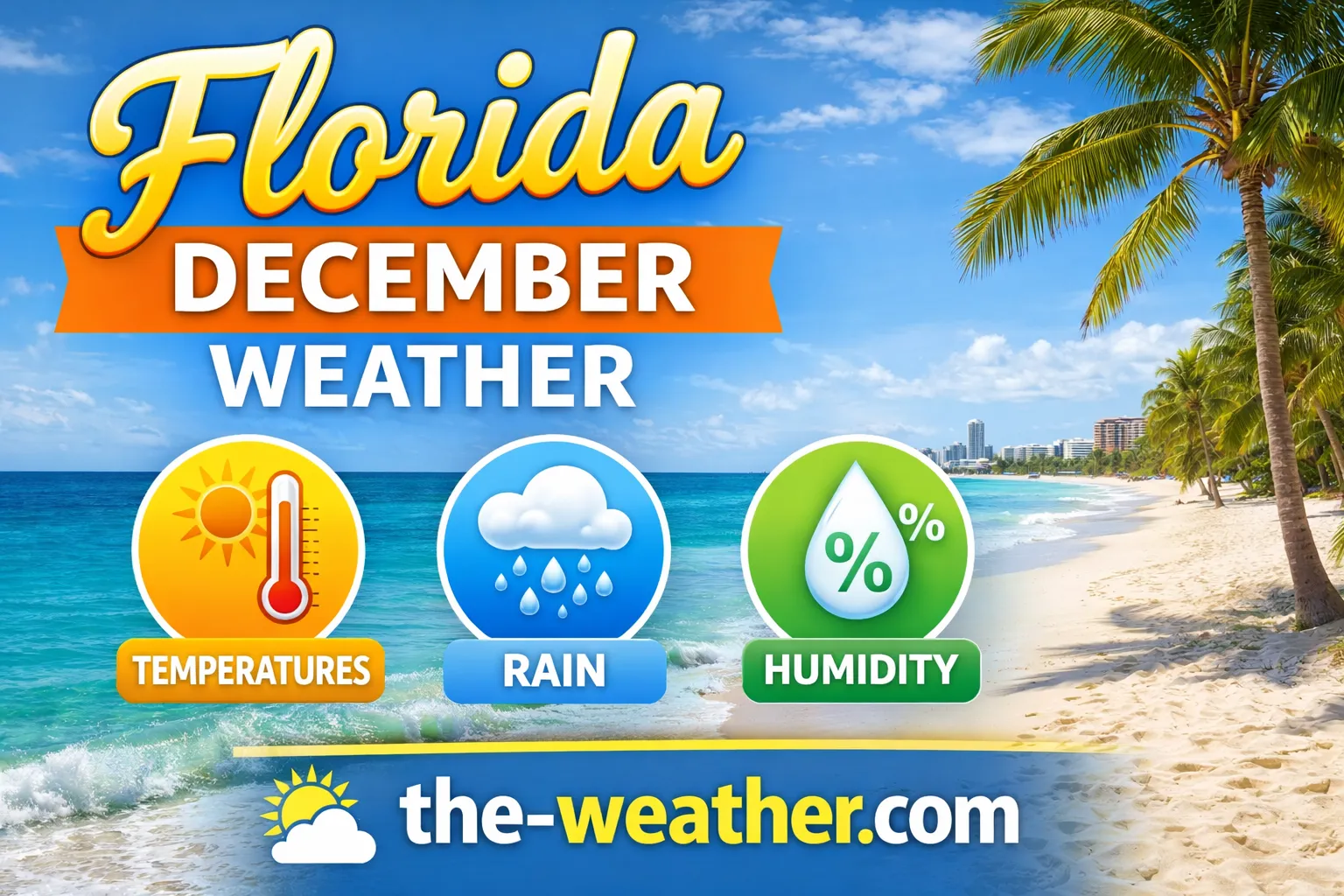
Florida in December offers one of the widest weather ranges of any US state, from tropical warmth in the Keys to near-freezing nights in the Panhandle.
Florida December Weather: The Short Answer
Florida in December is not one climate: it is four. The state stretches over 500 miles from north to south, and that geography creates dramatically different December experiences depending on where you are. South Florida genuinely feels like summer to most visitors from the northern US. The Panhandle, by contrast, experiences a real winter with cold fronts, occasional frost, and overnight lows that can touch the upper 20s°F.
According to the Florida State University Climate Center, which serves as the official state climatologist office, December is one of Florida's driest months and sees some of the clearest skies of the year: a direct result of the dry air that cold fronts bring from the north. NOAA's 1991–2020 climate normals confirm that December statewide averages 60.9°F, which masks an enormous range from the Keys to the Panhandle.
Florida's December statewide average of 60.9°F is the same as San Francisco in July, but that average combines a 79°F afternoon in Key West with a 44°F morning in Tallahassee on the same day.
Air Temperatures by Region
Florida divides naturally into four climate regions in December. Each behaves differently and requires different packing and planning.
The most reliably warm region. Miami averages a high of 75.9°F and overnight lows rarely drop below 60°F. Key West is even warmer and more stable: surrounded by ocean water that holds heat from summer. Shorts and light shirts are appropriate all day. A light layer for evenings is enough.
Comfortable daytime temperatures but noticeably cooler nights. Orlando averages 55.9°F overnight in December: cold enough to need a jacket after sunset. Inland cities cool faster than coastal ones. Tampa and Clearwater on the Gulf Coast stay warmer than Orlando due to sea influence.
Real winter weather. Tallahassee can see overnight lows in the mid-20s°F after strong cold fronts, with occasional frost on inland lawns. Pack a proper jacket and be prepared for large temperature swings of 30°F+ between morning and afternoon.
The coldest part of Florida in winter. Pensacola temperatures in December can reach down to the upper teens°F during strong Arctic outbreaks: Christmas 2022 saw wind chills in the single digits across the Panhandle. The beaches are beautiful and uncrowded, but winter gear is essential for evenings and mornings.
City-by-City Temperature Data
The table below uses NOAA NCEI 1991–2020 Climate Normals: the official 30-year average used by meteorologists and climatologists worldwide.
| City | Avg High | Avg Low | Avg Mean | Rain Days | Region |
|---|---|---|---|---|---|
| Key West | 79°F (26°C) | 67°F (19°C) | 73°F | 5 | South |
| Miami | 76°F (24°C) | 60°F (16°C) | 68°F | 7 | South |
| Fort Lauderdale | 77°F (25°C) | 62°F (17°C) | 69°F | 7 | South |
| West Palm Beach | 76°F (24°C) | 60°F (16°C) | 68°F | 7 | South |
| Naples | 77°F (25°C) | 58°F (14°C) | 67°F | 5 | South |
| Fort Myers | 76°F (24°C) | 56°F (13°C) | 66°F | 5 | South |
| Sarasota | 73°F (23°C) | 54°F (12°C) | 63°F | 5 | Central |
| Tampa | 71°F (22°C) | 53°F (12°C) | 62°F | 5 | Central |
| Clearwater | 71°F (22°C) | 55°F (13°C) | 63°F | 5 | Central |
| Orlando | 72°F (22°C) | 51°F (11°C) | 62°F | 6 | Central |
| Daytona Beach | 68°F (20°C) | 49°F (9°C) | 58°F | 7 | Central |
| St. Augustine | 65°F (18°C) | 46°F (8°C) | 56°F | 7 | North |
| Jacksonville | 65°F (18°C) | 44°F (7°C) | 54°F | 7 | North |
| Gainesville | 64°F (18°C) | 42°F (6°C) | 53°F | 7 | North |
| Tallahassee | 63°F (17°C) | 41°F (5°C) | 52°F | 8 | North |
| Panama City | 62°F (17°C) | 44°F (7°C) | 53°F | 7 | Panhandle |
| Pensacola | 59°F (15°C) | 43°F (6°C) | 51°F | 8 | Panhandle |
The difference between coastal and inland cities in December is explained by the microclimate effect of nearby water. Coastal cities release stored ocean heat overnight, moderating lows. Inland cities like Orlando and Gainesville lose heat rapidly after sunset, which is why their overnight lows are 5–10°F colder than coastal cities at the same latitude.
Ocean and Water Temperatures in December
Florida has two distinct ocean environments in December: the Atlantic Ocean on the east coast and the Gulf of Mexico on the west coast. They behave differently. The Atlantic retains heat longer into winter, making Miami Beach and the Palm Beaches the warmest coastal swimming spots in the continental US in December. The Gulf cools faster in autumn but also warms earlier in spring.
According to NOAA's Coastal Water Temperature Guide, the threshold where most people feel comfortable swimming without a wetsuit is around 70°F. The table below shows which areas meet that threshold in December.
| Location | Water Temp (Dec) | Ocean | Swimming |
|---|---|---|---|
| Key West | 75°F (24°C) | Atlantic/Gulf | ✓ Comfortable |
| West Palm Beach | 74°F (23°C) | Atlantic | ✓ Comfortable |
| Miami Beach | 73°F (23°C) | Atlantic | ✓ Comfortable |
| Fort Lauderdale | 73°F (23°C) | Atlantic | ✓ Comfortable |
| Naples / Fort Myers | 71°F (22°C) | Gulf | ✓ Comfortable |
| Cocoa Beach / Vero Beach | 70°F (21°C) | Atlantic | ~ Cool but ok |
| Sarasota / Tampa Bay | 68°F (20°C) | Gulf | ~ Cool but ok |
| Clearwater / St. Pete | 68°F (20°C) | Gulf | ~ Cool but ok |
| Daytona Beach | 67°F (19°C) | Atlantic | ~ Cool but ok |
| St. Augustine / Jacksonville | 65°F (18°C) | Atlantic | ✗ Cold |
| Pensacola / Panama City | 61°F (16°C) | Gulf | ✗ Cold |
| Gulf Islands NS (Panhandle) | 61°F (16°C) | Gulf | ✗ Wetsuit needed |
Humidity in Florida in December
Humidity is one of the most misunderstood aspects of Florida's December weather. Many visitors expect the thick, oppressive humidity of July, but December is fundamentally different. Cold fronts from the north regularly flush the state with dry continental air, dropping relative humidity dramatically, especially in North and Central Florida. The days following a cold front passage are often the clearest, driest days of the year.
South Florida retains more humidity year-round due to warm ocean temperatures and proximity to the tropics. As the hygrometer data from Miami shows, relative humidity in December typically ranges from 53% to 88%: mornings are humid, but afternoons with sea breezes feel comfortable and far drier than summer. Understanding how humidity varies with temperature helps explain why the same 70% relative humidity feels oppressive in August but comfortable in December.
Relative humidity percentages are the same number year-round but feel completely different depending on temperature. 70% humidity at 90°F in August feels like standing in warm soup. The same 70% at 65°F in December feels fresh and comfortable. December humidity in Florida is not a problem for most visitors: it is the absence of that problem that makes the month so popular.
Rainfall in December
December is one of the driest months in Florida's calendar. The state's summer rainy season, driven by daily afternoon thunderstorms from June through September, is long over by December. What rain does fall comes from cold fronts pushing south from the continental US, typically producing brief showers rather than prolonged downpours.
According to FSU Climate Center data, December 2024 saw below-normal precipitation across most of the state, with about 29% of Florida in moderate drought by month's end. December 2025 was similarly dry. The statewide average of roughly 2 inches in December compares to 7–9 inches in July and August.
| City | Avg Rainfall (Dec) | Avg Rain Days | Driest Month? |
|---|---|---|---|
| Miami | 1.8 in (45mm) | 7 days | One of top 3 |
| Key West | 2.0 in (51mm) | 6 days | One of top 3 |
| Fort Myers | 1.4 in (36mm) | 5 days | Yes, driest |
| Orlando | 2.0 in (51mm) | 6 days | One of top 3 |
| Tampa | 1.8 in (46mm) | 5 days | Yes, driest |
| Jacksonville | 3.0 in (76mm) | 8 days | No |
| Tallahassee | 4.4 in (112mm) | 9 days | No |
| Pensacola | 4.5 in (114mm) | 9 days | No |
North Florida and the Panhandle receive significantly more rain in December than South and Central Florida because they are more directly exposed to cold front systems that bring prolonged rain before clearing. South Florida receives less frontal rain and benefits from drier conditions behind those same fronts.
Cold Fronts and December Weather Patterns
Understanding Florida's December weather requires understanding cold fronts. The ability to read the sky and interpret changing conditions is especially useful in Florida in winter, where the weather can shift dramatically in 24 hours. According to the National Weather Service, Florida typically sees 4–6 cold front passages in December, each producing a distinct three-phase pattern.
Warm, humid air pushes north from the tropics. Temperatures rise above average. Clouds build from the southwest. Rain and thunderstorms possible along the front itself, especially in Central and North Florida.
Wind shifts from south to north. Temperature drops 10–25°F within hours. Brief heavy rain then clearing. This is the day that feels confused: warm morning, cold afternoon. The Panhandle can see the most dramatic drops.
Often the best weather of the month. Crystal-clear skies, low humidity, brilliant sunshine. South Florida returns to 70s°F within 1–2 days. North Florida stays cool for several days. This post-frontal weather is what December beach visitors hope for.
Cold front timing in Florida is highly variable: they can arrive a day early or stall entirely. For real-time tracking, Weather Underground's personal weather station network gives hyper-local readings that standard forecasts miss. Learning how to read weather radar lets you track front position in real time.
What to Pack for Florida in December
Packing for Florida in December depends entirely on which part of the state you are visiting. The single biggest mistake visitors make is packing either too light (forgetting that evenings in Central and North Florida can hit the 40s°F) or too heavy (bringing a heavy winter coat to Miami). Here is a region-specific packing guide.
South Florida (Miami, Key West, Fort Lauderdale)
- Light shirts, shorts, summer dresses
- Swimsuit, ocean is 73–75°F
- Light cardigan or thin zip-up for evenings
- Sunscreen, UV is still strong in December
- Sunglasses and hat
- Light rain jacket for occasional showers
Central Florida (Orlando, Tampa, Clearwater)
- Mix of shorts and long pants
- Light jacket or fleece for evenings
- Swimsuit, Gulf is 68°F, manageable
- Layers, daytime 70s, evenings low 50s
- Light rain jacket
- Closed shoes for theme park evenings
North Florida (Jacksonville, Tallahassee, Gainesville)
- Proper jacket or coat for evenings
- Warm layers: lows can hit 40s°F
- Scarf and light gloves for cold fronts
- Long pants for most of the day
- Rain jacket: more frontal rain here
- Skip the swimsuit unless visiting south
Panhandle (Pensacola, Destin, Panama City)
- Full winter coat for evenings and mornings
- Warm layers: can feel genuinely cold
- Scarf, gloves, warm hat
- Waterproof jacket: more rain than south
- Wetsuit if swimming: water is 61°F
- The beaches are spectacular and empty
Even South Florida can see a brief cold snap in December. The FSU Climate Center records show that temperatures in the low 50s°F can reach as far south as Fort Lauderdale during strong Arctic outbreaks, though these events typically last 1–2 days before warmer conditions return. Check the signs of changing weather and monitor the National Weather Service forecast for your specific destination.
Frequently Asked Questions
Published: · Data: NOAA NCEI 1991–2020 Climate Normals · FSU Climate Center · Reviewed by Lena Thornton, CWOP Contributor Observer