As an Amazon Associate, I earn from qualifying purchases.
In this article 9 sections
- Snowflake Science: Quick Insights
- Is a Snowflake an Ice Crystal? Understanding the Basics
- What Are the Different Types of Snowflakes?
- What Shape Are Snowflakes? The Science of Symmetry
- What Colors Are Snowflakes? The Truth Behind Their Appearance
- The Life Cycle of a Snowflake: From Cloud to Ground
- Myth vs. Reality: Are No Two Snowflakes Alike?
- The Science and Beauty of Snowflakes
- Snowflake Scoop: 5 Frosty Q&As
Dive deep into the frosty heart of nature’s tiny miracles and uncover the complex science behind every unique ice crystal that graces our winter skies.
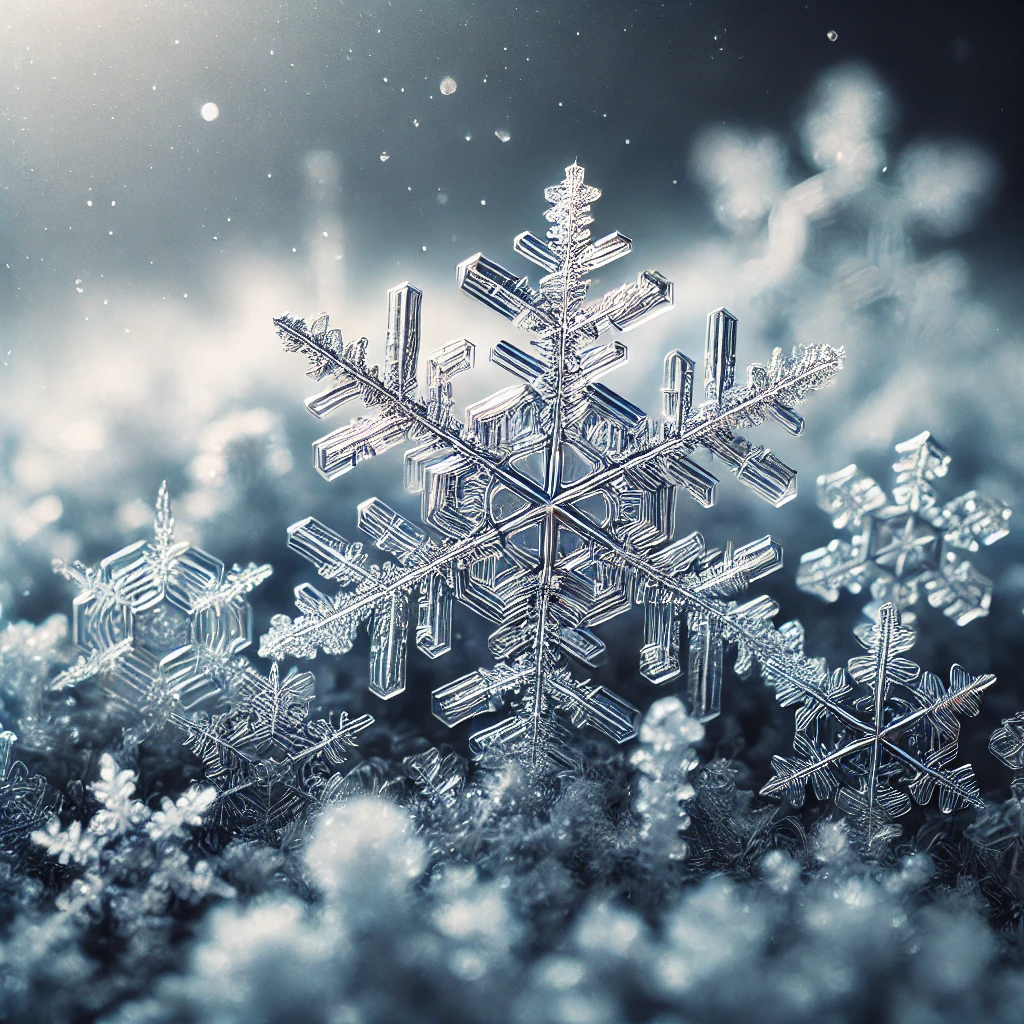

Snowflakes are nature’s tiny miracles: delicate, dazzling, and packed with mystery. Ever snagged one on your mitten and stared at its complex design? No two are ever quite the same, and that’s what makes them so special. Those lacy, frosty patterns have been enchanting us for ages, from kids tossing snowballs to scientists squinting through microscopes. But what’s really going on inside these icy gems? Are they just frozen drops, or something more complex? Let’s look at the frosty heart of it all and answer the big question: What are snowflakes really made of? Bonus curiosity: Is a snowflake an ice crystal? Get ready for some cool science that’s easy to wrap your head around!
For more weather goodies, pop over to our Weather Education page to geek out on the basics!
Snowflake Science: Quick Insights
Before we dive deep, here are some fascinating facts about snowflakes, from their unique structure to their incredible journey. Click on any insight to learn more!
Truly Unique
No two snowflakes are exactly alike, thanks to zillions of molecular variations during their formation journey.
Always Hexagonal
Every snowflake has six sides, a direct result of water’s molecular structure and hydrogen bonding when freezing.
Born in Frigid Air
Snowflakes form directly from water vapor, skipping the liquid phase entirely in super-cold clouds (deposition).
White, Not Clear
Despite being clear ice, snowflakes appear white because their many facets scatter all wavelengths of light.
Is a Snowflake an Ice Crystal? Understanding the Basics
So, is a snowflake an ice crystal? You bet: it’s an ice crystal with some serious flair! Snowflakes kick off their journey high in frigid clouds where it’s way below freezing. Here’s the scoop: water vapor up there doesn’t bother turning into liquid: it freezes solid right away, a trick called deposition (thanks, NOAA, for the rundown). Picture this: air so cold, think -10°F or frostier, that vapor skips the droplet stage and jumps straight to ice, sticking together like tiny building blocks.
The real kicker? Conditions rule everything. Temperature and humidity are the bosses here. At around 23°F with lots of moisture, you get those starry, branching flakes we love. Drop it to 5°F, and they slim down into needle shapes. A single ice crystal starts small, just a basic hexagon, says the American Meteorological Society, but as more vapor latches on, it grows into the full snowflake we know. That’s the difference: an ice crystal’s the seed, a snowflake’s the show-off. Sometimes, one crystal goes solo; other times, a bunch clump into a bigger flake: a process called aggregation.
So, what are snowflakes really made of? Frozen water, sure, but it’s how they form that’s the cool part. Want to peek at snow-making weather yourself? A home weather station can tip you off when the clouds are ripe for flakes!
What Are the Different Types of Snowflakes?
Snowflakes aren’t all cut from the same mold: there’s a whole crew of shapes out there! Scientists at Caltech have nailed down six main types, each born from the cloud’s mood. Let’s break down what are the different types of snowflakes?
- Stellar Dendrites: The rock stars: big, star-shaped flakes with feathery arms. They pop up in wet, chilly clouds around 5°F to 10°F: think picture-perfect snow.
- Hexagonal Plates: Thin, flat, six-sided discs: simple but sharp. These form in drier, colder air near 14°F, like little icy coasters.
- Needle-Like Crystals: Long, skinny spikes that sneak out in warmer subzero spots, like 23°F: almost like frosty splinters.
- Columns: Hollow, tube-shaped bits: imagine mini ice straws. They thrive at -5°F with low humidity, sturdy and straight.
- Capped Columns: Weird hybrids: columns with flat plates capping the ends. These show up when conditions flip mid-growth, mixing it up.
- Irregular Snowflakes: The oddballs: broken or clumped bits that didn’t finish the race. Wind or crashes mess them up.
Temperature and humidity pull the strings. Wet, mild subzero air grows those fancy dendrites; dry, super-cold air churns out columns or plates. A blizzard’s like a snowflake buffet: every type might show up! For more on wild weather shapes, our Norman, Oklahoma’s Legendary Mothership Supercell Storm looks at how storms sculpt the sky, and sometimes the snow.
Snowflake Formation Factors: Relative Influence
- Temperature Range (Dominant Contribution)
- Humidity Levels (Significant Contribution)
- Air Pressure (Moderate Influence)
- Cloud Turbulence (Minor Influence)
What Shape Are Snowflakes? The Science of Symmetry
Ever pondered what shape are snowflakes? They’re all hexagonal: six-sided beauties, every single one. Why six sides? Blame water’s molecular game. Water molecules, two hydrogens, one oxygen, lock into a hexagonal pattern when they freeze, thanks to hydrogen bonds (shoutout to the University Corporation for Atmospheric Research, UCAR). It’s like nature’s blueprint: those bonds click into a six-pointed frame, no exceptions.
As vapor piles on, that hexagon grows, sometimes into spiky arms, sometimes flat edges, but the six-sided base sticks. Perfect symmetry? Most flakes get close, but not spot-on. Wind, bumps, or uneven growth add tiny quirks: one arm might stretch longer, another might kink. I’ve seen flakes under a lens: near-perfect stars with just a hint of chaos. That’s the tie-in to what are snowflakes really made of: frozen water, shaped by physics down to the atom. Catch the next snowfall with a weather alert radio to know when they’re dropping!
What Colors Are Snowflakes? The Truth Behind Their Appearance
Now, what colors are snowflakes? They look white, right? That’s the usual vibe, but there’s a reason. Snowflakes scatter all wavelengths of light thanks to their tiny ice crystals, blending them into that bright white we see (per NOAA’s optics rundown). Light hits those facets and bounces every which way, tricking our eyes into seeing a snowy glow. A single flake might not dazzle alone, but pile ‘em up, and it’s a winter wonderland.
Can they be other colors? Sometimes! In deep snowpacks, light digs in and scatters more blue wavelengths, giving a faint blue tint: think glacier vibes. In polar spots, algae can stain snow pink or red, called “watermelon snow”, like in Antarctica (NSIDC notes this). Pollutants or volcanic ash can turn it green or black, too: yucky but real. So, what color are snowflakes? Mostly white, but nature’s got some wild exceptions. For more weather quirks, our Why Does Thunder Sound Different Every Time? explores another cool twist!
Snowflake Types: Estimated Occurrence
- Stellar Dendrites (Very Common)
- Hexagonal Plates (Common)
- Needle-Like Crystals (Frequent)
- Columns (Less Frequent)
- Capped Columns (Rare)
- Irregular Snowflakes (Highly Variable)
The Life Cycle of a Snowflake: From Cloud to Ground
Snowflakes don’t just pop out of nowhere: they’ve got a journey. It starts in cold clouds, where water vapor freezes into ice crystals at subzero temps. As they grow, temperature and humidity sculpt their shapes: dendrites in wet air, columns in dry. They tumble and twist as they fall, picking up more vapor or bumping into buddies, says UCAR. Wind can shear them, turning perfect stars into irregular chunks.
What happens when they land? Depends. Warm ground melts them fast: bye-bye, snowflake! Cold surfaces let them pile up, forming that fluffy blanket. Over time, they might compact into ice or snowpack. Temperature and wind keep tweaking them: gusty days might break those arms right off. Want a front-row seat? This clip, The Science of Snowflakes, breaks it down with visuals that nail the process: check it out!
Myth vs. Reality: Are No Two Snowflakes Alike?
You’ve heard it: “No two snowflakes are the same.” But is that true? Mostly, yeah, but there’s a catch. Mathematically, with zillions of water molecules (10^18 per flake, per Caltech), identical ones could happen. Odds? Slimmer than slim: think one in a billion trillion. Physicist Kenneth Libbrecht’s lab-grown flakes show tiny differences, branch tips or edge quirks, making each unique at the molecular level. Real-world proof? In 1988, a Wisconsin researcher found two near-identical flakes under a microscope, but even those had micro-flaws. Nature’s chaos, wind, humidity shifts, keeps them distinct. So, what are snowflakes really made of? Same stuff, different stories. A home weather station can help you catch the next batch to compare!The Science and Beauty of Snowflakes
Snowflakes are frozen water turned fabulous: ice crystals shaped by temperature, humidity, and a hexagonal molecular dance. From starry dendrites to needle spikes, their variety’s endless. Light scattering paints them white, with rare colorful twists, tying into what color are snowflakes? They’re nature’s tiny works of art: unique, fleeting, and stunning. Next snowfall, grab a magnifying glass and see for yourself! Stay in the loop with a weather alert radio or dive deeper at Weather Education!Snowflake Scoop: 5 Frosty Q&As
Got more burning questions about snowflakes? We’ve got quick answers to satisfy your curiosity!
Why don’t snowflakes melt in the cloud?
Can snowflakes form in warm weather?
Why are some snowflakes bigger?
Do snowflakes make noise?
Can you save a snowflake?
- Cold Surface: Catching a snowflake on a very cold surface (like a chilled dark mitten or a glass slide kept in the freezer) allows you to admire it for a few minutes before it melts.
- Microscopy/Photography: Professional photographers use specialized techniques, often involving supercooling surfaces and rapid photography, to capture complex snowflake details before they vanish.
- Polymer Replica: Some scientists use liquid polymer solutions that encapsulate the snowflake, then harden, creating a permanent resin replica of its original form.