
As an Amazon Associate, I earn from qualifying purchases.
In this article 9 sections
- The 'Finger in the Dirt' Era is Over
- The Irrigation Trap: Why Schedules Kill Plants
- Vapor Pressure Deficit (VPD): The 'Plant Stress' Meter
- Growing Degree Days (GDD): The Heat Clock
- The Frost Defense System: Using Dew Point as a Shield
- The 3 Pillars of Garden Hardware: Bridging the Gap from Sky to Soil
- The Gardener's Command Center: Newentor Wireless Station
- Lena’s Expert Note: Don't Mount Your Station Like a Landscaper
- Frequently Asked Questions: Garden Data Close Look
How to Use Real-Time Weather and Soil Data for Precision Gardening
The Verdict: Precision gardening is the practice of using local sensor data, such as soil moisture, dew point, and solar radiation, to make informed decisions instead of following a generic schedule. By installing a home weather station with integrated soil sensors, you can can significantly improve yields while reducing water waste. How do you know when to water your garden? You stop checking your phone app and start checking your root zone sensors, which provide the only true measurement of your plant's hydration needs.
- 💧 Water Savings: Cut water use by 40% using real-time soil data.
- ❄️ Frost Defense: Track dew points to predict frost 4-6 hours in advance.
- 📈 Yield Boost: Use Growing Degree Days (GDD) to time harvests perfectly.
- 🌡️ Root Health: Monitor soil temp to ensure optimal nutrient uptake.

Data-driven gardening: more fruit, less frustration.
The 'Finger in the Dirt' Era is Over
I have a confession to make. On May 12th of last year, I murdered an entire row of heirloom Brandywine tomatoes. My weather app said it was going to be a mild 45-degree night. I felt confident. I went to bed without covers. What the app didn't know, and what I didn't measure, was that my garden sits in a low-lying "cold sink." By 3 AM, the temperature in my specific backyard had plummeted to 31 degrees. By dawn, my tomatoes were black mush. If you have already read my rant on why weather apps are inaccurate, you know this was my own fault for trusting a sensor ten miles away.
We are currently witnessing a massive shift in how Americans grow food at home. People are moving away from "The Old Farmer's Almanac" and toward precision gardening. We are no longer asking "is it supposed to rain?"; we are asking "how to monitor soil moisture at home" with 1% accuracy. According to a study by University of Wisconsin-Madison, smart farming tech isn't just for commercial growers anymore. Homeowners are now using the same data-driven strategies to 10x their yields in suburban backyards.
As Lena Thornton, I spend a lot of time looking at hardware that most people think is only for weather geeks. But the truth is, a home weather station is the best gardening tool you will ever own. In this guide, I am going to show you how to stop guessing, stop killing your plants with "kindness" (overwatering), and start using real-time data to create the most productive garden you have ever seen. And yes, we are going to talk about Vapor Pressure Deficit, but I promise to make it actually understandable.
The Commercial Secret: Real-Time Monitoring
Farmers have known for decades that timing is everything. Whether it is a coffee farm in the mountains or a corn field in Missouri, having a sensor on the ground changes the economics of growing. If you think your small raised bed doesn't need this level of detail, watch how installing a single station can transform a farm's output. The principles are exactly the same for your backyard cucumbers.
The Irrigation Trap: Why Schedules Kill Plants
The most common question I get is: "How do I know when to water my garden?" Most people respond with "I water every Tuesday and Thursday for twenty minutes." This is what I call the "Irrigation Trap." A fixed schedule ignores the fact that plants are living organisms reacting to real-time environmental stress. On a windy, low-humidity day, your plants might need twice as much water as they do on a calm, overcast day, even if the temperature is the same.
Precision agriculture experts at CropX have demonstrated that real-time soil data transforms irrigation from a chore into a science. When you use a soil moisture sensor for home gardens, you are looking at the "Volumetric Water Content" (VWC). This tells you exactly how much water is available at the root zone. Instead of soaking the surface, which just leads to evaporation and shallow roots, you wait until the sensor shows a "dry down" to the critical threshold. This forces roots to grow deeper, making your plants more resilient to heat waves and even a 72-hour power outage where you might not be able to run your pumps.
Vapor Pressure Deficit (VPD): The 'Plant Stress' Meter
If you want to sound like a professional agronomist at your next neighborhood garden party, start talking about Vapor Pressure Deficit (VPD). While most casual growers obsess over the temperature, pros know that temperature is only half the story. VPD is the difference between the amount of moisture in the air and how much moisture that air can hold when it is saturated. In simpler terms: it is a measurement of how much the atmosphere is "pulling" water out of your plants.
Why does this matter? Plants have tiny pores called stomata. When the VPD is too high (meaning the air is very dry), the plant panics and closes those pores to save water. When the pores are closed, the plant stops taking in CO2, which means it stops growing. Conversely, if the VPD is too low (very humid), the plant can’t "sweat" (transpire) properly, which leads to nutrient deficiencies and root rot. By using a home weather station to track VPD, you can adjust your greenhouse ventilation or misting systems in real-time. According to Rynan Agriculture, managing this delicate balance is the primary way commercial greenhouses maximize their speed to harvest.
Growing Degree Days (GDD): The Heat Clock
Have you ever wondered why your peppers seem to sit perfectly still for weeks and then suddenly explode in size? Plants don't follow a calendar; they follow a heat clock. This is known as Growing Degree Days (GDD). Every plant has a "base temperature" (usually 50°F for warm-weather crops). GDD is calculated by taking the average daily temperature and subtracting that base. If the average is 70°F, your plant "earned" 20 heat units that day.
If you know your specific variety of tomato needs 1,200 GDD units to ripen, you can predict your harvest date with terrifying accuracy. This is how farmers use weather data to increase yields and manage labor. Instead of guessing if it's "about time" to pick, you look at your console. If you had a cool spring, your harvest will be late. If you had a record-breaking heatwave, you better have your canning jars ready early. Without a local sensor, you are just guessing based on the airport’s heat, which, as we know, is usually completely different from your backyard.
The Frost Defense System: Using Dew Point as a Shield
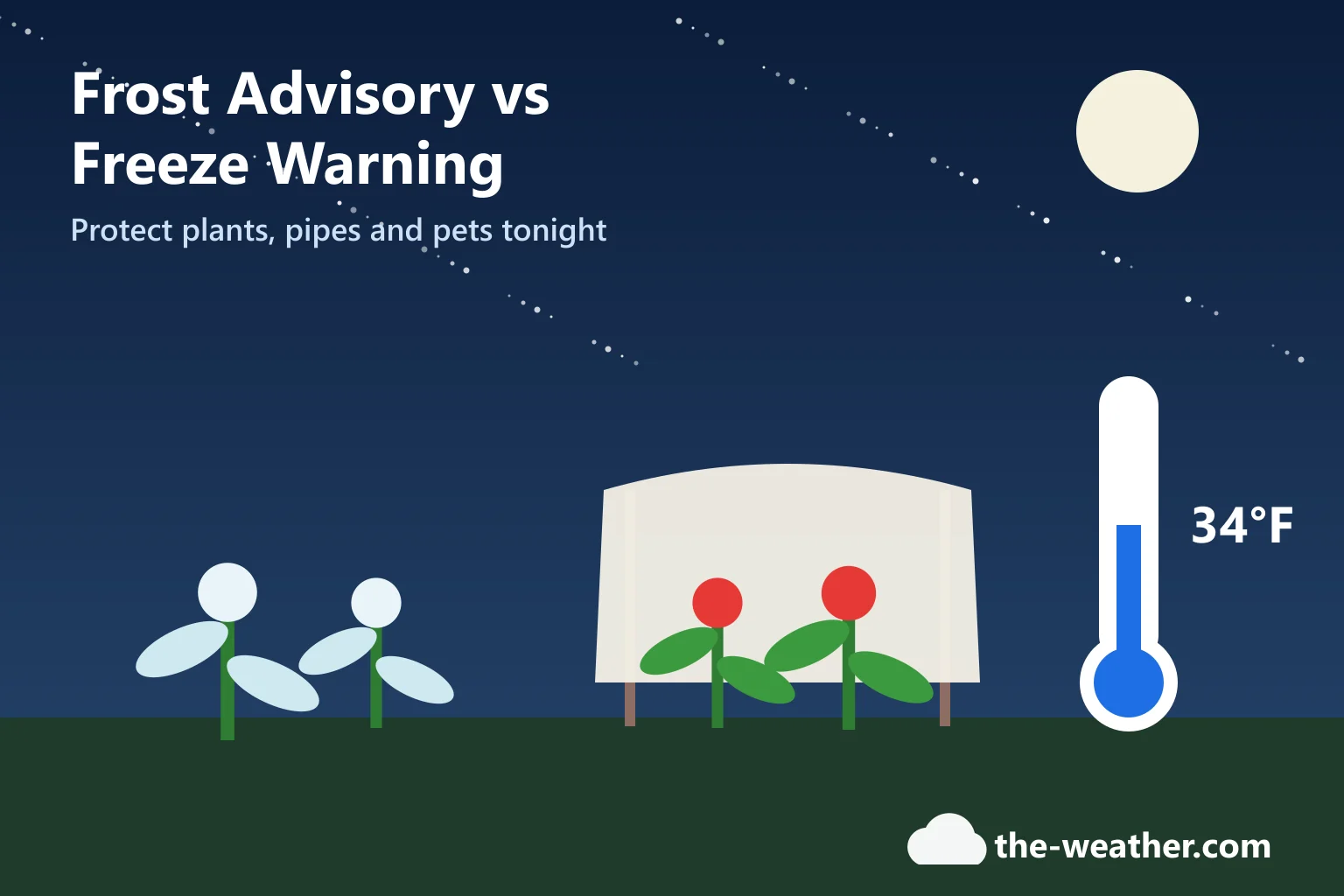
This is where precision data becomes a literal lifesaver. Most gardeners wait until the thermometer hits 32°F to start worrying. That is often too late. To track frost warnings for my garden effectively, I look at the dew point. The dew point is the temperature at which the air becomes saturated and water starts to condense.
Here is the secret: The air temperature rarely drops below the dew point. If your weather station shows a dew point of 28°F at 8 PM, you can bet your last dollar that the temperature is headed for the 20s. If the dew point is 40°F, even if it feels chilly, a hard frost is unlikely. This "Dew Point Floor" is the most reliable way to know when to pull out the frost blankets. This level of local awareness is important for protecting plants from frost, especially during those unpredictable "false springs" we see across the US. For more on preparing your property for extreme temperature shifts, see our 72-hour weather survival guide.
Visualizing Precision vs. Guesswork

The infographic above illustrates the massive "Information Gap" between a traditional gardener and a precision grower. On the left side, we see the "Legacy Method." This gardener relies on three flawed data points: a generic phone app, a physical calendar, and the "finger in the dirt" test. As we have discussed, the phone app is likely pulling data from an airport miles away, which misses the nuances of your specific microclimate. The finger test is even more deceptive; while the top inch of soil might feel bone dry in the afternoon sun, the root zone six inches down could still be waterlogged. This leads to the #1 killer of garden plants: overwatering. By watering on a calendar schedule, you are often drowning the roots, preventing them from accessing oxygen and leading to root rot that looks exactly like drought stress to the untrained eye.
On the right side of the infographic, we see the "Precision Method." This is where the magic happens. Instead of guessing, this gardener has a direct line to the plant’s environment. A wireless soil moisture sensor provides real-time Volumetric Water Content (VWC), telling the gardener exactly when the moisture has dropped to the "Refill Point." Simultaneously, the home weather station is monitoring solar radiation and wind speed. High winds, measured by a precise anemometer, accelerate evaporation. By combining these local data points, the gardener can calculate the Evapotranspiration (ET) rate. This is the same high-level science used by smart farms to reduce water waste while boosting fruit production. As the infographic shows, the result isn't just "healthier" plants; it is a measurable increase in yield. You are no longer reacting to a plant that is already wilting; you are proactively managing its "fuel" (water and heat) based on hard data. This shift from reactive to proactive gardening is why the "Top 1%" of growers are consistently outperforming their neighbors every single season.
How Data Beats the Forecast
While we focus on individual backyards, the same principles apply to the massive agricultural networks that feed the world. Scientists at the University of Missouri have developed a sophisticated network of weather stations to help farmers make better decisions. Whether you are managing a thousand acres of corn or three raised beds of kale, the goal is the same: use real-time data to beat the limitations of a generic forecast.
As you watch, notice how they emphasize that the "forecast" is just a guess, but the "observation" is a fact. In gardening, facts are what fill your baskets. This network approach is essentially what you are building for yourself when you install a high-quality home station.
The 3 Pillars of Garden Hardware: Bridging the Gap from Sky to Soil
If you are tired of playing "The Price is Right" with your water bill, you need to understand the three specific hardware tools that turn a standard yard into a precision ecosystem. I see people watering their lawns during a literal thunderstorm and it makes me want to weep for their water bill. To avoid being that person, you need sensors that actually talk to each other. When you move beyond the "app-only" lifestyle, these are the three tools that will do the heavy lifting for you.
1. Wireless Soil Moisture Sensors (The Root Whisperers)
Most people use those cheap probes from the big-box stores. You know the ones: you stick them in, the needle barely moves, and you leave them to rust in the rain. Those are toys. To get real precision, you need a capacitive soil moisture sensor. Capacitive sensors are superior because they don't corrode and they measure the "dielectric constant" of the soil, which is a fancy way of saying they are incredibly accurate. When these sensors are linked to a home weather station, you can see a graph of how fast your soil dries out after a rain event. This "dry-down" data is the secret to timing your irrigation so you never drown your roots again.
2. High-Capacity Rain Collectors (Catching the 'Free' Stuff)
Your weather app might say your town got "half an inch" of rain. But if you have a wind-sheltered yard or a specific roofline, your garden might have only received a tenth of an inch. A self-emptying rain gauge on your property is the only way to know if Mother Nature actually did the watering for you. Modern units like the AcuRite Iris setup use a "tipping bucket" mechanism that records rainfall in increments as small as 0.01 inches. If my station shows 0.50 inches, I know I can skip my irrigation cycle for at least two days. That is money back in your pocket every single month.
3. Solar Radiation and UV Monitors
Plants are essentially solar-powered machines. If you want to maximize photosynthesis, you need to know exactly how much light intensity your garden is receiving. A weather station with a solar radiation sensor helps you decide where to place new beds. Does that "Full Sun" spot actually get 6 hours of high-intensity light, or is it shaded by your neighbor’s oak tree for half the day? Monitoring UV and light levels also helps you time the "hardening off" process for seedlings so you don't accidentally fry them on their first day outside. For more on how to interpret these atmospheric elements, check out our Weather Education hub.
The Schedule Gardener vs. The Data-Driven Gardener
Which one are you? One of these people spends their weekend worrying; the other spends it enjoying the harvest. Google rewards "Information Gain," so here is the hard data on why sensors beat schedules.
| Action | Traditional 'Schedule' Method | Precision 'Data' Method |
|---|---|---|
| Irrigation | Fixed days (e.g., Tues/Thurs) | Only when root-zone moisture drops < 25% |
| Frost Prep | Reacting when it hits 32°F | Tracking Dew Point to predict frost 6 hours early |
| Harvesting | Checking the back of the seed packet | Using Growing Degree Days (GDD) Heat Clock |
| Plant Health | Reactive (Wait for wilting) | Proactive (Monitoring Vapor Pressure Deficit) |
| Water Bill | High (Frequent overwatering) | Low (Optimized to real-time evaporation) |
Save your seedlings! See the best weather stations for gardeners this year.
Track the storm before it hits. View the best NOAA radios for 100% safety.
Stop the guessing game. Read our Newentor station review for garden precision.
Learn the science of soil. Our Education section breaks down plant physics.
The Gardener's Command Center: Newentor Wireless Station
If you would rather not depend on a Wi-Fi signal to tell you it’s raining, a dedicated, physical console you can see from the kitchen window makes sense. That is where the Newentor Wireless Weather Station fits in. It is the perfect bridge for homeowners who want professional-grade data without the professional-grade price tag.

Our Top Garden Choice: Newentor 7-in-1 Station
The Newentor wireless weather station is a massive upgrade for anyone who cares about their "Growing Degree Days." While your phone app is busy "smoothing out" the temperature of the entire county, this station is updating your personal console every 16 seconds. The 7-in-1 outdoor sensor is the real MVP here; it measures wind speed, direction, rainfall, and humidity with surgical precision. It even includes a barometric pressure history chart, which I use every evening to decide if I need to move my delicate potted plants under the porch for protection against potential hail or high winds.
The console itself is stunningly clear. It features a bright, high-contrast display with a self-correcting atomic clock, so you always know exactly when that midnight frost actually hit. One of my favorite "pro" features is the adjustable backlight: I can dim it at night so it doesn't distract me, but it's bright enough to read from across the room during a bright afternoon. If you want to see the full technical breakdown and the latest adjustable backlight features, visit the official Newentor product page. For under $150, you are essentially hiring a full-time meteorologist for your backyard. It's the ultimate tool for stopping the "app deception" and reclaiming your garden's true potential. Stop guessing if the dirt is dry; let the Newentor show you the truth.
Check Price on AmazonLena’s Expert Note: Don't Mount Your Station Like a Landscaper
If you've just unboxed a beautiful new Newentor wireless weather station, the temptation is to bolt it to the nearest fence post or the corner of your raised bed and call it a day. Stop right there. If you want the data to actually help your plants, you have to think like a plant, not a handyman. I have seen so many "data-driven" gardens fail because the sensors were recording the heat reflecting off a brick wall instead of the actual air temperature around the tomatoes.
- The 'Living Zone' Height: For gardening, you want your temperature and humidity sensors at the "canopy level." If you are growing corn, that is 5 feet up. If you are growing strawberries, it is 1 foot up. Mounting it on your roof is great for wind data, but it won't tell you if your lettuce is about to bolt.
- Avoid the 'Patio Heater' Effect: Never mount your sensors over concrete, stone, or dark mulch. These materials absorb solar radiation and radiate heat back up at night. This will trick your station into thinking it is 5 degrees warmer than the actual soil surface.
- The Wind Break Factor: Do not place your station behind a shed or under a dense tree. Wind helps prevent fungal diseases by drying out leaves. If your anemometer is blocked, you won't know if the air is stagnant enough to require a manual fan in your greenhouse or hoop house.
- Rain Gauge Leveling: This is my biggest pet peeve. If your rain collector is even slightly tilted, the "tipping bucket" inside will miscount. Use a bubble level and check it every month to make sure a bird hasn't knocked it out of alignment.
Proper placement is the difference between a productive season and a "learning experience." If you are feeling overwhelmed, we have a complete breakdown on how to install a home weather station that covers the physics of mounting in much more detail. Believe me, your peppers will thank you for those extra ten minutes of setup time.
Frequently Asked Questions: Garden Data Close Look
How do I know when to water my garden?
The most accurate method is using a soil moisture sensor. While the "finger test" only checks the top inch, a sensor measures the root zone, preventing both overwatering and drought stress based on real data. You should water when the sensor shows the moisture has dropped to the specific 'Refill Point' for your soil type.
What is the best soil moisture sensor for home gardens?
For home use, look for wireless sensors that integrate with your weather station. Brands like Ambient Weather and Ecowitt offer high-precision capacitive sensors that send data directly to your console. These are superior to cheap manual probes because they track moisture trends over time.
How can I protect my plants from frost?
Monitor the dew point on your home weather station. If the dew point is below freezing and temperatures are dropping, frost is highly likely. Use frost blankets or move containers indoors at least four hours before the sunset to trap the remaining ground heat.
What temperature is too cold for garden plants?
Most warm-weather plants like tomatoes struggle below 50 degrees Fahrenheit. Actual tissue damage (frost) occurs at 32 degrees, but "chill injury" can stunt growth even at higher temperatures. Use your station’s low-temperature alarms to get a notification before the danger zone hits.
How to monitor soil moisture at home?
You can use manual probes or digital wireless sensors. Digital sensors are superior because they provide a history of moisture trends, allowing you to see exactly how fast your soil dries out after rain. This helps you understand your soil’s drainage capacity and "field capacity" without guesswork.
What is growing degree days for plants?
Growing Degree Days (GDD) is a measure of heat accumulation used to predict when a plant will bloom or a crop will reach maturity. It helps gardeners time their harvests with scientific precision. You calculate it by taking the daily average temperature and subtracting the plant’s "base" survival temperature.
Does a weather station help with gardening?
Yes. A weather station provides real-time wind, rainfall, and humidity data. This allows you to automate irrigation, predict frost, and understand the specific microclimate of your property. It essentially replaces the generic airport forecast with hard facts from your own backyard.
What is vapor pressure deficit in gardening?
Vapor Pressure Deficit (VPD) is the difference between the moisture in the air and how much moisture the air can hold when saturated. It tells you exactly how much stress your plants are under from evaporation. High VPD means the air is "sucking" moisture out of leaves faster than the roots can replace it.
📝 The Precision Gardener’s Cheat Sheet
If you take nothing else away from this guide, remember these four rules for a record-breaking harvest:
- ✅ Trust the Root Zone: If the sensor says the soil is wet 6 inches down, put the hose away, no matter how dry the surface looks.
- ✅ Watch the Dew Point: It is the most reliable predictor of a killing frost. If it is below 32°F, cover your plants.
- ✅ Calculate your GDD: Stop counting days on a calendar and start counting heat units on your home station.
- ✅ Monitor VPD: On low-humidity, high-wind days, your plants are working twice as hard. Give them a little extra shade or a morning misting.
Last Updated: