
As an Amazon Associate, I earn from qualifying purchases.
In this article 5 sections
The Verdict: When severe storms threaten life and property, The Weather Channel (TWC) remains the most trusted source in America for live, on-the-ground coverage. Known for its "TOR:CON" index and veteran meteorologists like Jim Cantore, it sets the standard for hurricane and blizzard reporting. WeatherNation is the preferred choice for viewers seeking a "pure forecast" without reality TV programming, while AccuWeather dominates the digital space with its "RealFeel" technology and MinuteCast features.
- 🏆 Most Trusted: The Weather Channel.
- 📰 Best Pure News: WeatherNation.
- 📱 Best Digital Integration: AccuWeather.
- 🏛️ Official Source: NOAA / NWS (Not a channel).

The Trust Factor: Why We Watch
There is a specific feeling of anxiety that comes when the sky turns a bruised shade of purple and the wind starts to howl. As a mother, my first instinct is to gather the family; my second is to find the remote. In those moments, we aren't looking for entertainment. We are looking for safety. We want a calm, authoritative voice to tell us exactly where the danger is.
Trust in media has eroded in many areas, but weather broadcasting remains a stronghold of credibility. Why? Because you can look out the window and verify it. If the weatherman says it is raining and it is sunny, he loses credibility instantly. This high-stakes accountability drives channels to invest billions in radar technology and talent.
However, understanding the terminology on these channels is key to lowering your anxiety. When they start talking about "bomb cyclones" or analyzing what is a snowstorm versus a blizzard, knowing the difference helps you prepare without panicking. It transforms fear into an action plan.
According to a recent YouGov poll, The Weather Channel continues to be the most trusted news brand in the entire country, surpassing CNN, Fox, and MSNBC. This speaks volumes about the American appetite for objective, scientific data.
🌩️ The Titans of TV Weather
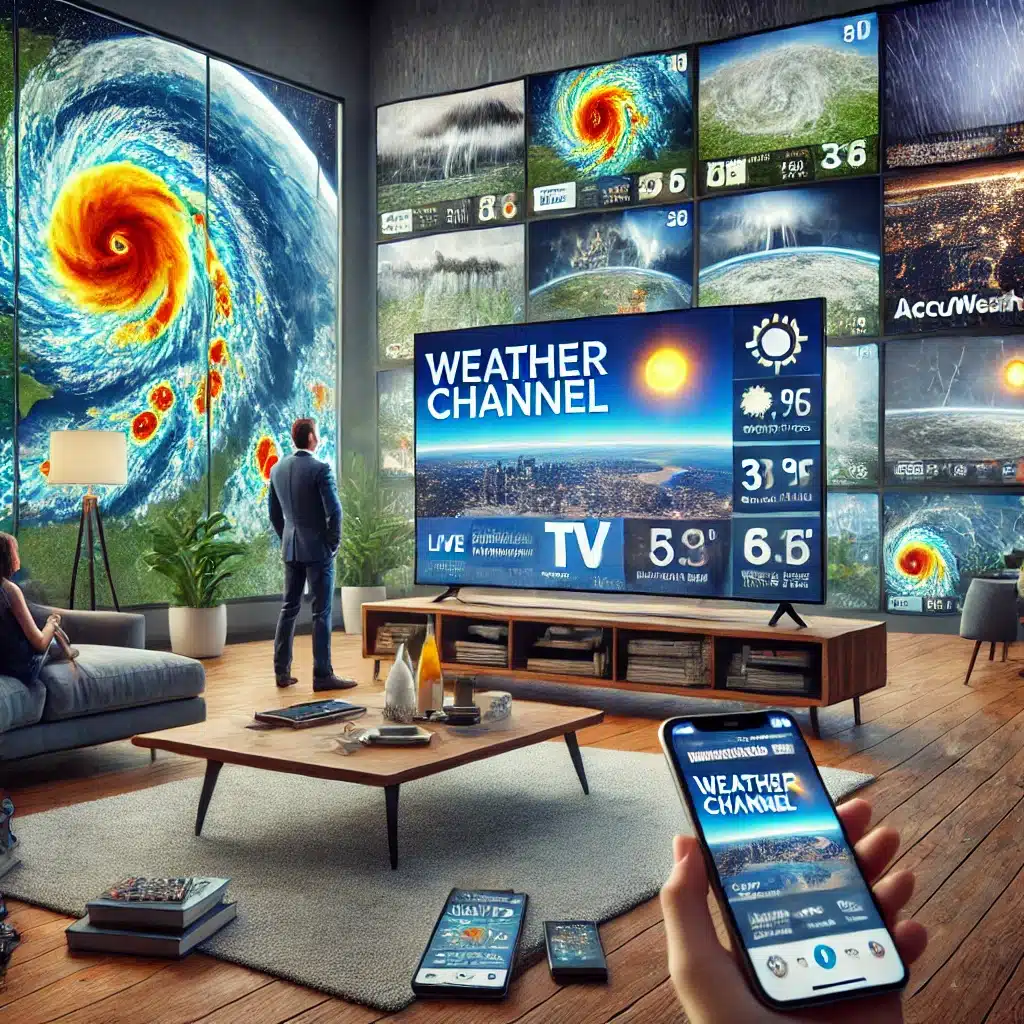
Let's break down the major players you will find on your cable box or streaming service.
1. The Weather Channel (TWC): Founded in 1982, this is the original 24-hour weather network. They excel at "storytelling." They don't just show you a map; they put a reporter in a parka in the middle of the blizzard. Their "TOR:CON" index (Tornado Condition Index) has become a standard for gauging severe weather probability. They are excellent for tracking massive systems like hurricanes or analyzing what is an atmospheric river as it approaches the West Coast.
2. WeatherNation: If TWC is the "blockbuster movie" of weather, WeatherNation is the documentary. They focus on continuous, looped forecasting without the reality TV shows (like "Highway Thru Hell") that TWC sometimes airs. For pure data junkies who just want the radar loop and the 7-day outlook, WeatherNation is often the preferred choice. It is less sensational, more informational.
3. AccuWeather Network: Famous for their "RealFeel" temperature, AccuWeather focuses heavily on how the weather impacts your body and daily routine. Their localized broadcasting is strong, and they are often aggressive with their "MinuteCast" predictions, telling you rain will stop in exactly 14 minutes.
The Digital Shift: From TV to App
The days of waiting for the "Local on the 8s" are fading. Most of us now consume these channels via their integrated apps or websites.
Both TWC and AccuWeather have massive app user bases. TWC is actually owned by IBM (The Weather Company), making it a data powerhouse.
Services like Weather Underground (also owned by IBM) allow users to connect their own home stations, creating a mesh network of neighborhood data.
The biggest shift is proactive alerting. Your phone screams at you before the TV anchor does.
However, relying solely on an app can be dangerous if cell towers go down. That is why understanding winter storm safety involves redundant systems. If the app fails, do you have a radio? If the TV is out, do you have a plan?
Visual Guide: Choosing Your Source
Different situations call for different channels. Use this guide to pick the right one for the moment.
- Hurricane Landfall: The Weather Channel (Live field coverage).
- Quick Morning Update: WeatherNation (Fast loops).
- Commute Planning: AccuWeather (MinuteCast).
- Severe Data: NOAA/NWS (Raw warnings).
Remember, the National Weather Service is the source of the data; these channels are the interpreters.

Verify at Home: Be Your Own Meteorologist
As much as I trust Jim Cantore, he isn't standing in my backyard. Micro-climates are real. It can be pouring rain three streets over and dry at my house. This is why adding a personal layer of data to the TV broadcast is so valuable.
By installing a system like the Zivron WiFi Weather Station, you can see the exact wind speed hitting your roof. This confirms if the severe thunderstorm warning on TV is actually materializing at your location. It gives you the confidence to know when to shelter and when to simply stay alert.
To get the most out of this, you need to understand the science. Our weather education section is packed with guides. For instance, knowing the difference between a watch and a warning, or understanding local cloud formations, can save your life. Even simple things, like debunking lightning myths (no, rubber tires don't make you invincible), are important during severe electrical storms.
For more on the history of weather broadcasting, the American Meteorological Society offers fascinating archives. Also, Weather.gov remains the ultimate unbiased source for raw data.
Video Explanation
For a deeper look at how these channels compare and the tech they use, check out this overview.
Frequently Asked Questions
Is The Weather Channel free?
Generally, no. It is a cable channel that requires a subscription, though they have a streaming app with a subscription fee. WeatherNation, however, is often free on many platforms.
Which channel is most accurate?
Accuracy varies by region and specific storm type. However, ForecastWatch consistently ranks The Weather Channel and AccuWeather as top performers for temperature and precipitation accuracy globally.
Does NOAA have a TV channel?
No. NOAA broadcasts via radio frequencies (NOAA Weather Radio), but they do not have a commercial television station. They provide the raw data that TV stations use.
📝 Viewing Guide
When the siren sounds:
- ✅ Step 1: Turn on The Weather Channel or local news.
- ✅ Step 2: Check your Weather Underground app for local radar.
- ✅ Step 3: Verify wind speeds with your home station.
- ✅ Step 4: Listen to NOAA radio if power fails.
Last Updated: