
Product covered in this analysis
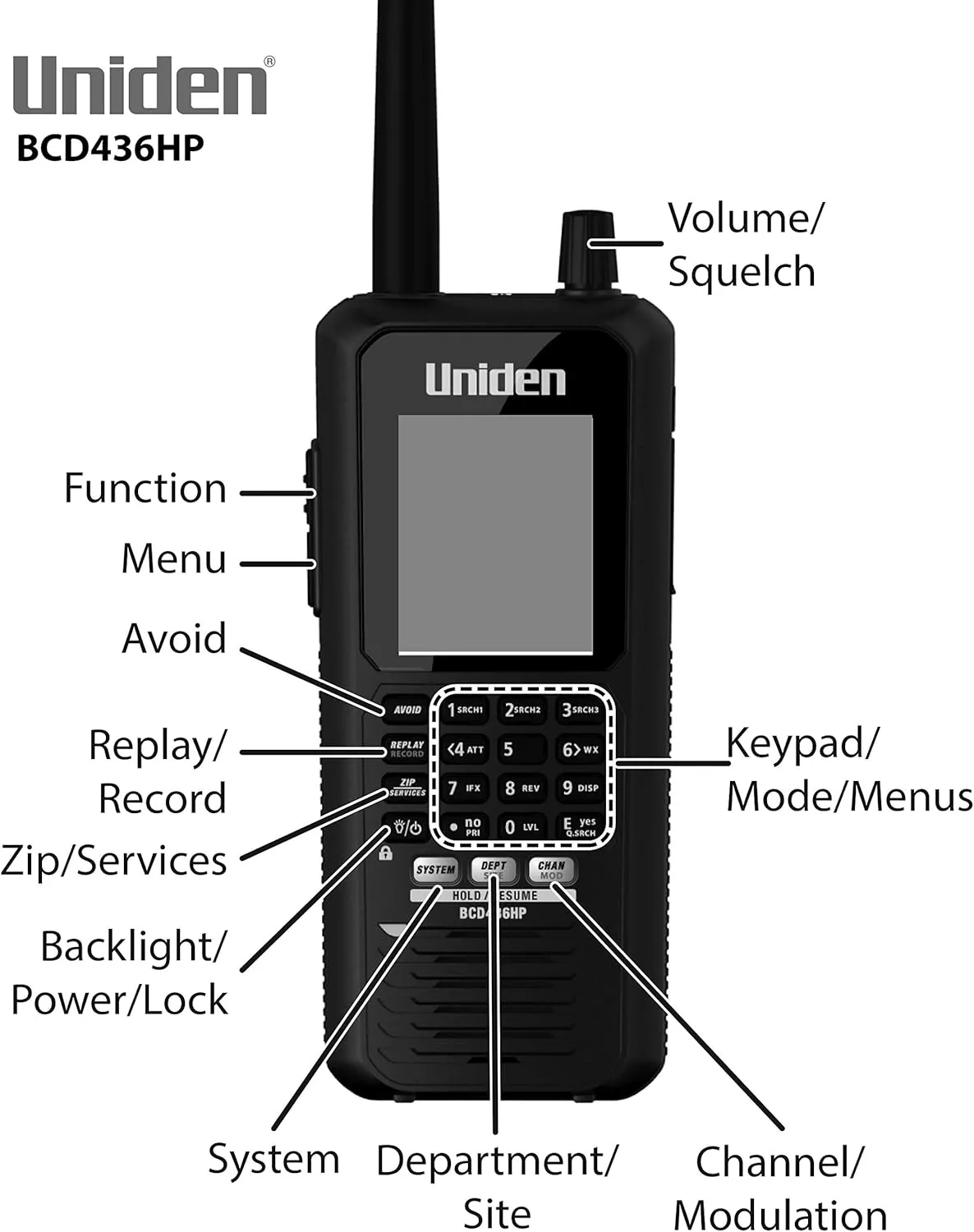
Uniden BCD436HP
See today’s price, delivery options and customer reviews on Amazon.
As an Amazon Associate, I earn from qualifying purchases.In this article 11 sections
- Scanner vs. Radio: Understanding the Difference
- Check This Before You Buy
- Editorial Assessment
- Pros & Cons of the Uniden BCD436HP
- Who is the BCD436HP Built For?
- The "Ground Truth": Why a Scanner Helps Weather Watchers
- The HomePatrol Revolution: From Impossible to Effortless
- The Best of Both Worlds: S.A.M.E. Weather Alerts
- Video Overview: Exploring the BCD436HP
- Analyst's Recommendation: Is the BCD436HP Worth It?
- My Review Methodology
Uniden BCD436HP Review: The Ultimate Situational Awareness Scanner
Which NOAA Weather Alert Radio Should You Buy?
We put five NOAA weather alert radios head to head on alert coverage, S.A.M.E. county programming, siren volume, and battery backup. See which one we recommend for most homes.
Expert Verdict & Key Takeaways: The Uniden BCD436HP is not merely a weather radio; it is a professional-grade intelligence gathering tool for the serious enthusiast. Our research shows it is one of the most capable handheld scanners in its class, combining Uniden's legendary TrunkTracker V technology with the revolutionary simplicity of HomePatrol zip code programming. Its gold-standard S.A.M.E. weather alert system makes it an unmatched device for total situational awareness during severe weather events.
I'm Lena Thornton, a weather station analyst who understands that a forecast is only part of the story. When severe weather strikes, the real-time information, the "ground truth", comes from the emergency services on the front lines. A standard NOAA weather radio tells you *what* is happening; a device like the Uniden BCD436HP Digital Scanner lets you hear *how* it's happening.
Let's be clear: this is in a completely different league from a simple alert radio. This is a sophisticated communications receiver designed to monitor the complex digital radio systems used by police, fire, EMS, and storm spotters. This expert review will break down its powerful features, from its simplified programming to its advanced trunking capabilities, and explain why, for a certain type of user, it is the single most valuable tool you can own for weather safety and awareness.
Scanner vs. Radio: Understanding the Difference
Before diving in, it's important to understand where the BCD436HP fits. It's not just about listening to one channel; it's about monitoring entire systems and hearing the complete picture.
| Capability | Standard NOAA Weather Radio | Uniden BCD436HP Scanner | Ham Radio Transceiver |
|---|---|---|---|
| Function | Receives Weather Alerts Only | Receives Thousands of Channels | Transmits & Receives |
| Primary Use | Passive Alerting | Active Monitoring & Situational Awareness | Two-Way Communication |
| Programming | Simple County Code (S.A.M.E.) | Zip Code (Easy) or Manual (Advanced) | Manual Frequency Programming |
| Monitors | NOAA Broadcasts | Police, Fire, EMS, Air, Rail, Weather | Amateur Radio Bands |
| User Profile | Homeowner | Enthusiast, Storm Chaser, Journalist | Licensed Operator |
Editorial Research & Review
- Reviewed by
- Lena Thornton, Weather Station Analyst
- Review basis
- Research and comparative analysis
- Hands-on testing
- Not performed by The-Weather.com
- Research reviewed
- Uniden specifications, scanner retailer guides on encryption, simulcast and legality, RadioReference community discussions, comparison with the Uniden SDS100/SDS150 and SAME weather radios
- Research last verified
- October 1, 2026
Check This Before You Buy
The biggest regret with any scanner is buying it and then hearing nothing useful. Three things decide that, and none of them is the scanner's quality.
| Question | Why it matters | How to check |
|---|---|---|
| Is your police or fire channel encrypted? | No legal scanner can decode fully encrypted talkgroups. More agencies encrypt every year, often police first, fire and EMS later. | Look up your county on RadioReference.com: encrypted talkgroups are marked "E" or "DE". |
| Which digital system does your area use? | P25 Phase I and II work out of the box. DMR, NXDN and ProVoice need paid upgrades from Uniden. | RadioReference lists the system type for each county and city. |
| Is it a simulcast system? | On simulcast P25 systems (several towers sending at once) handheld scanners can give garbled audio. Uniden's newer SDS series was designed to handle this better. | RadioReference notes "simulcast" on the system page; ask in the local forum which scanner works. |
| May you use it in your car? | A few states restrict scanners in vehicles, with exceptions for ham radio operators and press. | Check your state's rules before you mount it in a car. |
Editorial Assessment
No score. Each factor is rated in words, with the reason next to it.
| Factor | Assessment | Why we say this |
|---|---|---|
| Easy start (ZIP code) | Excellent | The built-in RadioReference database lets you start scanning by entering a ZIP code; no frequency lists needed. |
| Digital coverage | Very good | P25 Phase I and II included; DMR and NXDN only after paid upgrades. |
| Weather alerts | Good | Has SAME weather alerts, but a handheld you carry around is not a bedside alert radio. Keep a SAME weather radio at home as well. |
| Future-proofing | Moderate | Growing encryption can make parts of the scanner useless where you live, and simulcast areas favor the newer SDS models. |
| Learning curve | Moderate | Basic use is easy; favorites lists, upgrades and database updates take time. |
| Value | Good | Worth it for spotters, volunteers and enthusiasts in areas with unencrypted P25 systems. For weather alerts alone it is far more than you need. |
Claim → Evidence → Verdict: "hear the ground truth during a storm"
Claim: A scanner lets you hear first reports of funnel clouds, flooding and damage from spotters and emergency services.
What we found: That is true where those channels are open. Where police or fire talkgroups are encrypted, you hear only what remains open: often fire dispatch, public works, aviation, SKYWARN spotter nets on amateur frequencies and NOAA Weather Radio.
Our conclusion: Check RadioReference for your county first. If your key channels are open and not simulcast, the BCD436HP is a capable storm-day tool. If not, a SAME weather radio and the NWS warnings give you more for less money.
What we'd change
- DMR and NXDN included in the price, as they are now common.
- Better handling of simulcast systems, as on Uniden's SDS series.
Sources: Zip Scanners: system support, paid upgrades and encryption · Zip Scanners: simulcast distortion · Zip Scanners: are police scanners legal? · RadioReference frequency database
Pros & Cons of the Uniden BCD436HP
Pros
- Effortless Basic Setup: Simply enter your zip code and the scanner programs itself.
- Powerful Digital Trunking: Tracks APCO 25 Phase I & II systems; DMR and NXDN need paid upgrades.
- S.A.M.E. Weather Alerts: Provides the most precise, location-specific weather warnings available.
- Close Call RF Capture: Instantly finds and tunes to strong nearby transmissions.
- Massive Database: Pre-loaded with the entire USA/Canada frequency database from RadioReference.
Cons
- Significant Learning Curve: While basic use is easy, mastering its advanced features takes time and effort.
- High Price Point: This is a serious investment for a serious hobbyist.
- Not Water Resistant: Must be protected from the elements during field use.
Who is the BCD436HP Built For?
- Storm Chasers & Spotters: To hear real-time reports from the field and monitor emergency response.
- Journalists & Media Professionals: For gathering immediate, unfiltered information during breaking events.
- Aviation & Rail Fans: To monitor air traffic control, ground crews, and railroad operations.
- Emergency Response Volunteers: To maintain situational awareness across multiple agencies.
- The Ultimate Weather Enthusiast: For those who want to go beyond the forecast and understand the full impact of a storm.
The "Ground Truth": Why a Scanner Helps Weather Watchers
Doppler radar, satellite imagery, and computer models are the pillars of modern forecasting. They tell us where a storm is and where it's likely to go. But what are its actual impacts? Is a tornado on the ground? Are roads flooded? Are power lines down? That information comes from people: trained SKYWARN spotters, sheriff's deputies, and fire departments. And they communicate that information over the radio.
Owning a scanner like the BCD436HP is like having a direct line to the nervous system of a community during a crisis. You hear the first reports of a funnel cloud, the dispatch of emergency vehicles, and the coordination of rescue efforts. This isn't just interesting; it's a level of real-time situational awareness that no weather app can provide. It's the difference between knowing a tornado warning is in effect and hearing a spotter confirm, "Tornado on the ground, crossing Highway 50." This is the kind of critical information that forecasters at the Storm Prediction Center rely on to issue and refine warnings.
The HomePatrol Revolution: From Impossible to Effortless
For decades, programming a scanner was a notoriously difficult task, requiring manuals, frequency lists, and a lot of patience. Uniden's HomePatrol technology, integrated into the BCD436HP, changed everything. The scanner contains a comprehensive database of all known radio systems in the United States and Canada.
The process is astonishingly simple: 1. Turn on the scanner. 2. When prompted, enter your zip code. 3. The scanner instantly loads the appropriate police, fire, EMS, and other public safety channels for your exact location and begins scanning.
This single feature takes the BCD436HP from a niche hobbyist tool to an accessible device for anyone serious about being informed. Of course, the power to manually program and create custom "Favorites Lists" is still there for advanced users, but the barrier to entry has been completely removed.
The Best of Both Worlds: S.A.M.E. Weather Alerts
While it's a powerful scanner, the BCD436HP also includes the gold standard in weather alert technology: S.A.M.E. (Specific Area Message Encoding). Unlike basic weather alert radios that might go off for a warning 50 miles away, S.A.M.E. allows you to program in your specific county code. This means the alarm will only sound for alerts issued directly for your location by the National Weather Service. It filters out the noise and ensures that when the alarm goes off, it's an event you need to pay attention to immediately. This targeted alerting is a cornerstone of effective hurricane awareness and tornado safety.
Video Overview: Exploring the BCD436HP
To get a feel for the scanner's size, display, and menu system, this video provides a great hands-on look at its core functions.
Analyst's Recommendation: Is the BCD436HP Worth It?
For the right person, the Uniden BCD436HP is not just worth it; it's an indispensable tool. If you are a storm chaser, a journalist, an emergency volunteer, or simply a deeply dedicated enthusiast who craves unfiltered, real-time information, there is no better handheld device on the market. The combination of effortless zip code programming for beginners and deep, powerful features for experts is unmatched.
However, if your goal is simply to receive automated weather alerts, this device is overkill. But if you want to understand the full story of a storm as it unfolds, to hear the voices of those in its path and those responding to the call, the BCD436HP is, without question, the professional's choice.
My Review Methodology
This review is a comprehensive analysis grounded in more than ten years of work with weather technology and emergency communications. My assessment is based on manufacturer-provided specifications, official technical documentation, and an aggregation of reports from professional storm chasers and scanner hobbyists. I interpret this information against the operational standards of agencies like NOAA to provide an expert, evidence-based assessment of the product's capabilities and value. My conclusions are independent and grounded in this rigorous research process.
Ready to decide?
Get the Uniden BCD436HP
Prices and stock change daily. Check the current price, delivery options and what owners say in their reviews.